

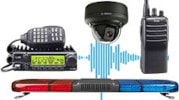
Icom Mobile Two-Way Transceiver Radio
Icom mobile two-way radios are designed for professional vehicle, industrial and site communication. The category includes VHF and UHF versions, analogue and IDAS/NXDN digital operation, up to 25 W RF output power and different channel capacities. Advanced versions also provide GPS, Bluetooth and work-safety functions. Read more...

• Frequency coverage: 136-174MHz
• LED channel display
• 8 programmable channels
• 4 programmable buttons
• 4W front mounted speaker
• Built-in SEL 2/5, CTCSS, DTCS coder and encoder, DTMF autodial
• Maximum 25W RF output power
• Equivalent to MIL-STD 810 C, D, E, and F requirements


• Frequency coverage: 400-470MHz
• LED channel display
• 8 programmable channels
• 4 programmable buttons
• 4W front mounted speaker
• Built-in SEL 2/5, CTCSS, DTCS coder and encoder, DTMF autodial
• Maximum 25W RF output power
• Equivalent to MIL-STD 810 C, D, E, and F requirements

• Frequency coverage: 136-174MHz
• 8-character LCD display
• 128 programmable channels, 8 channel groups
• 6 programmable buttons
• 4W front mounted speaker
• Built-in SEL 2/5, CTCSS, DTCS coder and encoder, DTMF autodial
• Maximum 25W RF output power
• Equivalent to MIL-STD 810 C, D, E, and F requirements
• Depending on the version it has SO-239 or BNC female antenna connector
• Frequency coverage: 400-470MHz
• 8-character LCD display
• 128 programmable channels, 8 channel groups
• 6 programmable buttons
• 4W front mounted speaker
• Built-in SEL 2/5, CTCSS, DTCS coder and encoder, DTMF autodial
• Maximum 25W RF output power
• Equivalent to MIL-STD 810 C, D, E, and F requirements
• Frequency coverage: 136-174MHz
• Full dot-matrix LCD display
• 512 programmable channels, 128 channel zones
• IDAS system digital mode ready (NXDN and dPMR)
• Detachable front panel
• Built-in SEL 2/5, CTCSS, DTCS coder and encoder, DTMF autodial
• Buil-in inversion type voice scrambler
• Maximum 25W RF output power
• Equivalent to MIL-STD 810 C, D, E, and F requirements

• Frequency coverage: 400-470MHz
• Full dot-matrix LCD display
• 512 programmable channels, 128 channel zones
• IDAS system digital mode ready (NXDN and dPMR)
• Detachable front panel
• Built-in SEL 2/5, CTCSS, DTCS coder and encoder, DTMF autodial
• Buil-in inversion type voice scrambler
• Maximum 25W RF output power
• Equivalent to MIL-STD 810 C, D, E, and F requirements

• Frequency coverage: 136-174MHz
• 8-character LCD display
• 128 programmable channels, 8 channel groups
• Integrated IDAS digital system (NXDN or dPMR)
• Built-in SEL 2/5, CTCSS, DTCS coder and encoder, DTMF autodial
• Buil-in inversion type voice scrambler
• 4W front mounted speaker
• Limited MDC 1200 compatibility
• Maximum 25W RF output power
• Equivalent to MIL-STD 810 C, D, E, and F requirement
• Frequency coverage: 400-470MHz
• 8-character LCD display
• 128 programmable channels, 8 channel groups
• Integrated IDAS digital system (NXDN or dPMR)
• Built-in SEL 2/5, CTCSS, DTCS coder and encoder, DTMF autodial
• Buil-in inversion type voice scrambler
• 4W front mounted speaker
• Limited MDC 1200 compatibility
• Maximum 25W RF output power
• Equivalent to MIL-STD 810 C, D, E, and F requirement

• Frequency coverage: 136-174MHz
• 2-digit numerical display
• 1024 programmable channels, 128 channel zones
• Integrated IDAS NXDN digital system
• Built-in Bluetooth and GPS receiver (optional external antenna is required)
• Lone worker and man down function with built-in motion sensor
• Built-in SEL 2/5, CTCSS, DTCS coder and encoder, DTMF autodial
• Built-in basic encryption
• Equivalent to MIL-STD 810 C, D, E, F and G requirements

• Frequency coverage: 380-470MHz
• 2-digit numerical display
• 1024 programmable channels, 128 channel zones
• Integrated IDAS NXDN digital system
• Built-in Bluetooth and GPS receiver (optional external antenna is required)
• Lone worker and man down function with built-in motion sensor
• Built-in SEL 2/5, CTCSS, DTCS coder and encoder, DTMF autodial
• Built-in basic encryption
• Equivalent to MIL-STD 810 C, D, E, F and G requirements

• Frequency coverage: 136-174MHz
• High-resolution colour LCD display
• 1024 programmable channels, 128 channel zones
• Integrated IDAS NXDN digital system
• Built-in Bluetooth and GPS receiver (optional external antenna is required)
• Lone worker and man down function with built-in motion sensor
• Detachable front panel
• Built-in SEL 2/5, CTCSS, DTCS coder and encoder, DTMF autodial
• Multiple controller configurations
• Equivalent to MIL-STD 810 C, D, E, F and G requirements
• Frequency coverage: 380-470MHz
• High-resolution colour LCD display
• 1024 programmable channels, 128 channel zones
• Integrated IDAS NXDN digital system
• Built-in Bluetooth and GPS receiver (optional external antenna is required)
• Lone worker and man down function with built-in motion sensor
• Detachable front panel
• Built-in SEL 2/5, CTCSS, DTCS coder and encoder, DTMF autodial
• Multiple controller configurations
• Equivalent to MIL-STD 810 C, D, E, F and G requirements
Icom mobile two-way radio for professional vehicle communication
VHF radios can be programmed in the 136-174 MHz range, while UHF versions operate, depending on the version, within 380-470 MHz or 400-470 MHz. The range extends from basic analogue radios to high-capacity digital systems, allowing the appropriate radio to be matched to the communication network.
What applications are Icom mobile radios suitable for?
Vehicle-mounted radios can be used for logistics, industrial, security and operational communication. Front-facing speakers, programmable controls and higher RF output power support continuous professional use.
VHF and UHF mobile radios for professional systems
The choice between VHF and UHF depends on the existing radio network, authorised frequencies and local RF conditions. Radios must be programmed according to the requirements of the specific communication system.
How does IDAS NXDN digital radio complement analogue operation?
Selected Icom mobile radios support both analogue and IDAS/NXDN digital communication. This enables gradual migration from existing analogue systems while providing access to digital system functions.
Programmable channels and up to 25 W RF output
The category includes versions with 8, 128, 512 or up to 1024 programmable channels. Several radios provide up to 25 W RF output power, while actual communication range also depends on antenna configuration, terrain and network design.
What are the benefits of GPS, Bluetooth and detachable control heads?
Advanced versions provide integrated GPS and Bluetooth, while selected radios support detachable or multiple control-head installations. These functions enable more flexible vehicle integration and location-based applications.
Lone Worker and Man Down functions in Icom mobile radios
Selected digital versions provide Lone Worker and Man Down functions. With the correct system configuration, these features support workplace-safety communication for users working alone or in higher-risk environments.
How should the antenna and vehicle installation be configured?
A mobile radio requires an external antenna matched to the selected VHF or UHF frequency band. Antenna type, positioning and connection have a major effect on overall radio-system performance.
Radio licensing and programming for professional Icom systems
Professional two-way radio frequencies and channels must be programmed according to the authorised network. Frequency band, operating mode and required system functions should therefore be considered together when selecting the radio.
FAQ about Icom mobile two-way radios
- Are both VHF and UHF versions available?
Yes. Radios for both frequency bands are available in this category. - What RF output power is available?
Several versions provide up to 25 W RF output. - Is digital operation available?
Yes. Selected radios support IDAS/NXDN digital communication. - Are GPS and Bluetooth available?
Yes. These functions are available on more advanced versions.
Summary: Icom mobile radios for professional use
We recommend Icom mobile two-way radios when you need a robust, programmable VHF or UHF vehicle radio for analogue or digital communication. Frequency band, channel capacity, RF output power and system functions should be evaluated together when selecting the appropriate radio.