

Dometic Battery Charger
The Dometic battery charger category includes 12 V and 24 V onboard devices that charge supply or starter batteries used in vehicles and boats from an AC mains connection. The shared product range includes eight versions from the PerfectCharge MCA series. The 12 V versions provide charging currents of 15, 25, 35, 50, and 80 A, while the 24 V group is available in three output levels. The devices use a modified IU0U charging characteristic and are designed for lead-acid, gel, and AGM batteries. Read more...
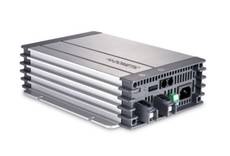
• Gentle charging of 12 V batteries with optimised 6-stage IU0U charging technology
• Simultaneous charging of one battery plus the starter battery
• Sleep mode for quiet charging at half the power – ideal at night or in parking spaces with low electrical circuit protection
• Comes standard with a bus interface for smooth integration in existing bus systems
• Compatible with the Dometic MPC 01 battery controller for perfect power management
• Useful enhancements: remote control, Hella battery sensor, temperature sensor
• Input voltage (AC) 110/230 V
• Output current 15.00 A
• Input frequency 50/60 Hz
• Battery type Lead, AGM, Gel

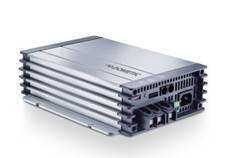
• Gentle charging of 12 V batteries with optimised 6-stage IU0U charging technology
• Simultaneous charging of two battery plus the starter battery
• Sleep mode for quiet charging at half the power – ideal at night or in parking spaces with low electrical circuit protection
• Comes standard with a bus interface for smooth integration in existing bus systems
• Compatible with the Dometic MPC 01 battery controller for perfect power management
• Useful enhancements: remote control, Hella battery sensor, temperature sensor
• Input voltage (AC) 110/230 V
• Output current 25.00 A
• Input frequency 50/60 Hz
• Battery type Lead, AGM, Gel
• Gentle charging of 12 V batteries with optimised 6-stage IU0U charging technology
• Simultaneous charging of two battery plus the starter battery
• Sleep mode for quiet charging at half the power – ideal at night or in parking spaces with low electrical circuit protection
• Comes standard with a bus interface for smooth integration in existing bus systems
• Compatible with the Dometic MPC 01 battery controller for perfect power management
• Useful enhancements: remote control, Hella battery sensor, temperature sensor
• Input voltage (AC) 110/230 V
• Output current 35.00 A
• Input frequency 50/60 Hz
• Battery type Lead, AGM, Gel
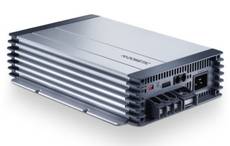
• Gentle charging of 12 V batteries with optimised 6-stage IU0U charging technology
• It can charge three batteries simultaneously
• Sleep mode for quiet charging at half the power – ideal at night or in parking spaces with low electrical circuit protection
• Comes standard with a bus interface for smooth integration in existing bus systems
• Compatible with the Dometic MPC 01 battery controller for perfect power management
• Useful enhancements: remote control, Hella battery sensor, temperature sensor
• Input voltage (AC) 110/230 V
• Output current 50.00 A
• Input frequency 50/60 Hz
• Battery type Lead, AGM, Gel
• Gentle charging of 12 V batteries with optimised 6-stage IU0U charging technology
• It can charge three batteries simultaneously
• Sleep mode for quiet charging at half the power – ideal at night or in parking spaces with low electrical circuit protection
• Comes standard with a bus interface for smooth integration in existing bus systems
• Compatible with the Dometic MPC 01 battery controller for perfect power management
• Useful enhancements: remote control, Hella battery sensor, temperature sensor
• Input voltage (AC) 110/230 V
• Output current 80.00 A
• Input frequency 50/60 Hz
• Battery type Lead, AGM, Gel

• Gentle charging of 24 V batteries with optimised 6-stage IU0U charging technology
• It can charge three batteries simultaneously
• Sleep mode for quiet charging at half the power – ideal at night or in parking spaces with low electrical circuit protection
• Comes standard with a bus interface for smooth integration in existing bus systems
• Compatible with the Dometic MPC 01 battery controller for perfect power management
• Useful enhancements: remote control, Hella battery sensor, temperature sensor
• Input voltage (AC) 110/230 V
• Output current 15.00 A
• Input frequency 50/60 Hz
• Battery type Lead, AGM, Gel
• Gentle charging of 24 V batteries with optimised 6-stage IU0U charging technology
• It can charge three batteries simultaneously
• Sleep mode for quiet charging at half the power – ideal at night or in parking spaces with low electrical circuit protection
• Comes standard with a bus interface for smooth integration in existing bus systems
• Compatible with the Dometic MPC 01 battery controller for perfect power management
• Useful enhancements: remote control, Hella battery sensor, temperature sensor
• Input voltage (AC) 110/230 V
• Output current 25.00 A
• Input frequency 50/60 Hz
• Battery type Lead, AGM, Gel
• Gentle charging of 24 V batteries with optimised 6-stage IU0U charging technology
• It can charge three batteries simultaneously
• Sleep mode for quiet charging at half the power – ideal at night or in parking spaces with low electrical circuit protection
• Comes standard with a bus interface for smooth integration in existing bus systems
• Compatible with the Dometic MPC 01 battery controller for perfect power management
• Useful enhancements: remote control, Hella battery sensor, temperature sensor
• Input voltage (AC) 110/230 V
• Output current 40.00 A
• Input frequency 50/60 Hz
• Battery type Lead, AGM, Gel
Dometic battery chargers for onboard 12 V and 24 V systems
An onboard battery charger is used for continuously charging supply batteries and maintaining a high state of charge. The series can be installed in onboard power systems used in vehicles and boats, including motorhomes, commercial vehicles, motorboats, and sailing boats. The compact housing supports installation in confined spaces, while the status LED provides information about the charging phase and possible faults.
The appropriate version should be selected according to the nominal voltage of the onboard system, the number of batteries, and the required charging current. A 12 V battery charger and a 24 V battery charger are separate device categories, so the output voltage must always match the battery system.
How does the IU0U charging characteristic work?
During the first phase of the modified IU0U charging process, the discharged battery is charged with a constant current until it reaches the selected charging voltage. The charger then continues at a constant voltage while the charging current gradually decreases. Once the battery is fully charged, the device changes to maintenance charging to preserve the battery charge level.
The charging voltage of the 12 V versions is 14.4 or 14.7 V, while the maintenance charging voltage is 13.8 V. For the 24 V versions, the charging voltage is 28.8 or 29.4 V, with a maintenance charging voltage of 27.6 V. The settings can be adjusted using DIP switches, and the charging status is indicated by the LED on the device.
Onboard battery chargers with different charging currents and output configurations
The product family offers different numbers of outputs for several battery arrangements. The smaller 12 V version can charge one supply battery and one starter battery. The medium-sized 12 V chargers can be used with up to two supply batteries and one starter battery, while the larger versions are designed for charging three supply batteries. The 24 V series provides outputs for two or three supply batteries.
- 12 V charging currents: 15 A, 25 A, 35 A, 50 A, and 80 A.
- 12 V output configuration: one, two, or three supply battery outputs.
- Separate starter battery connection: available on the 15 A, 25 A, and 35 A 12 V versions.
- 24 V output configuration: two or three supply battery outputs.
- 24 V charging current: lower-current, 25 A, and 40 A versions.
The charging current should be matched to the battery capacity, the mains connection, and the onboard electrical loads.
Which battery types can be charged with Dometic chargers?
The vehicle battery chargers in this category can be used for lead-acid starter batteries, gel batteries, and AGM batteries. The charging voltage can be selected using DIP switches. These devices must not be used to charge NiCd or NiMH batteries.
When a temperature sensor or battery sensor is connected, the charger can adjust the charging voltage according to the measured temperature. The 12 V battery sensor can also compensate for voltage drops in the connection cables.
Sleep mode, LIN bus, and battery management system
Sleep mode is used to reduce fan noise. The reduced-noise operation can be used at night or when the available mains power is limited. The operating mode can be controlled using an external switch or the separately available remote control.
Two LIN bus connections allow the charger to be integrated into a system. The 12 V versions can be used with the Dometic MPC 01 battery management system. A remote control, temperature sensor, and battery sensor can be connected as accessories. Accessory compatibility must be checked for the selected 12 V or 24 V version.
What should be considered when installing the charger in a motorhome, caravan, vehicle, or boat?
When selecting the installation location, the dimensions, weight, and fan-assisted cooling of the device must be considered. The smallest housing in the series measures 238 x 179 x 63 mm, while the larger versions can measure up to 303 x 208.5 x 75 mm. Depending on the version, the weight ranges from 1.6 to 3.9 kg. Sufficient free space must be provided for ventilation.
When selecting a motorhome battery charger or caravan battery charger, the number of supply and starter batteries must be checked in addition to the voltage of the onboard system. For marine use, the onboard electrical network, the number of batteries to be charged, and the available mains connection also determine the appropriate version.
- Advantage: several charging currents and output configurations are available.
- Advantage: charging, maintenance charging, and system monitoring are combined in one device.
- Advantage: LIN bus, remote control, and sensors can be connected to the system.
- Limitation: only lead-acid, gel, and AGM battery types can be used.
- Limitation: the 12 V or 24 V version must match the onboard electrical system.
- Limitation: a separate starter battery output is not available on every version.
The device must be installed in a dry, adequately ventilated location, and the wiring must be sized according to the charging current and battery arrangement.
Input voltage, operating temperature, and protection functions
The nominal input voltage range of the chargers is 90 to 260 V AC, with an input frequency of 50 to 60 Hz. At a 230 V input, the efficiency of the 12 V devices is 87 percent, while the efficiency of the 24 V versions is 90 percent. The ambient operating temperature range is from -20 to +50 C, and the storage temperature range is from -40 to +85 C.
The protection functions include output short-circuit management, overvoltage protection, and charger overtemperature monitoring. In the event of a short circuit, the device reduces the output current to 25 percent of the maximum current. When a battery sensor is connected, battery overheating can also be monitored. The fan speed is adjusted according to the charging output.
How should you choose a 12 V or 24 V battery charger?
The first step is to identify the nominal voltage of the onboard battery system. Next, determine the number of supply batteries, whether separate starter battery charging is required, and the necessary charging current. The 15 to 35 A 12 V versions also provide a separate starter battery connection, while the larger 12 V and the 24 V versions are designed for charging multiple supply batteries.
- Check whether the system operates at 12 V or 24 V.
- Determine the number of supply batteries and starter batteries.
- Select the charging current required for the battery capacity.
- Check whether the batteries are lead-acid, gel, or AGM.
- Consider the dimensions of the device and its fan-assisted cooling.
- Determine whether a LIN bus connection, remote control, or sensor is required.
- Check the availability of a 90 to 260 V AC mains input.