

- Special Offers
- Transceiver Radio
- Transceiver Accessory
- Antennas
- HF Antennas
- CB Antennas
- VHF Antennas
- Airband Antennas
- Marine Antennas
- Sirio Marine Antenna
- Albrecht Marine Antenna
- Nauticast Marine Antenna
- UHF Antennas
- TETRA Antennas
- Multiband Antennas up to 500Mhz
- LoRa Antennas
- GSM Antennas
- WiFi Antennas
- Multiband Antennas from 500Mhz
- GPS Antennas
- Vehicle Antennas
- TV Antennas
- Parabola Antennas
- Radio Broadcast Antennas
- Antenna Accessory
- Fiber Optics
- Cable
- Connector
- Installation Material
- Installation Tools
- Measuring Equipement
- Body Worn Camera
- Electrosmog
- Telephone
- Baby Monitor
- Fever Thermometer
- Radio Device
- Set-top Boxes
- Personal Protective Equipment
- Motorcycle Helmet Speaker
- Car Equipment
- Voltage Converter
- Dry Cell
- Battery
- Battery Charger
- Emergency Signal
- Amber Signal
- Sound Signal
- Light and Sound Signal Accessory
- Traffic Engineering
- LED Lamp
- Smart Home
- Mosquito Repellent Device
- Market - Other Products
- Discontinued Products
Pre-order (0)
Albrecht Marine Antenna
The Albrecht marine antenna category includes antennas operating in the 156-162 MHz frequency range, specified with 600 channels, 100 W maximum power and 3 dB gain. The range includes two different mechanical designs: a stainless steel whip version and a fiberglass whip version. Cable length, connector type, overall antenna length and mounting design vary by model, so these parameters should be checked together when selecting an antenna. Read more...
Pre-order (0)
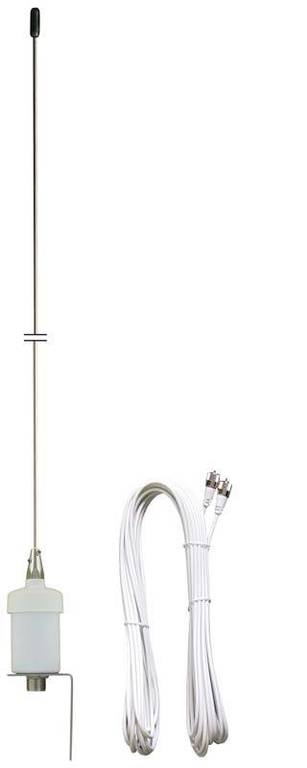
• Frequency: 156-162 MHz
• Channel number: 600
• Maximum output power: 100W
• S.W.R.: 1,1:1,5
• Gain: 3dB
• Length: 100cm
• Material: stainless steel
• Supplied 18 m RG-58 cable and 2 x PL 259 connector


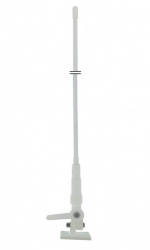
• Frequency: 156-162 MHz
• Channel number: 600
• Maximum output power: 100W
• S.W.R.: 1,1:1,5
• Gain: 3dB
• Length: ~150cm
• Material: glass fibre
• Supplied cable: 4m RG-58
• Antenna connector type: SO-239 (socket)
• Removable style, can be release for easy adjustment
Albrecht marine antenna for the 156-162 MHz frequency range
Which frequency and power specifications characterize Albrecht marine antennas?
The antennas in the category operate in the 156-162 MHz frequency range. Both versions are specified with 600 channels, 100 W maximum power and 3 dB gain. The S.W.R. value is listed as 1.1:1.5 for both products. These electrical specifications are common to the current models in the category, while their mechanical construction and cabling differ.
Stainless steel and fiberglass antenna designs
Albrecht antenna: how do whip material and length differ?
One version uses a 100 cm stainless steel whip. The other uses an approximately 150 cm fiberglass whip. The two versions therefore differ both in material and physical dimensions. When selecting the appropriate design, the antenna length and whip material should be considered together with the available mounting location.
Which mounting designs are available in the marine antenna range?
The fiberglass whip version has a tiltable and removable antenna design. No equivalent mechanical feature is separately specified for the stainless steel whip model. The mounting method should therefore be checked individually, especially when antenna tilting or removal is required at the installation point.
How do the cable and antenna connector differ?
RG-58 cable in Albrecht marine antenna designs
Both antennas are specified with RG-58 cable, but cable length and connector configuration differ. The 100 cm stainless steel whip model includes 18 metres of RG-58 cable with two PL 259 plugs. The approximately 150 cm fiberglass whip version is supplied with 4 metres of RG-58 cable and an Amphenol plug. Cable length and connector type are therefore directly comparable parameters when choosing between the two versions.
Albrecht marine antenna selection criteria
Which specifications should be compared when choosing a marine antenna?
The frequency range, maximum power and gain are specified with identical values for the models in this category. The main differences are antenna length, whip material, cable length, connector type and mechanical design. We recommend checking these product specifications together with the installation location and the radio equipment to be connected.
Documented common characteristics:
- 156-162 MHz frequency range.
- 600 channels.
- 100 W maximum power.
- 3 dB antenna gain.
- RG-58 cable.
In addition to the common electrical specifications, the two versions use different mechanical and connection solutions.
Documented differences:
- 100 cm and approximately 150 cm antenna lengths.
- Stainless steel and fiberglass whips.
- 18 metre and 4 metre RG-58 cable lengths.
- Two PL 259 plugs or an Amphenol plug.
- The fiberglass whip version is tiltable and removable.
These differences support the mechanical and connection-based comparison of the two Albrecht marine antenna designs.
Which technical specifications should be checked?
Antenna gain, cable and connector comparison
Antenna gain is specified as 3 dB for both versions and maximum power as 100 W, so these parameters do not distinguish the current models. The practical differences are cable length, connector type, antenna length, whip material and the presence of a tiltable and removable construction. Based on the product data, these are the main parameters that directly distinguish the two designs.
Frequently asked questions about Albrecht marine antennas
- What frequency range do Albrecht marine antennas operate in?
The models in the category operate in the 156-162 MHz frequency range. - What is the maximum power?
Both current models are specified with 100 W maximum power. - What is the antenna gain?
Both antennas in the category are specified with 3 dB gain. - Which cable is supplied with the antennas?
Both models use RG-58 cable. One is specified with 18 metres and the other with 4 metres of cable. - Which antenna connectors are available?
The range includes a version with two PL 259 plugs and another with an Amphenol plug. - Which antenna materials are used?
Depending on the model, the whip is made of stainless steel or fiberglass.
When selecting the exact version, the mechanical and connection specifications should be reviewed together with the frequency and power data.
Albrecht marine antenna summary
Technical comparison of Albrecht marine antennas
The current models in the Albrecht marine antenna category are specified for the 156-162 MHz frequency range, 600 channels, 100 W maximum power and 3 dB gain. The main differences are the 100 cm stainless steel and approximately 150 cm fiberglass constructions, as well as cable length and connector configuration. We recommend checking these parameters together so that you can select the version that matches the installation point and connection requirements.