

Shielding Mesh and Fleece
Shielding mesh and wallpaper against electrosmog can be used for the retrofit shielding of walls, ceilings, floors and selected building surfaces. The category includes indoor wallpapers, stable nonwoven materials, flexible meshes and versions suitable for outdoor use. The appropriate type is primarily determined by the installation location, surface structure, covering method and required shielding attenuation. Read more...
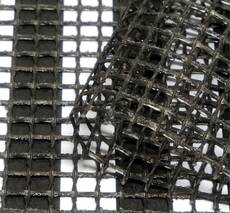
• Reinforcement fabric as universal standard product
• Length: By the meter / 50 m roll
•Attenuation: 23 dB
• Weight: 180 g/m²
• Material thickness: 0,45 mm
• Color: Schwarz
• Mesh width: 3,5 x 4,0 mm
• Tensile strenght max.: 1750 N/5 cm (warp and woof)
• Elongation max.: 3,9 % (warp and woof)
• Materials: Glas filber, stainless steel fibers, latex coating
• Weight: 200 g


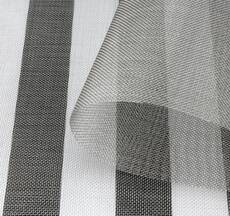
• V4A03 is an extremely fine woven, noncorrosive stainless-steel gauze for the protection against high-frequency radiation (HF) and low-frequency electric fields (LF)
• Width: 90 cm
• Length: 25 m roll / by the meter
• Attenuation: 55 dB
• Mesh width: 0.3 mm
• Wire diameter: 0.08 mm
• Material thickness: 0.16 mm
• Open area: 54 %
• Weight: 200 g/m²
• Color: Silver
• Fire-proof material, A1 according DIN 4102:1994.
• Surface conductivity: 0.03 Ohm (square resistance)
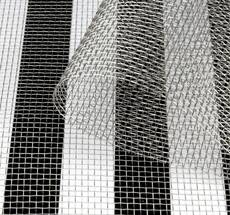
• Stainless steel mesh from corrosion-resistant
• V4A as cheap standard product for drywall constructions or on facades
• 40 dB Interior and exterior
• Width: 90 cm
• Length: 25 m/roll
• Attenuation: 40 dB, two-layer 55 dB
• Mesh width: 1.0 mm
• Wire diameter: 0.16 mm
• Material thickness: 0.32 mm
• Open area: 70 %
• Weight: 260 g/m²
• Color: Silver
• Fire-proof material, A1 according DIN 4102:1994
• Surface conductivity: 0.1 Ohm (square resistance)
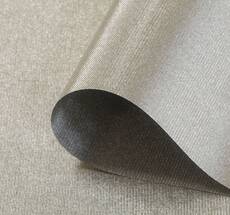
• Polyester mesh as cheap standard product for versatile applications
• Width: 90 cm
• Length: 100 m roll
• Attenuation: 88 dB
• Weight: 75 g/m²
• Material thickness: 0.075 mm
• Color: Gray / Brown
• Tensile strength: 90 lbf
• Materials: Polyester, copper, nickel
• Surface conductivity: 0.02 ohm (square resistance)
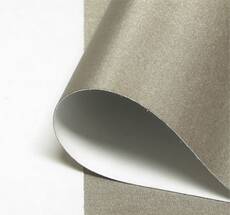
• Self-adhesive with electrically conductive glue for technical rooms, window frames, devices
• Width: 90 cm
• Length: By the meter / 100 m roll
• Attenuation: 75 dB
• Weight: 110 g/m² (without protective film), 220 g/m² (with protective film)
• Material thickness: 0.095 mm (without protective film), 0.22 mm (with protective film)
• Color: Gray / Brown
• Tensile strength: 90 lbf
• Materials: Polyester, copper, nickel, arylics glue
• Surface conductivity: 0.02 ohm (square resistance)
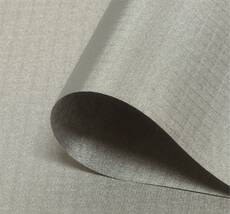
• Polyester mesh with maximum shielding for versatile applications
• Width: 90 cm
• Length: 100 m roll
• Attenuation: 98 dB
• Weight: 90 g/m²
• Material thickness: 0.08 mm
• Color: Gray / Brown
• Tensile strength: 90 lbf
• Materials: Polyester, copper, nickel
• Surface conductivity: 0.01 ohm (square resistance)

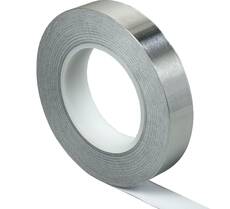
• Extremely strong adhesive aluminium tape for EMC shielding
• Attenuation: 120 dB
• Resistance: 0.5 mOhm/Square
• Thickness aluminum: 50 µm
• Width: 25 mm
• Length: 50 m
• Weight:340 g
• Total thickness: 100 µm
• Adhesive force: 48 N/100 mm
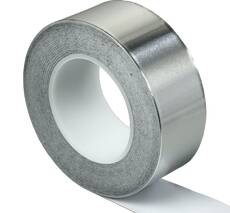
• Extremely strong adhesive aluminium tape for EMC shielding
• Attenuation: 120 dB
• Resistance: 0.5 mOhm/Square
• Thickness aluminum: 50 µm
• Width: 50 mm
• Length: 50 m
• Weight: 700 g
• Total thickness: 100 µm
• Adhesive force: 48 N/100 mm
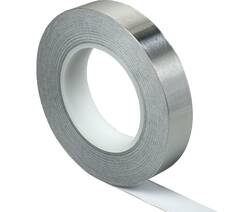
• Extremely strong adhesive aluminium tape for EMC shielding
• Attenuation: > 120 dB
• Resistance: 0.3 mOhm/Square
• Thickness aluminum: 100 µm
• Width: 25 mm
• Length: 50 m
• Total thickness: 150 µm
• Adhesive force: 48 N/100 mm
• Weight: 510 g
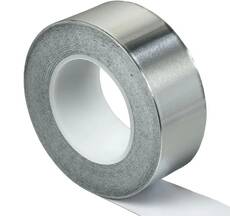
• Extremely strong adhesive aluminium tape for EMC shielding
• Attenuation: > 120 dB
• Resistance: 0.3 mOhm/Square
• Thickness aluminum: 100 µm
• Width: 50 mm
• Length: 50 m
• Total thickness: 150 µm
• Adhesive force: 48 N/100 mm
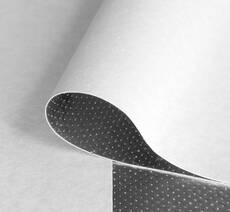
• Shielding wallpaper paper that is laminated on one side with a thin micro-needled aluminum foil
• Width: 70 cm
• Weight: 210 g/meter
• Length: by the meter / 50 m roll
• Shielding attenuation: 100 dB / surface conductivity: 0.0018 Ohm (square resistance)
• sd value: 0.02 m = very high water vapor permeability
• Basis weight: 150 g/m² / Thickness: 0.24 mm
• Color: White / silver
• Corrosion resistance: Corresponds to that of aluminum
• Materials: Cellulose pulp, aluminum, adhesive powder (OEKO-TEX certified)
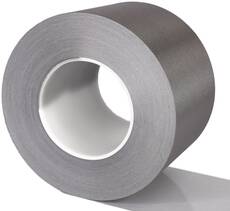
• Shielding attenuation: 76 dB
• Lenght: 50 m
• Width 100 mm
• Thickness 0.11 mm
• For bonding, we recommend our FVR10 bondig scrapper
• Materials: Polyester, copper, nickel. Backside conductive acrylic glue with high adhesive strength
• Recommended products: K150
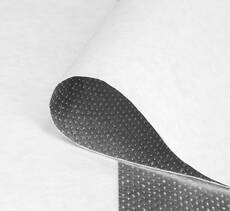
• Mechanically highly stable cellulose fleece that is laminated on one side with a thick micro-needled aluminum foil
• Due to its good surface stability, moisture resistance and high tear resistance, A190 can be used universally indoors in all conceivable applications
• Shielding attenuation: 112 dB / surface conductivity: 0.0018 Ohm (square resistance)
• sd value: 0.012 m = very high water vapor permeability
• Basis weight: 190 g/m² / Thickness: 0.28 mm
• Tear resistance: 4400 (transverse) - 6800 (longitudinal) N/m
• Corrosion resistance: Corresponds to that of aluminum
• Materials: Cellulose pulp (FSC, EUTR), aluminum, polyester fibers (OEKO-TEX certified), adhesive powder (OEKO-TEX certified)
• Width: 90 cm
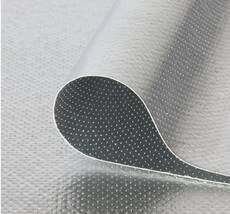
• A300-HEMP is a stable fleece that is laminated on both sides with a thick micro-needled aluminum foil.
• Width: 90 cm
• Length: by the meter / 50 m roll
• Shielding attenuation: 123 dB
• sd value: 0.024 m = very high water vapor permeability
• Surface weight: 300 g/m² / Thickness: 0.4 mm
• Color: silver / silver
• Tear resistance: 4400 (transverse) - 6800 (longitudinal) N/m
• Corrosion resistance: corresponds to that of aluminum
• Materials: aluminium, cellulose (FSC, EUTR), polyester fibers (OEKO-TEX certified), adhesive powder (OEKO-TEX certified)
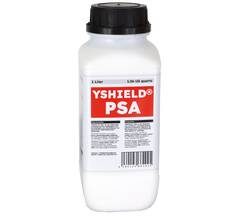
• YSHIELD PSA is an aqueous, low-emission, acrylate-based adhesive for the production of permanently self-adhesive layers
• 1 liter package
• Coverage: 5 sqm/l for single-layer application
• sd value: 0.02 m (highly permeable to water vapor)
• Viscosity: 3500 mPas
• pH value: 4
• Solids: 65 %
• Minimum film forming temperature: 0 °C
• Freeze resistance: Protect from frost
• Color: Wet white; Dry yellowish transparent
• Suitable for our SAFEBUILD products U230, A190, K150, our magnetic shielding plates M6L and many other products
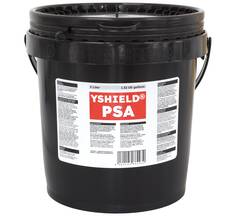
• YSHIELD PSA is an aqueous, low-emission, acrylate-based adhesive for the production of permanently self-adhesive layers
• 5 liter package
• Coverage: 5 sqm/l for single-layer application
• sd value: 0.02 m (highly permeable to water vapor)
• Viscosity: 3500 mPas
• pH value: 4
• Solids: 65 %
• Minimum film forming temperature: 0 °C
• Freeze resistance: Protect from frost
• Color: Wet white; Dry yellowish transparent
• Suitable for our SAFEBUILD products U230, A190, K150, our magnetic shielding plates M6L and many other products

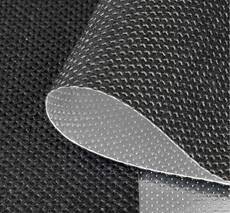
• U230 shielding underlay membrane is a four-layer membrane with a microneedled aluminum foil
• The micro-holes are so small that they have no influence on the sensationally high shielding attenuation of 111 dB
• Width: 90 cm
• Length: by the meter / 50 m roll
• Shielding attenuation: 111 dB / surface conductivity: 0.0018 Ohm (square resistance)
• SD value: 0.034 m = very high water vapor permeability
• Grammage: 230 g/m² / Thickness: 0.45 mm
• Color: Black / Silver
• Material layers: PP fleece / diffusion-open functional film / PP fleece / micro-needled aluminum foil
• Weight: 280g
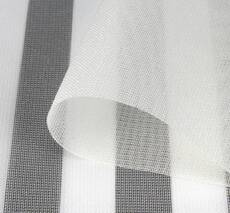
• VOILE from Swiss-Shield is a transparent voile-fabric for the shielding of high-frequency electromagnetic fields (HF)
• Typical application as elegant net curtain or to sew a bed canopy
• Width: 250 cm, +/- 5%
• Length: Available by the meter
• Attenuation: 38 dB
• Color: White
• Raw materials: 83 % polyester, 16 % copper, 1 % silver
• Weight: 65 g/m²
• Dimension stability: +/- 1 %
• Weight: 300g
Shielding mesh and wallpaper against electrosmog
Electromagnetic shielding mesh and wallpaper reduce the electromagnetic fields passing through the material by covering large surfaces. The products are made with different material structures and therefore require different installation methods. Wallpaper-type products can be bonded directly to walls, nonwoven materials form a stable covering layer, while meshes can be embedded in plaster, dry construction systems or other building layers.
The conductive shielding materials in this category are designed to shield high-frequency electromagnetic fields. Their electrically conductive surfaces can also contribute to shielding low-frequency alternating electric fields when the complete system is connected to functional equipotential bonding.
On which surfaces can electromagnetic shielding mesh be used?
Shielding mesh for walls, ceilings and floors
Shielding meshes can be installed on walls, ceilings, beneath floors, in dry construction systems and on selected technical surfaces. The exact field of application varies by product. Some versions are intended only for indoor use, while others can also be installed on facades, within roof structures or in outdoor building layers.
The mesh structure allows the material to be embedded in plaster or other construction materials. The surface can later be covered, plastered or painted in accordance with the selected system requirements. The mesh must be positioned so that it continuously covers the surface to be shielded.
Shielding wallpaper for indoor walls and ceilings
Shielding wallpaper for different indoor surfaces
Shielding wallpaper can be used to cover indoor walls and ceilings. Its wallpaper-like design allows it to be installed in strips in a similar way to conventional wall coverings. The documented version is 70 cm wide, water vapour permeable and provides 100 dB shielding attenuation.
Before installation, the substrate must be properly prepared, clean and capable of supporting the covering. The strips must be joined so that no unshielded gaps remain at the connections. Further covering or finishing can be carried out according to the adhesive used and the structure of the complete installation.
How does wall shielding work against high-frequency electromagnetic fields?
Conductive shielding material across a continuous surface
Wall shielding is effective across the entire area when the shielding material covers the required wall section without interruption. The joints between strips, the areas around windows and doors, and the positions of cables and fittings require particular attention.
Shielding attenuation is expressed in dB. It indicates how much the tested material reduces the electromagnetic field passing through it under defined measuring conditions. The value applies to the specific material and the stated measuring range.
Nonwoven material, mesh or wallpaper: which structure is suitable for which application?
Stable shielding nonwoven material for indoor surfaces
Shielding nonwoven material is a mechanically stable roll product suitable for walls, ceilings and floors. The documented version has a micro-perforated aluminium layer on one side, is 90 cm wide and provides 112 dB shielding attenuation. It is designed for indoor use.
The aluminium side can face either the room or the wall. Positioning the aluminium side towards the room makes it easier to connect the strips with grounding tape. Positioning the white side outwards provides a surface that is easier to finish.
Shielding mesh beneath wall coverings
Polyester-based shielding mesh can be used in several indoor building layers, including as a base layer beneath wallpaper. Its open mesh structure allows it to be incorporated with plaster, filler or covering layers where permitted by the installation instructions of the selected product.
What is the role of shielding attenuation?
Shielding attenuation for comparing products
Shielding attenuation helps compare individual materials, but it does not determine the overall performance of the complete shielding system by itself. The connection of the strips, openings, penetrations and grounding arrangement also affect the continuity of the shielded surface.
- The documented value of the shielding wallpaper is 100 dB.
- The documented value of the stable indoor nonwoven material is 112 dB.
- The documented value of the nonwoven material laminated on both sides is 123 dB.
- The documented value of the polyester shielding mesh is 98 dB.
- The documented value of the underlay membrane suitable for outdoor use is 111 dB.
The different values relate to different material structures and fields of application. When selecting a product, the installation location and processing method must therefore be considered in addition to the dB value.
Conductive shielding material for walls, floors and ceilings
Shielding nonwoven material with a multi-layer structure
Nonwoven material laminated with an aluminium layer on both sides can be used on walls, ceilings and floors. The documented version is 90 cm wide, provides 123 dB shielding attenuation and is water vapour permeable. A single layer already contains two conductive aluminium layers.
Two layers are required for an installation that complies with MIL-STD-188-125 requirements. Such a system consists of more than the surface material alone: overlaps, doors, windows, cable penetrations and ventilation openings must also be planned as a coordinated system.
How are shielding mesh and wallpaper installed?
Surface preparation and bonding
Absorbent or chalking substrates must be primed. The appropriate adhesive depends on the surface of the shielding material. Cellulose-based wallpaper adhesive does not bond to aluminium surfaces, so an adhesive designed to create a pressure-sensitive bonding layer can be used for this purpose.
The cellulose side of the nonwoven material can be fixed with an adhesive intended for heavy wallpaper. When bonding the aluminium side, the adhesive specified for this surface must be used. Materials in direct contact must have a pH value between 4 and 9.
Overlaps, bonding and surface preparation
Why are the connections between shielding strips important?
The strips can overlap or meet edge to edge, but overlapping installation can be used to achieve higher shielding performance. Some nonwoven materials require a 5 cm overlap, and the strip edges must also be sealed with shielding tape.
The overlaps must be secured with the specified adhesive, after which the surface can be finished with a fine filler. The exact installation always depends on the processing requirements of the selected mesh, nonwoven material or wallpaper.
Why is a groundable shielding system required?
Functional equipotential bonding for conductive surfaces
Shielding meshes, wallpapers and nonwoven materials with electrically conductive surfaces must be included in functional equipotential bonding. Grounding tape, grounding plates, cables and other grounding accessories specified for the system can be used for this purpose.
Creating the grounding connection is not the same as wallpapering or plastering. The electrical connection and commissioning must be carried out by a qualified electrician. We recommend agreeing on the location of the grounding point with the installer before the shielding material is fitted.
Differences between indoor and outdoor shielding meshes
Shielding membrane for roofs and facades
Indoor wallpaper and nonwoven materials must not automatically be used outdoors. A four-layer underlay membrane approved for both indoor and outdoor applications can be used in roof structures, on facades and in dry construction systems. It is 90 cm wide, provides 111 dB shielding attenuation and is water vapour permeable.
In outdoor systems, weather exposure, mechanical fixing, connections and the complete building layer structure must be considered together. Indoor products may only be used in the areas identified in their product descriptions.
What should be considered when selecting shielding material?
Selection criteria for shielding mesh and wallpaper
- Check whether the material is intended for indoor use, outdoor use or both.
- Consider the roll width and the size of the surface to be covered.
- Select the appropriate adhesive for the substrate and the relevant side of the material.
- Plan the overlaps and the electrical connection between the strips.
- Determine the grounding point before the covering work begins.
- Have the conductive surface connected by a qualified electrician.
Shielding wallpaper can be selected for indoor wall coverings, nonwoven material for stable surface construction, mesh for plaster or dry construction systems, and outdoor membrane for roofs and facades. We help you select the appropriate version according to the installation location and the planned surface finish.
Frequently asked questions about shielding mesh and wallpaper
- Can shielding wallpaper also be used on ceilings?
Yes. Indoor shielding wallpapers and nonwoven materials can be used on walls and ceilings where the product's specified field of application permits it. - Can every shielding mesh be used outdoors?
No. Only meshes or membranes specifically approved for outdoor use may be installed outside. - Is an overlap required between the strips?
The required overlap varies by product. Some materials require a 5 cm overlap and separate sealing of the edges. - Can conventional wallpaper adhesive be used on an aluminium surface?
No. Cellulose-based adhesive does not bond to the aluminium side, so an adhesive specified for that surface must be used. - Is grounding required?
Shielding materials with electrically conductive surfaces must be included in functional equipotential bonding.
Summary of selecting shielding mesh and wallpaper
Shielding mesh and wallpaper against electrosmog can be used in several building applications. Wallpaper is intended for indoor wall coverings, nonwoven material for stable surface construction, mesh for plaster or dry construction systems, and membrane for roofs and facades.
When designing the complete system, the adhesive, overlaps, surface preparation and grounding must be planned in addition to the shielding value. The electrical connection of the conductive shielding surface must always be carried out by a qualified electrician.