

Diamond Handheld VHF Antenna
The Diamond VHF handheld radio antenna category includes antennas designed for handheld transceivers operating in the 134-174 MHz VHF frequency range. The selection includes 19 cm and 40 cm versions with BNC male, SMA male, or SMA female connectors. Documented antenna gain is 2.15 dBi, maximum transmit power is 10 W, and antenna weight ranges from 39 to 45 g. When selecting the appropriate antenna, the operating frequency, the radio's antenna connector, and any frequency-specific adjustment requirements must all be checked. Read more...

• Type: 1/4 λ, 120/150/300/450/800/900MHz receiving only
• Frequency: 134-174 MHz
• Gain: 2.15 dB
• Power: 10 Watts
• Impedance: 50 Ohms
• VSWR : 1.5:1 (nominal)
• Length: 0.19m
• Weight: 45 g
• Connector: BNC-male


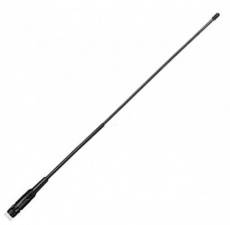
• Type: 1/4 λ
• Frequency: 134-174 MHz
• Gain: 2.15 dB
• Power: 10 Watts
• Impedance: 50 Ohms
• VSWR : 1.5:1 (nominal)
• Length: 0.4m
• Weight: 39 g
• Connector: SMA-male
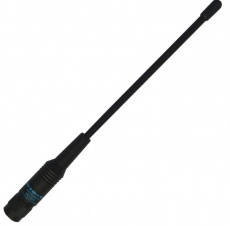
• Type: 1/4 λ
• Frequency: 134-174 MHz
• Gain: 2.15 dB
• Power: 10 Watts
• Impedance: 50 Ohms
• VSWR : 1.5:1 (nominal)
• Length: 0.4m
• Weight: 39 g
• Connector: SMA-female
Diamond VHF handheld radio antenna – main technical characteristics
The Diamond antenna range consists of three VHF handheld radio antennas. All three versions are designed for the 134-174 MHz frequency range, with a documented gain of 2.15 dBi and a maximum transmit power rating of 10 W. The 19 cm version weighs 45 g and features a BNC male connector. Both 40 cm antennas weigh 39 g, but one is equipped with an SMA male connector and the other with an SMA female connector. Differences in connector configuration and physical dimensions are important factors in compatibility with the radio equipment.
Documented specifications of Diamond VHF handheld radio antennas
- Frequency range: 134-174 MHz.
- Antenna gain: 2.15 dBi.
- Maximum transmit power: 10 W.
- Antenna length: 19 or 40 cm.
- Weight: 39 or 45 g.
- Connector: BNC male, SMA male, or SMA female.
- Impedance of the documented 40 cm configuration: 50 ohms.
- VSWR of the documented 40 cm configuration: below 1.5.
These electrical and mechanical specifications allow the different configurations to be compared directly. We recommend checking the exact connector configuration in addition to the operating frequency and maximum power rating.
What frequency range do VHF handheld radio antennas support?
The documented frequency range of the VHF handheld radio antenna is 134-174 MHz. This range includes amateur radio frequencies around 144 MHz, as well as other VHF radio communication frequencies. However, antenna frequency coverage does not automatically mean that the connected radio can transmit throughout the entire range. Transmitting capabilities depend on the technical specifications of the radio equipment and the regulations governing the use of the relevant frequencies.
What does the 134-174 MHz frequency coverage of a Diamond antenna mean?
The 134-174 MHz range indicates the documented frequency limits of the antenna configuration. The 40 cm version is also supplied with a frequency-specific cutting chart that helps determine the required length of the radiating element. Therefore, the specified frequency range must not be interpreted as a guarantee of identical impedance matching across the entire band without adjustment. The actual operating frequency and the manufacturer's adjustment instructions must be considered when selecting and configuring the antenna.
144 MHz antennas and the 2-metre amateur radio band
A 144 MHz antenna can be used with handheld transceivers operating in the 2-metre amateur radio band, provided that the radio's frequency, transmit power, and antenna connector are compatible. The documented 134-174 MHz range of the Diamond VHF antennas includes 144 MHz. However, compatibility between the radio equipment and the antenna cannot be established from frequency alone. The connector type, permitted power, and any required antenna adjustment must also be verified.
Diamond amateur radio antennas for handheld transceivers
Operation in the 2-metre amateur radio band requires a VHF antenna with a suitable connection to the transceiver. The category includes versions with BNC and two different SMA connector configurations. The 10 W maximum antenna power rating is an important limit when connecting these antennas to handheld radios. The actual transmit power of the radio must be checked against the manufacturer's specifications, and the applicable frequency-use requirements must also be observed.
What do 2.15 dBi antenna gain and the 10 W power limit mean?
The documented antenna gain is 2.15 dBi for all three configurations. The dBi unit expresses an antenna's directional radiation characteristics relative to a theoretical isotropic radiator. This value does not mean that the antenna provides active amplification, nor does it independently determine radio communication range. Actual connection performance depends on the radio equipment, surrounding environment, antenna position, and radio-frequency impedance matching.
Why is the 10 W power limit important for Diamond VHF antennas?
The 10 W maximum power rating specifies the upper limit of the antenna's permitted RF power handling. The connected transceiver must not exceed this value. Compatibility with a higher-power radio therefore cannot be determined solely by matching frequency bands. We recommend comparing the radio's output power with the antenna's permitted maximum power rating in every case.
Diamond VHF whip antennas: 19 cm and 40 cm configurations
The physical dimensions of a VHF whip antenna determine how much space it occupies when attached to a handheld radio. The 19 cm version has a shorter design, weighs 45 g, and features a BNC male connector. The 40 cm configurations weigh 39 g and are equipped with SMA connectors. All three antennas have a documented gain of 2.15 dBi, so the difference in length does not, by itself, indicate a difference in specified gain. Installation space, connector compatibility, and operating frequency are the primary selection criteria.
What are the advantages and limitations of a shorter VHF antenna?
- 19 cm configuration: smaller physical dimensions and BNC connection.
- 40 cm configuration: longer radiating element, available with SMA male or SMA female connectors.
- Antenna weight: 45 g for the shorter version and 39 g for the longer configurations.
- Documented gain: 2.15 dBi for all three versions.
- Compatibility limitation: the different connector types are not directly interchangeable.
A more compact antenna may make the handheld radio easier to accommodate, but antenna selection should not be based on length alone. Mechanical and electrical compatibility must be evaluated together.
SMA or BNC connector: which one fits your handheld radio?
The antenna connector provides the direct RF connection between the handheld transceiver and the antenna. The Diamond VHF range includes BNC male, SMA male, and SMA female connectors. BNC and SMA are different connector systems, while SMA male and SMA female refer to different mating configurations. To select the correct version, the exact type and configuration of the radio's antenna connector must be checked.
How should you select the correct SMA connector?
Distinguishing between male and female configurations is essential when selecting an SMA connector. The 40 cm antennas are available in both versions, allowing the configuration to be matched to the corresponding connector on the radio. It is not sufficient to check only whether the device uses an SMA connector system. The connector gender must also be compatible with the required mechanical connection.
Diamond VHF handheld radio antenna with BNC connector
The version equipped with a BNC connector is 19 cm long and weighs 45 g. The BNC connection differs from the threaded SMA system and can therefore be connected directly only to a compatible BNC mating connector. When an adapter is used, its RF compatibility and mechanical fit must be checked separately. We recommend selecting an antenna with a directly compatible connector whenever the appropriate configuration is available for the radio.
Antenna impedance, VSWR, and frequency-specific adjustment
The detailed documentation for the 40 cm configuration specifies an antenna impedance of 50 ohms and a VSWR below 1.5. A nominal impedance of 50 ohms is common in VHF radio equipment. VSWR, or Voltage Standing Wave Ratio, is one of the parameters used to evaluate impedance matching in an RF system. For applications within the 134-174 MHz range, the antenna must be checked and, where necessary, adjusted for the intended operating frequency.
What is the purpose of the Diamond VHF antenna cutting chart?
The technical documentation for the 40 cm antenna includes a frequency-specific cutting chart. The chart indicates the required radiating element length for the intended frequency, helping users adjust the antenna to the appropriate dimensions. Shortening the radiating element is a permanent modification, so the operating frequency must be determined accurately before cutting. After adjustment, antenna matching should be verified using suitable measuring equipment.
What are receive-only frequencies used for?
The documented additional receiving frequencies of the VHF whip antenna include 120, 150, 300, 450, 800, and 900 MHz. These frequencies are identified in the technical documentation for receive-only applications. This designation does not mean that the antenna is suitable for transmission on all the listed frequencies. Receiving capabilities must be considered together with the frequency coverage of the connected radio or communications receiver.
Why must transmitting and receiving frequencies be distinguished?
The transmitting and receiving characteristics of an amateur radio antenna do not necessarily cover identical frequency ranges. An antenna may be suitable for receiving signals on certain frequencies without having documented transmitting capabilities at those frequencies. Transmitting suitability must therefore not be assumed for frequencies designated as receive-only. Before use, the radio equipment's operating range, antenna specifications, and applicable frequency-use regulations must all be checked.
How should you select the right Diamond VHF handheld radio antenna?
When selecting a Diamond VHF handheld radio antenna, the first step is to identify the radio's operating frequency and antenna connector. Next, verify that the radio's transmit power does not exceed the antenna's 10 W power-handling limit. Antenna length, weight, and any frequency-specific adjustment requirements should then be considered. Alongside the documented 2.15 dBi gain, these characteristics determine which configuration is compatible with the intended application.
Diamond VHF handheld antenna selection checklist
- The radio's operating frequency within the 134-174 MHz range.
- The radio's maximum transmit power, respecting the antenna's 10 W limit.
- Selection of BNC male, SMA male, or SMA female connectors.
- Antenna length of 19 or 40 cm.
- Antenna weight of 39 or 45 g.
- Documented gain of 2.15 dBi.
- 50-ohm impedance and VSWR below 1.5 for the documented 40 cm configuration.
- Use of the frequency-specific cutting chart where required.
- Separation of additional receive-only frequencies from transmitting frequencies.
We recommend checking complete electrical and mechanical compatibility rather than selecting an antenna solely on the basis of its frequency range or connector type.
FAQ – Diamond VHF handheld radio antennas
- What frequency range do Diamond VHF handheld radio antennas support?
The documented frequency range is 134-174 MHz. - What is the antenna gain?
All three configurations have a documented gain of 2.15 dBi. - What is the maximum transmit power?
The permitted maximum transmit power is 10 W. - What antenna lengths are available?
The range includes 19 cm and 40 cm versions. - Which connectors are available?
BNC male, SMA male, and SMA female configurations are available. - How much do the antennas weigh?
The 19 cm version weighs 45 g, while the 40 cm configurations weigh 39 g. - What is the antenna impedance?
The detailed documentation specifies an impedance of 50 ohms for the 40 cm configuration. - What does a VSWR below 1.5 mean?
It is a documented value for the 40 cm configuration that describes radio-frequency impedance matching. - Does the antenna need to be cut to the required length?
The 40 cm configuration includes a frequency-specific cutting chart to help determine the required radiating element length for the intended operating frequency. - Can these antennas transmit on 800 or 900 MHz?
The relevant technical documentation specifies these frequencies for reception only.
Summary
The Diamond VHF handheld radio antenna category includes whip antennas with different lengths and connector configurations for VHF radio communication in the 134-174 MHz range. The 19 cm and 40 cm versions all have a documented gain of 2.15 dBi and a maximum transmit power rating of 10 W. BNC and SMA connector compatibility, 50-ohm impedance, VSWR, and frequency-specific adjustment requirements are important selection criteria. Choosing the appropriate antenna requires checking the radio's operating frequency, connector type, transmit power, and required mechanical configuration together.