

- Special Offers
- Transceiver Radio
- Transceiver Accessory
- Antennas
- HF Antennas
- CB Antennas
- VHF Antennas
- Airband Antennas
- Marine Antennas
- UHF Antennas
- TETRA Antennas
- Sirio TETRA Vehicle Antenna
- Sirio TETRA Base Antenna
- Panorama Antennas Tetra Automotive Antenna
- Panorama Antennas Tetra Base Antenna
- 2J Tetra Vehicle Antenna
- Sure Antennas Tetra Vehicle Antenna
- Hansch Tetra Vehicle Antenna
- Multiband Antennas up to 500Mhz
- LoRa Antennas
- GSM Antennas
- WiFi Antennas
- Multiband Antennas from 500Mhz
- GPS Antennas
- Vehicle Antennas
- TV Antennas
- Parabola Antennas
- Radio Broadcast Antennas
- Antenna Accessory
- Fiber Optics
- Cable
- Connector
- Installation Material
- Installation Tools
- Measuring Equipement
- Body Worn Camera
- Electrosmog
- Telephone
- Baby Monitor
- Fever Thermometer
- Radio Device
- Set-top Boxes
- Personal Protective Equipment
- Motorcycle Helmet Speaker
- Car Equipment
- Voltage Converter
- Dry Cell
- Battery
- Battery Charger
- Emergency Signal
- Amber Signal
- Sound Signal
- Light and Sound Signal Accessory
- Traffic Engineering
- LED Lamp
- Smart Home
- Mosquito Repellent Device
- Market - Other Products
- Discontinued Products
Pre-order (1)
Sirio TETRA Vehicle Antenna
The Sirio TETRA vehicle antenna category includes vehicle antennas designed for UHF and TETRA radio communication above 380 MHz. The documented frequency ranges are 380-400 MHz and 380-430 MHz, the impedance is 50 ohm, and the radiation pattern is 360-degree omnidirectional. The category includes different antenna constructions, gain values, and maximum power ratings, so the operating frequency of the radio, SWR, power handling, cable, and connector configuration should all be checked during selection. Read more...
Pre-order (1)
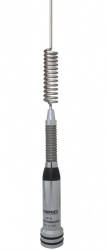
• Type: 1/4 λ + 1/28 λ colinear
• Frequency range: tunable 380-400 MHz @ SWR ≤ 1.5
• Impedance: 50Ω
• Radiation (H-plane): 360° omnidirectional
• Polarization: linear vertical
• Gain: 2.8 dB ref. to a λ /4 whip
• Max. Power (CW) @ 30°C: 200 Watts
• Grounding protection: All metal part are DC-grounded, the inner conductor is coupled capacitively
• Connector: UHF-male (PL 259)

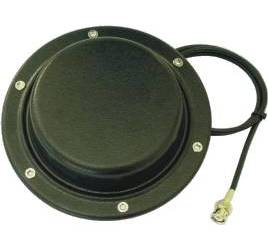
• Frequency range: tunable 380-430 MHz
• Impedance: 50Ω
• Radiation (H-plane): 360° omnidirectional
• Radiation (E-plane): beamwidth @ -3 dB= 78°
• Polarization: linear vertical
• Gain: 2 dBi (0 dB ref. to a λ/4 whip) @ resonant freq
• Max. Power (CW) @ 30°C: 100 Watts
• Grounding protection: All metal part are DC-grounded, the inner conductor is coupled capacitively
• Cable Length / Type: 1 m / RG 58 C/U
• Connector: BNC-male
Sirio TETRA vehicle antenna - main technical characteristics
The documented antenna designs in the category include a 1/4 lambda + 1/2 lambda colinear configuration as well as a low-profile version. One solution operates in the 380-400 MHz frequency range, while the other is adjustable between 380-430 MHz. Both are specified with 50 ohm impedance and a 360-degree omnidirectional radiation pattern.
What frequency range does the TETRA antenna operate in?
When selecting a TETRA antenna, the actual operating frequency of the radio should first be compared with the frequency range of the antenna. The category includes one antenna for 380-400 MHz and another adjustable version for 380-430 MHz. The wider-range configuration therefore covers a broader frequency range, while the other solution is specified for the narrower 380-400 MHz range.
Sirio antenna with 50 ohm impedance and omnidirectional radiation
The documented Sirio antenna configurations have 50 ohm impedance and a 360-degree omnidirectional radiation pattern. The SWR is no more than 1.5 for both designs. These electrical parameters can be directly compared with the requirements of the radio equipment installed in the vehicle.
What gain and power ratings are available?
The documented antenna gain differs within the category. One design is specified with 2.8 dB gain, referenced to a quarter-wave whip antenna. The other configuration has a gain of 2 dBi. Maximum power also differs, with documented values of 200 W and 100 W.
UHF antenna with different power handling
- Frequency range: 380-400 MHz or 380-430 MHz.
- Impedance: 50 ohm.
- Radiation pattern: 360-degree omnidirectional.
- SWR: maximum 1.5.
- Gain: 2.8 dB or 2 dBi.
- Maximum power: 200 W or 100 W.
The power and gain values should always be considered together with the corresponding antenna design. Not every technical parameter is common to all antennas in the category, so the complete configuration should be compared with the specifications of the radio equipment.
TETRA radio system and mobile radio communication in vehicles
For a vehicle-mounted TETRA radio system, the frequency range, impedance, and SWR should be checked together with the mechanical design. The category includes both a conventional colinear structure and a low-profile version. The documented materials of the low-profile antenna include UV-resistant plastic, aluminium, and copper.
Which cable and antenna connector may be supplied with the vehicle antenna?
One documented configuration includes a 1 m RG-58 coaxial cable fitted with a BNC male connector. During installation planning, the cable and antenna connector can be directly compared with the radio connection and the available cable routing. The category page does not specify the same cable and connector details for the other antenna, so this characteristic cannot be generalized to the entire category.
What should be checked when selecting a TETRA vehicle antenna?
We recommend first checking the frequency range and 50 ohm impedance when selecting a Sirio TETRA vehicle antenna, followed by the SWR, gain, and maximum power ratings. The physical antenna design may also be important depending on the available installation space in the vehicle.
Sirio vehicle antenna selection checklist
- 380-400 MHz or 380-430 MHz frequency range.
- 50 ohm impedance.
- 360-degree omnidirectional radiation pattern.
- Maximum SWR of 1.5.
- Documented gain of 2.8 dB or 2 dBi.
- Maximum power of 100 W or 200 W.
- Colinear or low-profile antenna design.
- RG-58 cable and BNC male connector where included in the configuration.
In addition to antenna mounting, cabling, and connection, the electrical requirements of the radio system should also be considered. Several technical parameters differ between the two antenna designs in the category, so a single common power, gain, or cable specification should not be applied to every version.
FAQ - Sirio TETRA vehicle antennas
- Which frequency ranges are available?
The documented frequency ranges are 380-400 MHz and 380-430 MHz. - What is the impedance of the antennas?
Both documented configurations have an impedance of 50 ohm. - What radiation pattern is used?
The antennas in the category have a 360-degree omnidirectional radiation pattern. - What is the SWR?
The documented SWR is no more than 1.5. - What maximum power ratings are available?
Depending on the antenna design, the maximum power is 100 W or 200 W. - Is there a version supplied with RG-58 cable?
Yes. One configuration is specified with a 1 m RG-58 coaxial cable and a BNC male connector.
Summary
The Sirio TETRA vehicle antenna category includes different antenna configurations for TETRA and UHF vehicle communication between 380 and 430 MHz. The documented solutions have 50 ohm impedance, a 360-degree omnidirectional radiation pattern, and a maximum SWR of 1.5. When selecting the appropriate antenna, the frequency range, gain, maximum power, antenna construction, and the cable and connector details of the relevant configuration should all be checked.