

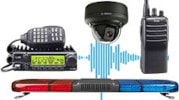
Panorama Antennas Tetra Automotive Antenna
The Panorama Antennas TETRA vehicle antenna category includes antennas designed for various vehicle-based TETRA and UHF radio communication applications. The documented frequency ranges include 380-400 MHz, 380-410 MHz, 410-430 MHz, and 380-430 MHz. The range includes internal glass-mounted, windscreen-mounted, bumper-mounted, and combined TETRA and GPS/GNSS antenna configurations. When selecting the appropriate antenna, the operating frequency of the radio, impedance, gain, VSWR, maximum RF input power, mounting method, cable, and connector configuration should all be checked. Read more...
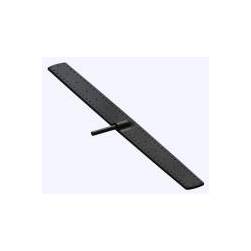
• Type: Internal glass mount TETRA antenna
• Frequency range @ SWR ≤1.5: 380-400 MHz
• Impedance: 50Ω
• Pattern: omni-directional
• Polarization: vertical
• Gain: 2 dBi
• Maximum input RF power: 20W
• Dimensions: 217 x 19 x 2.5 mm
• Cable length / type: 3 m SR-35 with BNC-male


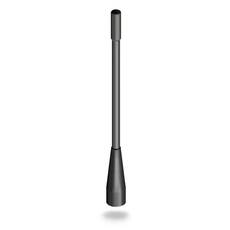
• Frequency Range: 380-430MHz
• Impedance: 50Ω
• Max Input Power: 100 W
• Gain: Isotropic: 2dBi
• UHF frequency
• Tuned Band Reference: TET
• Polarisation: vertical
• Colour: Black
• Length: 154 mm

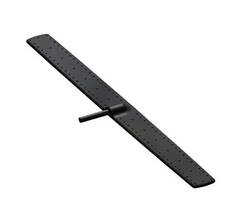
• Frequency range: 380-410MHz
• Impedance: 50Ω
• Maximum input power: 20W
• FME socket
• Gain: 0 dBd, 2 dBi
• Mounting: internal glass
• Bandwidth 2:1 VSWR at 10%
• Cable type: RG174
• Cable dimensions: 2.8 mm (diameter) x 3 m (length)
• Dimensions: 217 mm (length) x 19 mm (width) x 2.5 mm (thickness)
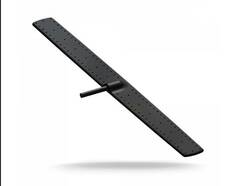
• Frequency range: 380-400MHz
• Maximum input power: 20W
• Impedance: 50Ω
• Mounting: on glass
• Dimensions: 217 mm (length) x 19 mm (width) x 6.5 mm (depth)
• Cable type: 2.8 mm (diameter) x 5 m (length) RG174 cable
• Connector: BNC connector 5m
• Polarization: vertical
• Typical VSWR <2:1
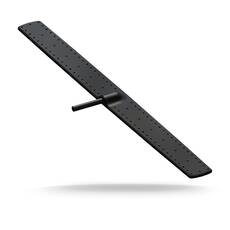
• Frequency range: 380-400MHz
• Maximum input power: 20W
• Impedance: 50Ω
• Mounting: on glass
• Dimensions: 217 mm (length) x 19 mm (width) x 6.5 mm (depth)
• Cable type: 2.8 mm (diameter) x 3 m (length) RG174 cable
• Connector: FME (fitted) 3m
• Polarization: vertical
• Typical VSWR <2:1
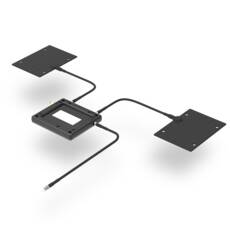
• Frequency Range: 380-400 Mhz
• Operational Band: S1
• Peak Gain: 0dBi
• Typical VSWR: <3:1
• Polarisation: Vertical
• Pattern: Omni-directional
• Impedance: 50 Ω
• Max Input Power: 15W
• Includes a 10-meter cable with an FME connector

• Frequency Range: 410-430 Mhz
• Operational Band: S1
• Peak Gain: 0dBi
• Typical VSWR: <3:1
• Polarisation: Vertical
• Pattern: Omni-directional
• Impedance: 50 ohm
• Max Input Power: 15W
• Includes a 10-meter cable with an FME connector
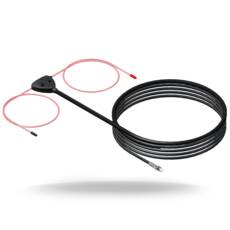
• Frequency range: 380-400 MHz
• Designed for covert applications
• Gain: 2 dBi
• Impedance: 50 ohms
• Max. power: 100 W
• Cable length: 5 m
• Connector: FME
• Bandwidth: approx. 8% (after tuning)
• Radiation pattern: omnidirectional
• Frequency range: 410-430 MHz
• Designed for covert applications
• Gain: 2 dBi
• Impedance: 50 ohms
• Max. power: 100 W
• Cable length: 5 m
• Connector: FME
• Bandwidth: approx. 8% (after tuning)
• Radiation pattern: omnidirectional
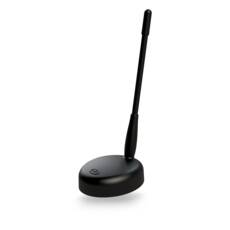
• UHF frequency: 380-430 MHz (TETRA)
• GPS/GNSS frequency: 1559-1612 MHz
• UHF gain: 2 dBi
• GPS gain (LNA): 26-30 dB
• Polarization: UHF: vertical, GPS: circularly polarized (RHCP)
• Impedance: 50 ohms
• Supply voltage: 3-7 V DC (via coax)
• Max. power: 25 W
• Cable: RG174, with BNC and SMA connectors
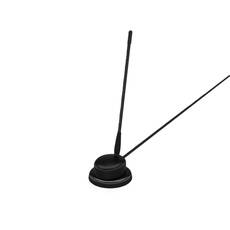
• UHF frequency: 380-430 MHz (TETRA)
• GPS/GNSS frequency: 1559-1612 MHz
• GPS gain (LNA): 30 dB
• Polarization: UHF: vertical, GPS: circularly polarized (RHCP)
• Impedance: 50 ohms
• Supply voltage: 3-5 V DC (via coax)
• Max. power: 25 W
• Cable: RG174 (3m), with BNC and SMA connectors
• Applications: TETRA and UHF radio systems, vehicle tracking and fleet management. Law enforcement and public service vehicles, taxi, bus, and logistics fleets, as well as industrial and utility applications
Panorama Antennas TETRA vehicle antenna - technical characteristics and application areas
The documented impedance of the antennas in the category is 50 ohm, while the polarization of the TETRA/UHF section is vertical. Several configurations specify a non-directional or omnidirectional radiation pattern. Depending on the design, the documented antenna gain can be 0 dBi or 2 dBi, while maximum RF input power ratings of 15 W, 20 W, 25 W, and 100 W are available. These values cannot be applied to every configuration, so the requirements of the radio system should always be compared with the parameters of the selected antenna.
Which frequency ranges are covered by TETRA antennas?
The documented TETRA and UHF frequency ranges include several configurations. Antennas are available for 380-400 MHz, 380-410 MHz, and 410-430 MHz, as well as versions specified for the complete 380-430 MHz range. This allows the antenna to be selected according to the actual operating frequency of the radio. Some versions specify 10 percent bandwidth at 2:1 VSWR, while other configurations provide approximately 8 percent bandwidth after tuning.
TETRA radio system and UHF antenna for vehicle communication
The vehicle-mounted TETRA antenna range includes solutions for TETRA and UHF radio systems. Documented applications include law enforcement and public service vehicles, taxi, bus, and logistics fleets, as well as industrial and utility applications. In combined antenna configurations, the radio communication function can be complemented by GPS/GNSS connectivity for vehicle tracking and fleet management.
Which antenna mounting options are available for vehicles?
The Panorama Antennas TETRA vehicle antenna range includes several installation methods. The category contains antennas designed for adhesive mounting on internal glass, windscreen installation, and internal glass mounting. Bumper-mounted antennas for concealed installation are also included. Mechanical design is therefore an important selection criterion in addition to the operating frequency range.
Panorama Antennas vehicle antenna with glass and bumper mounting
- Adhesive internal glass-mounted antenna
- Windscreen-mounted antenna
- Internal glass mounting configuration
- Bumper-mounted TETRA antenna
- Configuration designed for concealed installations
Among the internal glass and windscreen-mounted antennas, documented dimensions include versions with a length of 217 mm and width of 19 mm, with a thickness or depth of 2.5 mm or 6.5 mm. Bumper-mounted antennas use different cable lengths and RF power ratings, so the installation method should always be evaluated together with the technical design of the selected antenna.
Panorama Antennas vehicle antenna - gain, impedance, and polarization
The documented impedance of the TETRA/UHF antennas in the category is 50 ohm. Polarization is vertical, while gain values of 0 dBi or 2 dBi are specified for several configurations. Some versions specify 0 dBd - 2 dBi. Typical VSWR can be below 2:1 or below 3:1, depending on the design. Maximum input power also varies, with 15 W, 20 W, 25 W, and 100 W options documented within the category.
Which cable and RF connector can be used with a TETRA antenna?
Several cabling configurations are documented. These include RG174 coaxial cable with lengths of 3 m or 5 m, while some bumper-mounted antennas are specified with a 10 m cable. Connector options include BNC male and FME female. Combined TETRA and GPS/GNSS antennas may use BNC and SMA connectors together.
When may a combined TETRA and GPS/GNSS antenna be required?
Combined antennas in the category can integrate TETRA/UHF and GPS/GNSS functions in a single housing. The documented UHF frequency range is 380-430 MHz, while the GPS/GNSS frequency range is 1559-1612 MHz. The UHF section uses vertical polarization, while the GPS section uses RHCP circular polarization. Depending on the configuration, GPS LNA gain can be 26-30 dB or 30 dB.
Panorama Antennas combined TETRA and GPS/GNSS vehicle antenna
In combined configurations, the GPS/GNSS section receives its supply voltage through the coaxial cable. The documented supply voltage range can be 3-7 V DC or 3-5 V DC. The maximum power of the TETRA/UHF section is 25 W, while the impedance is 50 ohm. RG174 cabling is used, and the connector configuration can include BNC and SMA connectors. Documented applications of these antennas include vehicle tracking and fleet management.
What should be checked when selecting a TETRA vehicle antenna?
We recommend selecting the antenna by comparing the complete technical configuration of the radio system and the antenna. The TETRA designation alone does not determine the appropriate antenna because several frequency ranges, power ratings, gain values, VSWR values, cable lengths, and mounting methods are available within the category.
Panorama Antennas TETRA antenna selection checklist
- 380-400 MHz, 380-410 MHz, 410-430 MHz, or 380-430 MHz frequency range
- 50 ohm impedance
- Vertical polarization
- 0 dBi or 2 dBi documented gain
- VSWR specified for the selected configuration
- 15 W, 20 W, 25 W, or 100 W maximum input power
- Internal glass, windscreen, or bumper mounting
- RG174 cable or the cabling specified for the selected configuration
- BNC, FME, or SMA connection for combined configurations
- Requirement for GPS/GNSS functionality in combined antennas
The technical parameters vary between antenna configurations. For this reason, a single gain, power, VSWR, or cable specification cannot be applied to every antenna in the category.
FAQ - Panorama Antennas TETRA vehicle antennas
- Which frequency ranges are available for TETRA antennas?
The documented frequency ranges include 380-400 MHz, 380-410 MHz, 410-430 MHz, and 380-430 MHz. - What is the impedance of the TETRA antennas?
The documented impedance of the antennas in the category is 50 ohm. - What polarization is used?
The documented polarization of the TETRA/UHF antennas is vertical. - Are windscreen-mounted TETRA antennas available?
Yes. The category includes antennas designed for internal glass and windscreen mounting. - Are bumper-mounted TETRA antennas available?
Yes. Bumper-mounted antenna configurations are also included in the category. - Are combined TETRA and GPS/GNSS vehicle antennas available?
Yes. Documented combined configurations integrate 380-430 MHz TETRA/UHF with 1559-1612 MHz GPS/GNSS functionality. - Which RF connectors are available?
The documented configurations include BNC and FME connectors, while combined antennas may also use SMA connectors.
Summary
The Panorama Antennas TETRA vehicle antenna category includes antenna configurations for different TETRA and UHF frequency ranges, mounting methods, and vehicle communication applications. The range includes internal glass-mounted, windscreen-mounted, and bumper-mounted solutions, as well as combined TETRA and GPS/GNSS antennas. To select the appropriate antenna, the frequency range, 50 ohm impedance, gain, VSWR, maximum RF input power, cabling, connector type, and mounting method should all be checked.