

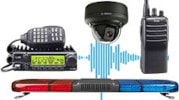
Icom Two-Way Radio Repeater
The Icom VHF/UHF repeater is designed for professional VHF and UHF radio communication systems and supports analogue FM and IDAS digital operation. The category includes 136-174 MHz VHF and 400-470 MHz UHF versions, standalone RF channel modules and a RoIP gateway for IP network integration. The repeaters support 32 programmable channels, mixed digital and analogue operation, CTCSS, DTCS and RAN code handling, as well as optional Simulcast Conventional, Multi-site Conventional and Type-D Trunking system functions. Read more...

• 19-inch rack-mountable, 2 unit high design with display
• Space for additional RF channel module
• Programmable between 136-174 MHz
• IDAS digital and analogue mixed mode
• 32 programmable channels, 5 programmable buttons
• Maximum 25W RF output power
• Upgradeable with optional control cards (Simulcast Conventional, Multi-site Conventional, Single site Trunking, Multi-site Trunking)
• Remote access via IP interface via optional UC-FR5300 IP card


• Can also be operated as a stand-alone repeater
• Programmable between 136-174 MHz
• IDAS digital and analogue mixed mode
• 32 programmable channels, 5 programmable buttons
• Maximum 25W RF output power
• Upgradeable with optional control cards (Simulcast Conventional, Multi-site Conventional, Single site Trunking, Multi-site Trunking)
• Remote access via IP interface via optional UC-FR5300 IP card


• 19-inch rack-mountable, 2 unit high design with display
• Space for additional RF channel module
• Programmable between 400-470 MHz
• IDAS digital and analogue mixed mode
• 32 programmable channels, 5 programmable buttons
• Maximum 25W RF output power
• Upgradeable with optional control cards (Simulcast Conventional, Multi-site Conventional, Single site Trunking, Multi-site Trunking)
• Remote access via IP interface via optional UC-FR5300 IP card

• Can also be operated as a stand-alone repeater
• Programmable between 400-470 MHz
• IDAS digital and analogue mixed mode
• 32 programmable channels, 5 programmable buttons
• Maximum 25W RF output power
• Upgradeable with optional control cards (Simulcast Conventional, Multi-site Conventional, Single site Trunking, Multi-site Trunking)
• Remote access via IP interface via optional UC-FR5300 IP card

• Radio over IP Gateway (RoIP)
• Create one system with IP telephones, analogue telephones and two-way radios
• Site-to-site and site-to-multisite radiocommunication
• Connect you radionetworks together even though they are on different locations
• Analogue and digital radios can be interconnected
• Audio in / out interfaces on the back
• RC-FS10 dispatcher software can be connected
• Connect external device (signal-lamp, gate-opener, etc)
• Supplied accessories: BC-236 AC adapter, antenna, antenna connector
Icom VHF/UHF repeater for professional radio communication systems
The VHF version of the Icom repeater can be programmed from 136-174 MHz, while the European UHF version covers 400-470 MHz. The system supports both IDAS digital and analogue FM communication, allowing analogue and digital signals to be received on the same programmed channel and retransmitted in the appropriate mode according to the configuration. The device provides 32 memory channels and one zone.
How does the IDAS system operate in analogue and digital mixed mode?
The IDAS system provides digital radio communication based on NXDN technology. Mixed Mode allows the repeater to receive both analogue FM and digital IDAS calls on the same programmed channel. The system can decode multiple CTCSS and DTCS tones per channel, as well as digital RAN, or Radio Access Number, codes. Up to 16 tones or codes can be assigned to one channel.
VHF and UHF repeater with 32 programmable channels
The radio repeater features a 12-character alphanumeric display, 5 programmable control buttons, 32 memory channels and an internal speaker. The display can show text and code information, allowing repeater activity to be checked directly from the front panel. The controls and internal speaker also allow the unit to be used as a simple base station when configured accordingly.
What RF output power and duty cycle are available?
The documented RF power levels for the European version are 25 W, 10 W and 5.8 W. The 25 W setting supports a 100 percent duty cycle at an ambient temperature of 25 C. Versions for other markets also specify a 50 W setting with a 50 percent duty cycle. With an optional external power amplifier, 50 W at a 100 percent duty cycle or 100 W at a 50 percent duty cycle can also be configured, depending on the amplifier used.
Two RF channel modules in one 19-inch 2U chassis
The 19-inch rack-mountable 2U chassis includes space for an additional RF channel module. Two RF modules can be installed in one chassis and operated independently. Front-panel LEDs indicate the status of both channels. The complete repeater measures 483 x 88 x 260 mm and weighs approximately 5.78 kg, while the separate RF module measures 176 x 60 x 194 mm and weighs approximately 2.1 kg.
How can the Icom radio system be expanded to Simulcast and Multi-site operation?
With the optional network and control board, a standalone site can be expanded to Simulcast Conventional, Multi-site Conventional, Single-site Trunking or Multi-site Trunking configurations. Digital simulcast operation can also use a GNSS reference signal. Compatible IDAS radio terminals are required for multi-site trunking systems. The appropriate control board and software are required for the selected system function.
IP-based repeater system with remote programming and monitoring
With the optional network control board, the repeater can be connected to an IP network. Remote PC programming and IP address configuration can then be performed through the network. The system can also transmit SNMP trap and Syslog information for network monitoring. Remote access is therefore not a standard function and depends on the optional IP control board.
CTCSS, DTCS and RAN code handling in the Icom repeater
CTCSS and DTCS can be used in analogue operation, while RAN codes are used for digital IDAS communication. The repeater recognises the programmed tone or code associated with an incoming signal and retransmits the communication with the tone or code defined by the system configuration. Analogue functions also include a 5-Tone decoder and DTMF encoder and decoder.
How can the VHF/UHF repeater be used as a base station?
The built-in speaker, alphanumeric display and programmable controls also allow simple local base-station operation. PTT priority can be programmed for the local microphone, external PTT or repeater operation. The unit also includes a CW ID transmitter, low supply voltage alarm and receiver voting function. Optional remote communicator software can connect to the repeater as a basic dispatcher station.
D-SUB connection, external control and dispatcher communication
A programmable 25-pin D-SUB connector is provided on the rear panel for external control devices. Modulation and demodulation signals can also be routed through this connector. The system provides interfaces for an external speaker, DC power supply, separate transmit and receive antennas, as well as optional Ethernet and GNSS connections.
RoIP gateway and multi-site radio communication
The RoIP gateway can establish communication between radios, WLAN radios and IP telephones over an IP network. It can be used to connect analogue and digital radio systems and supports site-to-site and site-to-multisite communication. Dispatcher software, external signalling or control equipment and USB storage can also be connected to the system. Radio and telephone communication audio can be recorded to a USB storage device.
What network functions does the RoIP system provide?
The RoIP gateway includes integrated RoIP, SIP gateway, IP router, IP PBX and IP communication terminal controller functions. Up to 50 WLAN radios or remote communicators and 25 IP telephones can be registered in the system. SNMP network monitoring, IP address filtering and automatic 10BASE-T, 100BASE-TX and 1000BASE-T Ethernet connectivity are also supported.
Antenna, 50 ohm matching, power supply and rack installation
The repeater is designed for a 50 ohm antenna system and uses separate TX and RX antenna connections. The nominal supply voltage of the European version is 13.2 V DC, while current consumption during transmission at 25 W is approximately 8 A maximum. The documented European operating temperature range is -25 to +55 C. The 19-inch 2U design allows installation in a rack cabinet.
Which radio licensing and programming requirements should be considered?
The Icom VHF/UHF repeater operates on professional VHF or UHF frequencies, so operation may require frequency assignment, a radio licence and appropriate programming. We recommend first determining the required VHF or UHF frequency band, analogue or IDAS digital operation and the required system architecture. The IP control board, second RF module and any RoIP system connection can then be selected accordingly.
What are the advantages and limitations of the Icom VHF/UHF repeater system?
- Advantage: available in VHF and UHF versions with IDAS digital and analogue mixed-mode operation.
- Advantage: 32 memory channels with CTCSS, DTCS and digital RAN code handling.
- Advantage: two independent RF channel modules can be operated in one chassis.
- Advantage: optional IP control enables Simulcast, Multi-site and trunking system functions.
- Limitation: IP networking and multi-site functions require optional control hardware and the appropriate software.
- Limitation: operation on professional VHF/UHF frequencies may be subject to licensing and programming requirements.
The system configuration should therefore be determined according to the frequency band, required number of channels, duty cycle, IP networking requirements and number of sites.
Frequently asked questions about Icom VHF/UHF repeater systems
- Which frequency bands are available?
The VHF version can be programmed from 136-174 MHz, while the European UHF version covers 400-470 MHz. - Can it be used with analogue and digital radios?
Yes. The repeater supports analogue FM and IDAS digital mixed-mode operation. - How many channels can be programmed?
The system supports 32 memory channels and 5 programmable front-panel buttons. - Can it be used for continuous transmission?
In the documented European configuration, a 100 percent duty cycle is supported at 25 W RF output under the specified ambient conditions. - Can two RF modules be installed in one chassis?
Yes. A second VHF or UHF RF channel module can be installed in the chassis, and the two modules can operate independently. - Is remote IP monitoring available?
Yes. With the optional network control board, remote programming, IP address configuration, SNMP trap and Syslog monitoring are available.
When designing the complete system, the repeater, antenna system, power supply, duplexer or separate TX/RX antennas, network control and licensing requirements must all be considered separately.
Summary for selecting an Icom VHF/UHF repeater
We recommend starting the selection of an Icom VHF/UHF repeater by determining whether the required frequency range is 136-174 MHz VHF or 400-470 MHz UHF. Next, decide whether IDAS digital and analogue mixed operation, a second RF channel module, 25 W continuous operation, IP-based remote monitoring, Simulcast or Multi-site operation, or a RoIP gateway is required. The category can therefore be expanded from a standalone single-channel repeater to a network-connected multi-site radio communication infrastructure.