

Diamond Handheld UHF Antenna
The Diamond UHF handheld radio antenna category includes antennas designed for handheld transceivers, adjustable for frequencies between 350 and 520 MHz. The range includes 19 cm and 20 cm configurations with BNC male, SMA male, and SMA female connectors. The antennas have a documented gain of 2.15 dBi, a maximum transmit power rating of 10 W, and weights ranging from 27 to 45 g. When selecting the appropriate configuration, the operating frequency, connector type, antenna dimensions, and frequency-specific adjustment requirements must all be checked. Read more...
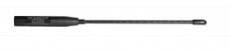
• Type: 1/4 λ, 120/150/300/450/800/900MHz receiving only
• Frequency: 350-520 MHz
• Gain: 2.15 dB
• Power: 10 Watts
• Impedance: 50 Ohms
• VSWR : 1.5:1 (nominal)
• Length: 0.19m
• Weight: 45 g
• Connector: BNC-male


• Type: 1/4 λ
• Frequency: 350-520 MHz
• Gain: 2.15 dB
• Power: 10 Watts
• Impedance: 50 Ohms
• VSWR : 1.5:1 (nominal)
• Length: 0.2m
• Weight: 27 g
• Connector: SMA-male
• Type: 1/4 λ
• Frequency: 350-520 MHz
• Gain: 2.15 dB
• Power: 10 Watts
• Impedance: 50 Ohms
• VSWR : 1.5:1 (nominal)
• Length: 0.2m
• Weight: 27 g
• Connector: SMA-female
Diamond UHF handheld radio antenna – main technical characteristics
The Diamond antenna range includes three UHF handheld radio antennas with the same basic electrical specifications. The 19 cm version weighs 45 g and features a BNC male connector. The 20 cm configurations weigh 27 g and are equipped with either an SMA male or SMA female connector. All three versions are specified as frequency-adjustable antennas covering 350-520 MHz. The documented maximum power rating of 10 W defines the antennas' RF power-handling capability.
Technical specifications of Diamond UHF handheld radio antennas
- Frequency range: 350-520 MHz, adjustable for the required operating frequency.
- Antenna design: 1/4 Lambda whip antenna.
- Documented gain: 2.15 dBi.
- Maximum input power: 10 W.
- Antenna length: 19 or 20 cm.
- Weight: 27 or 45 g.
- Connectors: BNC male, SMA male, and SMA female.
- Documented impedance: 50 ohms; nominal VSWR: approximately 1.5.
In addition to electrical specifications, the connector configuration of the handheld transceiver is an essential consideration when selecting the appropriate antenna.
What frequency range do UHF handheld radio antennas support?
The documented frequency range of the UHF handheld radio antenna is 350-520 MHz. This designation indicates the potential operating frequencies of the adjustable antenna, rather than guaranteeing identical impedance matching across the entire range without adjustment. The length of the radiating element must be matched to the intended operating frequency. The radio equipment's actual frequency coverage and permitted transmit power must be checked separately.
Why is frequency adjustment important for a 350-520 MHz Diamond antenna?
The electrical length of an antenna is related to its operating frequency. For the documented 1/4 Lambda design, the appropriate radiating element length depends on frequency. The manufacturer's cutting chart can be used to determine the required length for the selected frequency. Shortening the radiator is an irreversible modification, so we recommend carrying out the adjustment using accurate frequency specifications and appropriate measuring equipment.
430 MHz antennas for the 70-centimetre amateur radio band
A 430 MHz antenna can also be selected for handheld transceivers operating on suitable frequencies within the 70-centimetre amateur radio band. The documented 350-520 MHz range includes frequencies around 430 MHz. However, the antenna must be adjusted for the required operating frequency, and the radio's connector and transmit power must also be checked. Antenna frequency coverage does not, by itself, establish permission to transmit.
Diamond amateur radio antennas for UHF handheld transceivers
When operating in the 70-centimetre amateur radio band, proper matching between the radio and antenna is essential. Diamond UHF whip antennas are rated for a maximum transmit power of 10 W. Once correctly selected and adjusted, the antenna can be attached to a compatible handheld transceiver. We recommend verifying frequency, power, and connector compatibility before purchasing.
What do 2.15 dBi antenna gain and the 10 W power limit mean?
The documented antenna gain is 2.15 dBi for all three configurations. The dBi unit expresses antenna gain relative to a theoretical isotropic radiator. This is a passive antenna characteristic, not active signal amplification, and it does not determine a specific communication distance. Radio communication performance also depends on the operating environment, antenna position, and radio equipment specifications. The 10 W power limit represents the maximum permitted RF input power of the antenna.
Why is the maximum transmit power of a UHF antenna important?
The connected radio must not exceed the antenna's 10 W maximum input power rating. Operating within the correct frequency band does not automatically make a higher-power transceiver compatible. The radio's output power must therefore be checked against its technical documentation. Antenna gain and power-handling capability must be treated as separate specifications.
Diamond UHF whip antennas: mechanical design and dimensions
The Diamond UHF whip antenna is available in two lengths. The 19 cm version features a BNC connector and weighs 45 g. The 20 cm SMA configurations both weigh 27 g. Physical dimensions and weight should be considered in relation to the portability of the handheld transceiver and the mechanical load on its antenna connector. Since all three versions have the same documented gain of 2.15 dBi, connector compatibility and the required mechanical configuration are the primary selection criteria.
Should you choose a shorter or longer UHF antenna?
- 19 cm configuration: BNC male connector, 45 g weight.
- 20 cm configuration: SMA male or SMA female connector, 27 g weight.
- Common electrical specifications: adjustable 350-520 MHz frequency range, 2.15 dBi gain, and 10 W maximum power.
- Limitation: the different connector types are not directly interchangeable.
Correct compatibility with the radio's RF connector may be more important than the relatively small difference in antenna length.
SMA or BNC connector: which one is compatible with your handheld radio?
SMA connectors and BNC connectors use different mechanical connection systems. The Diamond UHF range includes BNC male, SMA male, and SMA female configurations. The distinction between SMA male and SMA female is also important: the antenna connector must match the corresponding connector on the radio. Even when the frequency ranges are identical, direct connection is not possible if the connector configurations are incompatible.
How can antenna connector compatibility be verified?
First, identify the antenna connector on the handheld transceiver. Next, select the appropriate BNC or SMA configuration, taking the male or female arrangement into account for SMA connections. If an adapter is used, its mechanical and radio-frequency compatibility must be checked separately. We recommend choosing an antenna with a directly compatible connector whenever possible.
Antenna impedance, VSWR, and frequency-specific adjustment
The documented antenna impedance is 50 ohms. The nominal VSWR is approximately 1.5, while the detailed operating instructions specify a value below 1.5. VSWR, or Voltage Standing Wave Ratio, is a parameter used to assess radio-frequency impedance matching. For a frequency-adjustable antenna, matching should be checked at the intended operating frequency after determining the appropriate radiating element length. Incorrect adjustment may result in an unfavourable VSWR value.
Diamond UHF antenna cutting chart
The documented cutting chart shows the required radiating element length for frequencies within the 350-520 MHz range. As the frequency increases, the required radiator length decreases. The manufacturer's chart should be followed when determining the correct dimensions rather than relying on estimated lengths. After shortening the radiator, the adjustment can be verified using a VSWR meter suitable for the relevant frequency range.
What are receive-only frequencies used for?
The operating instructions for the BNC-equipped UHF antenna also list additional receive-only frequencies: 120, 150, 300, 450, 800, and 900 MHz. These designations do not establish that the antenna is suitable for transmission at those frequencies. Receiving capabilities must be considered together with the actual frequency coverage of the connected radio or communications receiver. Before transmitting, the specified operating frequencies and applicable operating conditions must always be checked.
Diamond UHF handheld radio antenna selection criteria
To select the appropriate Diamond UHF handheld radio antenna, first identify the radio's operating frequency, maximum transmit power, and antenna connector. The next step is to choose between the 19 cm and 20 cm configurations. Any requirement for frequency-specific adjustment must also be considered. In addition to the documented 2.15 dBi gain and 10 W power limit, correct connector compatibility and suitable VSWR are essential selection criteria.
FAQ – Diamond UHF handheld radio antennas
- What frequency range do Diamond UHF antennas support?
The documented adjustable frequency range is 350-520 MHz. - What is the antenna gain?
All three configurations have a documented gain of 2.15 dBi. - What is the maximum transmit power?
The maximum input power rating is 10 W. - What antenna lengths are available?
The range includes 19 cm and 20 cm configurations. - Which connectors are available?
BNC male, SMA male, and SMA female versions can be selected. - What does frequency-specific adjustment mean?
The radiating element is shortened to the required length for the intended operating frequency using the manufacturer's cutting chart. - Can the antenna transmit on 800 or 900 MHz?
The documentation specifies these frequencies for reception only. - What is the antenna impedance?
The documented nominal impedance is 50 ohms.
Summary
The Diamond UHF handheld radio antenna category includes whip antennas that can be adjusted for frequencies between 350 and 520 MHz. The 19 cm and 20 cm versions provide 2.15 dBi gain, a maximum power rating of 10 W, and BNC or SMA connector options. Selecting the appropriate antenna requires checking the operating frequency, connector type, 50-ohm impedance, VSWR, and any necessary frequency-specific adjustment.