

Sirio Airband Base Antenna
The Sirio airband base station antenna category includes antennas designed for the VHF airband around 108-137 MHz. The range includes 1/4 Lambda, wideband 1/4 Lambda, 1/2 Lambda, and 3-element directional yagi configurations. The documented antennas have 50 ohm impedance, while the radiation pattern, gain, SWR, and maximum power vary depending on the antenna design. When selecting the appropriate version, the receive and transmit frequency ranges, antenna construction, radiation direction, and radio power should therefore be checked together. Read more...

• Type: 1/4λ ground plane
• Frequency range: tunable 108-136 MHz
• Impedance: 50Ω
• Radiation (H-plane): 360° omnidirectional
• Radiation (E-plane): beamwidth @ -3 dB = 86°
• Radiation angle: 0°
• Polarization: linear vertical
• Gain: 0 dBd, 2.15 dBi
• Bandwidth @ SWR ≤2: ≥12.2 MHz @ 108 MHz
• SWR @ res. freq.: ≤ 1.2 @ start freq.
• Max. Power (CW) @ 30°C: 500 Watts
• Connector: UHF-female


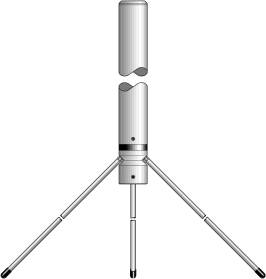
• Type: 1/4λ ground plane large band
• Frequency range: VHF AIR band, RX 108-136MHz, TX 118-136MHz @SWR ≤2
• Impedance: 50Ω
• Radiation (H-plane): 360° omnidirectional
• Radiation (E-plane): beamwidth @ -3 dB = 78°
• Radiation angle: 0°
• Polarization: linear vertical
• Gain: 0 dBd, 2.15 dBi
• Max. Power (CW) @ 30°C: 1000 Watts
• Grounding protection: All metal parts are DC-grounded, the inner conductor shows a DC short
• Connector: N-female
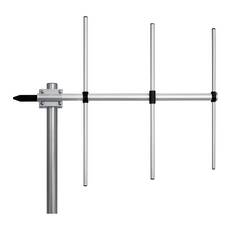
• Type: 3 elements yagi antenna
• Frequency range: 108-118MHz @ SWR ≤1.5, 118-137MHz @ SWR ≤2.0
• Impedance: 50Ω
• Radiation (H-plane): beamwidth @ -3 dB = 150° @ center freq.
• Radiation (E-plane): beamwidth @ -3 dB = 70° @ center freq.
• Front to back ratio: ≥ 12 dB
• Polarization: linear vertical or horizontal
• Gain: 4.85 dBd, 7 dBi
• Max. Power (CW) @ 30°C: 200 Watts
• Grounding protection: All metal parts are DC-grounded, the inner conductor shows a DC short
• Connector: N-female with rubber protection cap
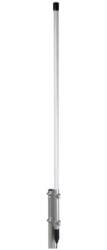
• Type: 1/2λ ground plane
• Frequency range: TX 118-136, RX 108-136 MHz
• Impedance: 50Ω
• Radiation (H-plane): 360° omnidirectional
• Polarization: linear vertical
• Gain: 0 dBd, 2.15 dBi
• Max. Power (CW) @ 30°C: 100 Watts
• Connector: N-female
Sirio airband base station antenna - main technical characteristics
The documented Sirio antenna solutions cover different airband radio communication frequency ranges. The complete 108-136 MHz range is documented, as well as configurations with a receive range of 108-136 MHz and a transmit range of 118-136 MHz. For the directional antenna, the ranges 108-118 MHz and 118-137 MHz are specified with separate SWR values.
What frequency range does the Sirio airband antenna operate in?
The frequency range depends on the antenna design. The 1/4 Lambda version is specified for 108-136 MHz. The wideband 1/4 Lambda antenna has a receive range of 108-136 MHz and a transmit range of 118-136 MHz. The 1/2 Lambda configuration also uses a receive range of 108-136 MHz and a transmit range of 118-136 MHz. The 3-element yagi has separate technical data for 108-118 MHz and 118-137 MHz.
Sirio VHF antenna with 50 ohm impedance
All documented VHF antenna configurations in the category have an impedance of 50 ohm. This applies to the 1/4 Lambda, wideband 1/4 Lambda, 1/2 Lambda, and 3-element yagi designs. When configuring the radio communication system, the 50 ohm impedance can therefore be checked directly against the technical requirements of the connected radio equipment in addition to the frequency range.
Omnidirectional or directional antenna - which designs are available?
The category includes both omnidirectional and directional base station antenna configurations. The 1/4 Lambda, wideband 1/4 Lambda, and 1/2 Lambda versions have a documented 360-degree omnidirectional radiation pattern. The 3-element yagi, by contrast, is a directional antenna with a documented horizontal radiation angle of 150 degrees.
Sirio omnidirectional antenna for airband radio communication
A 360-degree omnidirectional pattern is documented for three different antenna designs. These antennas are specified with 0 dBd, equivalent to 2.15 dBi, gain. The main differences are in construction, receive and transmit frequency ranges, SWR, and maximum power. The omnidirectional designation alone is therefore not sufficient to distinguish the individual antennas technically.
How does the Sirio directional yagi antenna differ?
The documented 3-element yagi configuration has a horizontal radiation angle of 150 degrees. Its gain is 4.85 dBd, equivalent to 7.0 dBi, while the maximum power is 200 W. The specified SWR is maximum 1.5 in the 108-118 MHz range and maximum 2.0 between 118-137 MHz. These parameters distinguish the directional design from the 360-degree omnidirectional versions.
What antenna gain and maximum power ratings are available?
The antenna gain appears at two documented levels depending on construction. The omnidirectional 1/4 Lambda, wideband 1/4 Lambda, and 1/2 Lambda versions are specified with 0 dBd, equivalent to 2.15 dBi. The 3-element directional yagi is specified with 4.85 dBd, equivalent to 7.0 dBi. Maximum power can be 100 W, 200 W, 500 W, or 1000 W depending on the antenna design.
Sirio base station antenna power and SWR data
- 1/4 Lambda configuration: 500 W maximum power.
- Wideband 1/4 Lambda configuration: 1000 W maximum power, maximum SWR 2.
- 3-element yagi: 200 W maximum power.
- 1/2 Lambda configuration: 100 W maximum power.
- The documented SWR of the 1/4 Lambda configuration is maximum 1.2.
Maximum power and SWR are not identical for all antennas. These values should therefore always be considered together with the frequency range and gain specified for the selected antenna design.
Fixed-mount antenna for airband radio communication
The fixed-mount antenna solutions in the category cover the documented VHF airband frequency ranges with different constructions. The range does not consist of a single electrical design: in addition to operation across 108-136 MHz, there are antennas with separate transmit and receive ranges. For the directional yagi, the frequency range is divided into two sections with different SWR limits.
What should be checked when selecting a Sirio airband antenna?
We recommend first determining the required receive and transmit frequency ranges. Then check the 50 ohm impedance, antenna construction, omnidirectional or directional radiation pattern, gain, SWR, and maximum power. The documented designs in the category differ significantly, so a single power or gain value cannot be applied to every configuration.
Sirio airband base station antenna selection checklist
- 108-136 MHz or the frequency range specified for the selected configuration.
- Separate verification of receive and transmit ranges where they differ.
- 50 ohm impedance.
- 1/4 Lambda, wideband 1/4 Lambda, 1/2 Lambda, or 3-element yagi design.
- 360-degree omnidirectional or 150-degree directional radiation data.
- 0 dBd / 2.15 dBi or 4.85 dBd / 7.0 dBi gain.
- SWR specified for the relevant frequency range.
- 100 W, 200 W, 500 W, or 1000 W maximum power.
When determining the appropriate version, it is particularly important to compare the radio operating frequency and power with the antenna data, because the transmit range and maximum power handling differ between configurations.
FAQ - Sirio airband base station antennas
- Which frequency range is covered by the airband base station antennas?
The documented solutions cover different parts of the VHF airband between 108 and 137 MHz. - What is the impedance of the antennas?
The antennas in the category have 50 ohm impedance. - Are omnidirectional airband antennas available?
Yes. The 1/4 Lambda, wideband 1/4 Lambda, and 1/2 Lambda configurations have a 360-degree omnidirectional radiation pattern. - Is a directional antenna also available?
Yes. The 3-element yagi has a documented horizontal radiation angle of 150 degrees. - What gain values are available?
The documented gain is 0 dBd / 2.15 dBi or 4.85 dBd / 7.0 dBi. - What maximum power ratings are available?
Depending on the configuration, the documented maximum power is 100 W, 200 W, 500 W, or 1000 W.
Summary
The Sirio airband base station antenna category includes 50 ohm antennas designed for different frequency ranges within the VHF airband. The range includes 360-degree omnidirectional 1/4 Lambda, wideband 1/4 Lambda, and 1/2 Lambda configurations, as well as a 3-element directional yagi. To select the appropriate antenna, the receive and transmit frequency ranges, gain, SWR, radiation pattern, and documented maximum power between 100 W and 1000 W should all be compared.