

Diamond Base Station UHF Antenna
The Diamond UHF base station antenna category includes fixed-installation vertical collinear antennas designed for the 430-490 MHz and 1260-1300 MHz frequency ranges. The selection includes 3 x 5/8 Lambda, 5 x 5/8 Lambda, and 14 x 5/8 Lambda configurations. Depending on the design, documented antenna gain is 6.5 dB, 8.5 dBi, or 13.8 dBi, while maximum transmit power ranges from 100 to 200 W. The antennas measure between 1.7 and 3.5 m in length and feature PL female or N female connectors. When selecting the appropriate configuration, the exact operating frequency, impedance, gain, and outdoor installation requirements must all be considered. Read more...
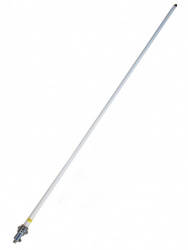
• Type: omnidirectional 3×5/8λ,FRP outershell
• Frequency: 430-490 MHz
• Gain: 6.5 dB
• Power: 200 Watts
• Impedance: 50 Ohms
• VSWR : 1.5:1 (nominal)
• Rated wind velocity: 60 m/sec
• Mast diameter accepted: 30-62 mm
• Length: 1.7 m
• Weight: 0.9 kg
• Connector: UHF-female

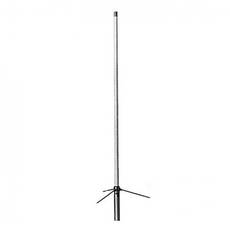
• Frequency: 430-490 MHz
• Gain: 8.5 dBi
• Power: 200 Watts
• Impedance: 50 Ohms
• VSWR : 1.5:1 (nominal)
• Rated wind velocity: 50 m/sec
• Mast diameter accepted: 30-62 mm
• Length: 2.9 m
• Radial length: 19 cm
• Weight: 1.15 kg
• Connector: UHF-male
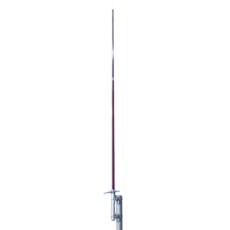
• A 14-element collinear antenna, each element with a wavelength of 5/8
• Frequency: 1260–1300 MHz
• Gain: 13.8 dBi
• Power: max 100 W
• Impedance: 50 ohms
• VSWR: less than 1.5:1
• Length: 3.5 m
• Weight: 1.7 kg
• Connector: N-type connector
Diamond UHF base station antenna – main technical characteristics
The Diamond antenna range consists of three different UHF base station antenna configurations. The 430-490 MHz versions use three or five 5/8-wave radiating sections and have a maximum power rating of 200 W. The 1260-1300 MHz version is a 14-section collinear antenna rated for a maximum power of 100 W. Documented antenna lengths are 1.7 m, 2.9 m, and 3.5 m. Due to differences in operating frequency and radiator construction, these antennas are not automatically interchangeable.
Key specifications of Diamond UHF base station antennas
- Frequency range: 430-490 MHz or 1260-1300 MHz.
- Antenna construction: 3 x 5/8, 5 x 5/8, or 14 x 5/8 Lambda.
- Gain: 6.5 dB, 8.5 dBi, or 13.8 dBi.
- Maximum input power: 100 W or 200 W.
- Impedance: 50 ohms for configurations with detailed specifications.
- VSWR: below 1.5:1 under the specified conditions.
- Antenna length: 1.7 m, 2.9 m, or 3.5 m.
- Weight: 0.9 kg, 1.15 kg, or 1.7 kg.
- RF connector: PL female or N female.
These specifications apply to different antenna configurations. We recommend starting the selection process by identifying the required operating frequency before comparing gain and power ratings.
What frequency ranges do Diamond UHF base station antennas support?
The category includes two distinct frequency ranges. A 430-490 MHz UHF base station antenna can be selected for applications within its specified range after the appropriate frequency adjustment. The 1260-1300 MHz configuration is designed for a significantly higher frequency range. These operating ranges do not overlap, so the radio equipment's operating frequency must always be compared with the technical documentation of the selected antenna.
Diamond antennas for 430-490 MHz applications
The manufacturer's documentation for the 430-490 MHz configurations includes frequency-specific adjustment instructions. The adjustment process sets the dimensions of the radiating elements according to the intended operating frequency. The manufacturer's cutting chart is therefore an important part of installation planning. After adjustment, the antenna's actual VSWR should be checked at the intended operating frequency.
430 MHz antennas and the 70-centimetre amateur radio band
A 430 MHz antenna can also be used on the appropriate frequencies within the 70-centimetre amateur radio band. The 430-490 MHz Diamond antennas are available in two collinear configurations, with documented gain values of 6.5 dB and 8.5 dBi. Both have a maximum power rating of 200 W and feature PL female connectors. For amateur radio applications, compatibility between the transceiver, transmission line, and antenna connection must be checked in addition to frequency-specific adjustment.
Amateur radio antennas for the 70-centimetre band
When operating in the 70-centimetre amateur radio band, the base station antenna system consists of the radio equipment, coaxial transmission line, and correctly tuned antenna. The documented 50-ohm impedance is an important matching parameter. The antenna's power rating is not equivalent to the transmitter's output power: the connected radio must not exceed the antenna's permitted power-handling limit. The applicable frequency-use and licensing requirements must be verified separately.
What is the difference between 430-490 MHz and 1260-1300 MHz antenna configurations?
The two frequency ranges require different electrical and mechanical designs. The 430-490 MHz antennas measure 1.7 m and 2.9 m in length, support a maximum power of 200 W, and feature PL female connectors. The 1260-1300 MHz antenna is 3.5 m long, has 14 radiating sections, and is rated for a maximum power of 100 W. This version uses an N female connector. The differences therefore extend beyond physical dimensions to operating frequency and connection type.
Diamond 23-centimetre amateur radio antenna
The 1260-1300 MHz configuration is designed for the corresponding section of the 23-centimetre amateur radio band. Its documented gain is 13.8 dBi, impedance is 50 ohms, and VSWR is below 1.5:1. The antenna operates with factory-defined dimensions and does not require frequency-specific cutting. The construction features a fibreglass-reinforced plastic outer housing and three radials.
Vertical collinear antennas: 3, 5, and 14 radiating-section configurations
A collinear vertical antenna uses multiple radiating sections arranged above one another. The category includes configurations consisting of 3, 5, and 14 sections, each with an electrical length of 5/8 wavelength. The phase relationships between these sections determine the radiation pattern. In the documented configurations, a higher number of sections is associated with increased gain and a longer antenna structure. However, gain values specified for different frequency bands should not be compared without considering the operating frequency.
Diamond collinear antennas and radiation characteristics
The documented radiation characteristic of the 430-490 MHz configurations is an omnidirectional pattern in the horizontal plane. The collinear structure modifies the vertical radiation distribution while providing omnidirectional coverage horizontally. Higher documented gain does not guarantee the same improvement in radio communication performance in every installation environment. Installation height, surrounding obstacles, and losses throughout the antenna system also affect the radio link.
What antenna gain and maximum transmit power ratings are available?
The three configurations have documented antenna gain values of 6.5 dB, 8.5 dBi, and 13.8 dBi. The dBi unit expresses gain relative to an isotropic radiator, so the reference must be identified when directly comparing values expressed in dB and dBi. The 430-490 MHz antennas have a maximum input power rating of 200 W, while the 1260-1300 MHz version is rated for 100 W. These values represent the antennas' permitted power-handling limits.
How should Diamond antenna power ratings be interpreted?
The maximum transmit power rating does not describe power generated by the antenna. Instead, it specifies the maximum permitted radio-frequency input power. The 200 W UHF antennas and the 100 W higher-frequency configuration have different technical specifications. When designing the complete antenna system, the coaxial cable's attenuation and power-handling capability must also be checked. Selecting a suitable transmission line is particularly important at frequencies above 1200 MHz.
Antenna impedance, VSWR, and frequency-specific adjustment
According to the detailed manufacturer's specifications, the antenna impedance is 50 ohms. The documented VSWR is below 1.5:1. VSWR, or Voltage Standing Wave Ratio, is one of the measurable parameters used to evaluate impedance matching within an antenna system. The 430-490 MHz antennas can be adjusted to the intended frequency using the manufacturer's cutting chart. In contrast, the 1260-1300 MHz configuration does not require frequency-specific adjustment of its physical dimensions.
Why is VSWR measurement important for UHF base station antennas?
Measuring VSWR helps identify impedance-matching problems involving the antenna, coaxial cable, or connectors. Excessively high values may indicate incorrect adjustment, a damaged connection, or another radio-frequency problem. After adjusting a 430-490 MHz antenna, measurement should be performed at the actual operating frequency. For the factory-tuned 1260-1300 MHz configuration, the condition of the connectors and transmission line must also be checked.
PL or N antenna connector: which one is compatible with the radio system?
The available antenna connectors are PL female and N female. The 430-490 MHz antennas feature PL female connectors, also known as UHF female connectors. These require a compatible PL male plug. The 1260-1300 MHz version uses an N female connector. Since these connector systems have different mechanical interfaces, they cannot be connected directly to each other. The coaxial cabling and radio equipment's RF connector must therefore be matched to the selected antenna.
Coaxial cabling for Diamond UHF antennas
When selecting a coaxial transmission line, frequency-dependent cable attenuation and the required cable length are important considerations. Due to higher attenuation at higher frequencies, the same cable can introduce different signal losses at 430 MHz and 1260 MHz. Outdoor connections must be adequately protected against moisture. We recommend selecting suitable 50-ohm coaxial cable and compatible connectors when designing the antenna system.
Outdoor installation, mast mounting, and wind resistance
When selecting a Diamond UHF base station antenna, mechanical specifications are just as important as electrical characteristics. The three configurations weigh 0.9 kg, 1.15 kg, and 1.7 kg, with lengths ranging from 1.7 to 3.5 m. Manufacturer specifications indicate mast diameters of approximately 30-62 mm and rated wind resistance values of 40, 50, or 60 m/s for the corresponding configurations. Mounting arrangements must always be designed according to the dimensions and mechanical load ratings of the specific antenna.
What mechanical requirements apply to vertical antenna installation?
- Shorter UHF configuration: 1.7 m length, 0.9 kg weight, and 60 m/s rated wind resistance.
- Longer 430-490 MHz configuration: 2.9 m length, 1.15 kg weight, and 50 m/s rated wind resistance.
- 1260-1300 MHz configuration: approximately 3.5 m length, 1.7 kg weight, and 40 m/s rated wind resistance.
- Documented mast diameter: typically 30-62 mm.
- Weatherproofing of outdoor connections against moisture.
- Use of a stable, properly grounded supporting structure.
Outdoor installation must be carried out under safe conditions. The manufacturer's instructions specifically warn about maintaining adequate clearance from overhead electrical power lines, ensuring proper mast grounding, and using appropriate installation procedures for larger antennas.
How should you select the right Diamond UHF base station antenna?
We recommend checking the radio's exact operating frequency first. The 430-490 MHz and 1260-1300 MHz configurations are designed for different applications. Next, compare antenna gain, permitted power, 50-ohm impedance matching, connector type, and the required antenna length. For the 430-490 MHz versions, frequency-specific adjustment must also be considered. For the higher-frequency configuration, particular attention should be paid to the N connector and coaxial cable attenuation.
Diamond UHF base station antenna selection checklist
- Radio operating frequency: 430-490 MHz or 1260-1300 MHz.
- 3, 5, or 14 radiating sections, each with a length of 5/8 Lambda.
- Documented gain of 6.5 dB, 8.5 dBi, or 13.8 dBi.
- Maximum input power of 100 W or 200 W.
- 50-ohm impedance and the corresponding VSWR specification.
- PL female or N female connector.
- Antenna length, weight, mast diameter, and wind resistance.
- Frequency-specific adjustment where required.
The most suitable antenna is not necessarily the configuration with the highest gain. Frequency compatibility, connector type, installation environment, and mechanical mounting requirements are equally important.
FAQ – Diamond UHF base station antennas
- What frequency ranges are available for Diamond UHF base station antennas?
The documented range includes configurations for 430-490 MHz and 1260-1300 MHz. - Can a 430-490 MHz antenna be used in the 1260-1300 MHz band?
No. The two antenna configurations are designed for different frequency ranges. - What antenna designs are available?
The selection includes 3 x 5/8, 5 x 5/8, and 14 x 5/8 Lambda collinear configurations. - What is the maximum antenna gain?
The highest documented gain in the category is 13.8 dBi for the 1260-1300 MHz configuration. - What maximum transmit power do these antennas support?
The 430-490 MHz versions are rated for 200 W, while the 1260-1300 MHz antenna has a maximum power rating of 100 W. - What is the antenna impedance?
The configurations with detailed technical specifications have a nominal impedance of 50 ohms. - Which connectors are available?
The 430-490 MHz antennas feature PL female connectors, while the 1260-1300 MHz version uses an N female connector. - Is frequency-specific antenna adjustment required?
The 430-490 MHz versions include cutting charts for frequency adjustment. The 1260-1300 MHz antenna is factory-tuned. - What antenna lengths are available?
The documented lengths are 1.7 m, 2.9 m, and approximately 3.5 m. - What type of mast is required for installation?
Manufacturer specifications typically indicate mast diameters of 30-62 mm, but the exact requirements must be verified for the specific configuration.
Summary
The Diamond UHF base station antenna category includes collinear antenna configurations designed for 430-490 MHz and 1260-1300 MHz applications. The range features antennas with 3, 5, or 14 radiating sections, each measuring 5/8 Lambda, with documented gain values ranging from 6.5 dB to 13.8 dBi, maximum power ratings of 100-200 W, and PL or N female connectors. When selecting the appropriate antenna, the operating frequency, VSWR, impedance, cabling, and outdoor mounting requirements must all be considered together.