

Carant Base Station UHF Antenna
The Carant UHF base station antenna category includes several antenna designs covering different parts of the 380-480 MHz frequency range. The range includes yagi, log-periodic, MIMO and omnidirectional models. The listed antennas have an impedance of 50 Ohm, while their frequency range, polarization, gain, radiation angle, VSWR and maximum input power differ. Read more...

• Type: 7 elements yagi
• Frequency range: 380-470 MHz
• Impedance: 50Ω
• Radiation angle: 70°
• Polarisation: horizontal / vertical
• Gain: 10 dBi @ 430 Mhz
• VSWR: < 2:1
• Maximum input power: 15 Watts

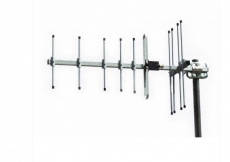
• Type: 7 elements Yagi
• Frequency range: 380-470 MHz
• Impedance: 50Ω
• Radiation angle: 70°
• Polarisation: horizontal / vertical
• Gain: 10 dBi @ 430 Mhz
• VSWR: < 2:1
• Maximum input power: 15 Watts
• Reinforced version, robust design
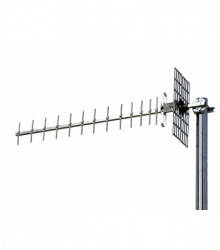
• Type: 12 elements yagi
• Frequency range: 415-480 MHz
• Impedance: 50Ω
• Radiation angle: 65°
• Polarisation: horizontal / vertical
• Gain: 12 dBi @ 450 Mhz
• VSWR: < 2:1
• Maximum input power: 15 Watts
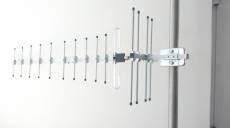
• Type: 12 elements yagi
• Frequency range: 415-480 MHz
• Impedance: 50Ω
• Radiation angle: 65°
• Polarisation: horizontal / vertical
• Gain: 12 dBi @ 450 Mhz
• VSWR: < 2:1
• Maximum input power: 15 Watts
• Reinforced version, robust design
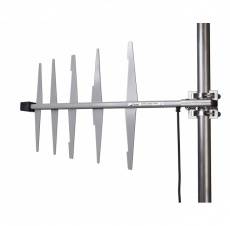
• Type: log-per
• Frequency range: 410-480 MHz
• Impedance: 50Ω
• Radiation angle: E 80° - H 60°
• Polarisation: vertical
• Nyereség: 9,5 dBi
• VSWR: < 1,5:1
• Maximum input power: 10 Watts
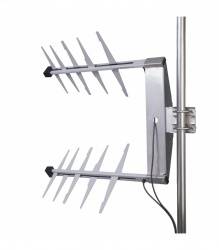
• Type: log-per
• Frequency range: 410-180 MHz
• Impedance: 50Ω
• Radiation angle: E 80° - H 60°
• Polarisation: ±45°
• Nyereség: 9,5 dBi
• VSWR: < 1,5:1
• Maximum input power: 10 Watts
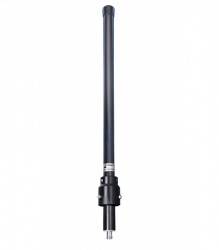
• Type: omnidirectional
• Frequency range: 380-450 MHz
• Impedance: 50Ω
• Polarisation: vertical
• Gain: 2 dBi
• VSWR: < 1,5:1
• Maximum input power: 100 Watts (on C2FP cable)
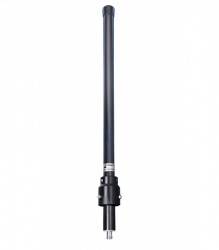
• Type: omnidirectional
• Frequency range: 380-450 MHz
• Impedance: 50Ω
• Polarisation: vertical
• Gain: 5 dBi
• VSWR: < 1,5:1
• Maximum input power: 100 Watts (on C2FP cable)

• Type: log-per
• Frequency range: 440–470 MHz (LTE 450)
• Impedance: 50Ω
• Radiation angle: E: 65° ; H 60°
• Polarisation: ±45°
• Gain: max. 7,4 dBi
• VSWR: < 2,2:1
• Maximum input power: 50 Watts
Carant UHF base station antenna types and technical characteristics
Carant UHF antenna: yagi, log-periodic, MIMO and omnidirectional designs
The range includes antennas with several different constructions. Yagi versions are available with 7 or 12 elements, the log-periodic models include conventional and MIMO designs, while the omnidirectional antennas are listed as omni models.
How do the Carant base station antenna designs differ?
The documented differences include frequency range, polarization, radiation angle, gain, VSWR and maximum input power. Yagi antennas are specified with horizontal or vertical polarization, conventional log-periodic and omnidirectional versions use vertical polarization, while the MIMO versions are specified with +45/-45 degree polarization.
Which UHF frequency ranges are covered by Carant base station antennas?
UHF frequency ranges in the Carant antenna range
The specified frequency ranges in the category are between 380 and 480 MHz overall. Certain yagi antennas are specified for 380-470 MHz, while other yagi versions cover 415-480 MHz. The log-periodic and MIMO log-periodic models are specified for 410-480 MHz, the omnidirectional versions for 380-450 MHz, and the separate MIMO model for 440-470 MHz.
Why should the frequency range of a UHF antenna be checked separately?
The models do not have identical lower and upper frequency limits. Several different frequency ranges are present within the same Carant UHF base station antenna category, so the frequency specification must be checked individually for each model.
Antenna gain, impedance and VSWR in the Carant range
Carant antenna gain and 50 Ohm impedance
The antennas listed in the category have an impedance of 50 Ohm. The documented gain values range from 2 dBi to 12 dBi. Yagi versions are specified with 10 or 12 dBi gain, log-periodic versions with 9.5 dBi, omnidirectional models with 2 or 5 dBi, and the 440-470 MHz MIMO antenna with a maximum gain of 7.4 dBi.
Which VSWR values are specified for Carant UHF antennas?
The VSWR limit varies according to antenna design. Values below 2:1 are specified for the yagi versions, below 1.5:1 for the log-periodic, MIMO log-periodic and omnidirectional models, and below 2.2:1 for the 440-470 MHz MIMO antenna.
What polarization and radiation angles are specified for the different designs?
Polarization of Carant yagi, log-periodic, MIMO and omni antennas
The yagi antennas are specified with horizontal or vertical polarization. Conventional log-periodic and omnidirectional omni models use vertical polarization. The MIMO log-periodic and the 440-470 MHz MIMO design are specified with +45/-45 degree polarization.
Which radiation angles are documented?
Radiation angles of 65 or 70 degrees are specified for the yagi models. For the 410-480 MHz log-periodic and MIMO log-periodic versions, the specified values are 80 degrees in the E-plane and 60 degrees in the H-plane, while the 440-470 MHz MIMO model is specified with 65 degrees in the E-plane and 60 degrees in the H-plane. No separate radiation angle is specified for the omnidirectional models on the category page.
Power ratings and reinforced Carant UHF designs
Maximum input power of Carant outdoor antennas
Depending on the specific model, the maximum input power within the category is 10 W, 15 W, 50 W or 100 W. Yagi models are specified with 15 W, log-periodic and MIMO log-periodic versions with 10 W, the separate MIMO antenna with 50 W, and the omnidirectional models with 100 W on C2FP cable.
Which Carant UHF antenna versions have a reinforced design?
The yagi family includes models with the NE20 designation, for which the category information specifies a reinforced and robust design. This characteristic applies to specific yagi versions.
Which parameters can be used to compare Carant UHF base station antennas?
Comparing radio communication antennas by documented parameters
Several common technical fields are provided for the models in the category to support comparison. These include frequency range, impedance, polarization, gain, VSWR and maximum input power. Radiation angle is also specified for directional versions. We recommend checking these parameters together when selecting an antenna.
What should be checked regarding the antenna connector and mechanical design?
The detailed product data includes several antenna connector types, including FME, N and SMA versions. Mechanical dimensions, weight, materials and mounting data also differ by model, so these characteristics cannot be treated as uniform category-level properties.
Carant UHF base station antenna category: characteristics and differences
Main characteristics of the Carant UHF antenna range
The category contains several different antenna designs within one manufacturer range. The documented technical data includes multiple frequency ranges, polarization types, gain levels, VSWR limits and maximum input power values.
- Yagi, log-periodic, MIMO and omnidirectional designs.
- Documented frequency ranges between 380 and 480 MHz.
- 50 Ohm impedance for all listed models.
- Documented gain values between 2 and 12 dBi.
- Horizontal, vertical and +45/-45 degree polarization versions.
Because of the differences within the category, the exact frequency range, gain, VSWR, power limit, connector and mechanical data should be checked separately for each model.
Which parameters are not uniform across the entire Carant UHF antenna category?
- Frequency range and antenna design.
- Polarization and radiation angle.
- Gain and VSWR.
- Maximum input power.
- Antenna connector and mechanical design.
Frequently asked questions about Carant UHF base station antennas
- Which antenna types are available in the category?
The range includes yagi, log-periodic, MIMO log-periodic, omnidirectional omni and MIMO designs. - Which frequency ranges are covered by Carant UHF base station antennas?
The documented model frequency ranges are between 380 and 480 MHz overall. - What is the impedance of the antennas in the category?
All listed models are specified with an impedance of 50 Ohm. - Which gain values are available?
The documented gain values range from 2 dBi to 12 dBi. - Are MIMO antennas available in the range?
Yes. The range includes a MIMO log-periodic design and a separate 440-470 MHz MIMO version specified for the LTE 450 band. - Is the polarization identical for every model?
No. The range includes horizontal or vertical, exclusively vertical, and +45/-45 degree polarization versions.
Summary: what should you know about Carant UHF base station antennas?
Technical overview of the Carant UHF antenna category
The Carant UHF base station antenna category includes yagi, log-periodic, MIMO and omnidirectional designs for frequency ranges between 380 and 480 MHz. The listed antennas have an impedance of 50 Ohm, while their polarization, gain, VSWR, radiation angle and maximum input power differ by model. We therefore recommend checking the frequency range, antenna design and the other electrical, connector and mechanical parameters together.