

Hytera Two-Way Radio Repeater
The Hytera two-way repeater category features professional radio repeater systems designed to expand the coverage of DMR-based radio communication networks, increase communication range, and ensure uninterrupted radio traffic. Hytera’s product lineup includes DMR Tier II repeaters, DMR Tier III trunking systems, and XPT infrastructures, which support the deployment of radio networks of various sizes. Some models support both digital DMR and analog modes, thereby enabling the operation of mixed radio fleets. Read more...
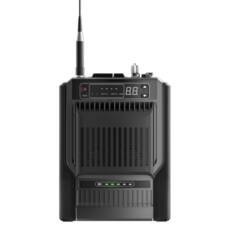
• Programmable between 400-470MHz
• 1024 channel memory
• Designed to extend the communication range of DMR radios
• 1-25 W (high power version)
• 100% continuous operation even at the highest output power
• AC power and battery operation
• Easy operation, LED displays
• Automatic recognition between analogue and digital modes
• Can operate on AC power or optional battery, so can continue to operate in the event of a power failure
• GPS/GLONASS
• Over-the-air encryption
• IP54 dust and water resistance


• Programmable between 400-470MHz
• 1024 channel memory
• Designed to extend the communication range of DMR radios
• With installed duplexer
• 1-25 W (high power version)
• 100% continuous operation even at the highest output power
• AC power and battery operation
• Easy operation, LED displays
• Automatic recognition between analogue and digital modes
• Can operate on AC power or optional battery, so can continue to operate in the event of a power failure
• GPS/GLONASS
• Over-the-air encryption
• IP54 dust and water resistance
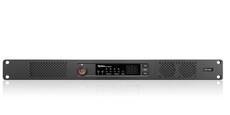
• Frequency range VHF: 136-174 MHz
• Channel capacity 64
• 100% continuous duty cycle from 5 W to 50 W
• Analog and digital mode support
• Built-in power supply
• Multiple CTCSS/CDCSS analog and mixed channels
• Power supply DC +13.6 V ± 15% AC 100-240 V
• Dimensions: 44 x 483 x 366 mm
• Weight 5.8 kg
• Frequency range UHF: 400-470 MHz
• Channel capacity 64
• 100% continuous duty cycle from 5 W to 50 W
• Analog and digital mode support
• Built-in power supply
• Multiple CTCSS/CDCSS analog and mixed channels
• Power supply DC +13.6 V ± 15% AC 100-240 V
• Dimensions: 44 x 483 x 366 mm
• Weight 5.8 kg
• Enhanced version
• WEB-based management (enhanced version only)
• Integrated SIP gateway and router (enhanced version only)
• SNMP V3 (enhanced version only)
• Frequency range VHF: 136-174 MHz
• Channel capacity 64
• 100% continuous duty cycle from 5 W to 50 W
• Analog and digital mode support
• Built-in power supply
• Multiple CTCSS/CDCSS analog and mixed channels
• Power supply DC +13.6 V ± 15% AC 100-240 V
• Dimensions: 44 x 483 x 366 mm
• Enhanced version
• WEB-based management (enhanced version only)
• Integrated SIP gateway and router (enhanced version only)
• SNMP V3 (enhanced version only)
• Frequency range UHF: 400-470 MHz
• Channel capacity 64
• 100% continuous duty cycle from 5 W to 50 W
• Analog and digital mode support
• Built-in power supply
• Multiple CTCSS/CDCSS analog and mixed channels
• Power supply DC +13.6 V ± 15% AC 100-240 V
• Dimensions: 44 x 483 x 366 mm
Overview of Hytera two-way Repeater Systems
The Hytera two-way repeater is designed to receive and retransmit signals sent by radio stations, thereby extending the range of the radio communication network. By simultaneously managing receive and transmit frequencies, the repeater ensures that users can stay connected even across a larger geographic area. The system can operate as a standalone repeater or as part of a radio network consisting of multiple stations.
Hytera’s VHF repeater lineup supports various network architectures. This category includes traditional DMR Tier II systems, higher-capacity XPT solutions, and DMR Tier III trunking infrastructures. This allows the radio network to be configured to meet specific communication needs.
Why is coverage important in a Hytera two-way repeater system?
The quality of radio communication is significantly determined by the available coverage. By using Hytera two-way repeater systems, areas can be reached where direct radio contact with handheld radios is no longer possible. By connecting multiple repeaters, network coverage can be further expanded, allowing for the coverage of larger sites or multiple geographic locations.
Hytera two-way Repeater and Radio Network Architecture
Several network components are involved in the operation of a radio repeater system. In addition to the repeater, key components include the duplexer, which enables the use of a shared antenna; the antenna system, which ensures the transmission and reception of radio signals; and the power supply and IP-based network connection. Together, these various components form the radio communication infrastructure.
DMR Tier II Repeaters and Their Applications
Hytera DMR Tier II repeaters support digital radio communication in accordance with the ETSI DMR standard. Some models can operate in both analog and digital modes, making it possible to support mixed radio fleets. A DMR Tier II system can be set up using a single repeater or by connecting multiple stations.
HR1065 DMR Repeater
The HR1065 series consists of DMR repeaters in a 1U rack-mount design. The product family is available in multiple hardware variants, making it adaptable to various radio network requirements. The device supports web-based management, SNMPv3-based monitoring, and a SIP gateway function. Its network-ready design enables multiple repeaters to work together.
HR655 Compact Hytera two-way Repeater
The HR655 is a compact DMR repeater designed for installations with limited space. The device supports digital DMR operation, as well as analog and mixed modes in specific configurations. Despite its compact design, it can be used as part of a full-fledged DMR infrastructure.
What do DMR Tier III trunking systems offer?
The DMR Tier III system provides a centrally controlled trunking infrastructure. The system supports the coordinated operation of multiple repeaters while managing users, talk groups, and radio channel assignments. The network can be built using multiple base stations.
How does the XPT system work?
The XPT (Extended Pseudo Trunk) system is based on the cooperation of multiple DMR repeaters. The solution dynamically manages available radio channels without the need for a central trunking controller. This enables the efficient use of available radio resources and supports a larger number of radios on the same infrastructure.
The Role of the Base Station, Duplexer, and Antenna System
The performance of the Hytera two-way repeater system is not determined solely by the repeater itself. The radio communication infrastructure consists of several interconnected components that ensure continuous operation and the transmission of radio signals. The base station, duplexer, antenna system, power supply, and IP-based network connection all play important roles in the design of the repeater system.
The Role of the Antenna System in Establishing Coverage
The antenna system is responsible for transmitting and receiving radio signals. The placement and design of the antenna, as well as the structure of the radio network, all influence the resulting coverage. By connecting multiple Hytera two-way repeaters, radio communication can be established across larger geographic areas.
Use of Duplexers in Radio Repeater Systems
A duplexer allows the transmitter and receiver to use the same antenna system. As a result, the repeater can perform both reception and transmission tasks through a single antenna. The duplexer is a key component of professional radio repeater infrastructure.
Digital Radio Communication and Analog Mode
The radio repeaters in Hytera’s product line are designed to support DMR digital radio communication. Some models also offer analog mode, which allows digital and analog radios to operate on the same infrastructure during a transition period. This can facilitate the gradual modernization of the radio network.
Digital Radio Communication Using a Hytera two-way repeater
Digital radio communication enables the deployment of DMR networks, where the repeater ensures that communication between radios is maintained. Hytera’s DMR infrastructure can be used to build radio networks of various sizes, ranging from a single repeater to systems consisting of multiple stations.
Where can the Hytera two-way repeater be used?
The Hytera two-way repeater systems can be used in radio communication networks where the communication area exceeds the range of direct radio contact. The various system configurations allow for the creation of smaller local networks as well as infrastructures connecting multiple locations.
- radio communications for industrial facilities;
- logistics centers;
- transportation infrastructure;
- radio networks for public utility providers;
- security communication systems;
- radio communication connecting multiple sites.
When selecting the appropriate system, factors such as desired coverage, the number of users, and network scalability should be considered.
Why choose a Hytera two-way repeater system?
Hytera’s product portfolio offers DMR infrastructure for a variety of radio communication needs. The lineup includes traditional DMR Tier II repeaters, XPT systems, and DMR Tier III trunking solutions. The devices in the portfolio can be adapted to networks of various sizes, and some models support both analog and digital operation.
Frequently Asked Questions
- What is the function of a Hytera two-way repeater?
It receives and retransmits radio signals, thereby increasing radio communication coverage. - What is VHF?
VHF is the term for the very high frequency band, which is widely used in professional radio communications. - What is DMR?
DMR (Digital Mobile Radio) is a digital radio communication standard. - What is the difference between DMR Tier II and DMR Tier III?
DMR Tier II is a traditional digital radio trunking system, while DMR Tier III provides a centrally controlled trunking infrastructure. - What is XPT?
XPT (Extended Pseudo Trunk) is a system based on the cooperation of multiple repeaters that dynamically manages radio channels. - Do all Hytera two-way repeaters support analog mode?
No. Analog operation is only available on models that support it. - What is the role of a duplexer?
A duplexer allows the transmitter and receiver to use the same antenna system. - What factors affect radio network coverage?
Coverage is influenced by the repeater system configuration, the antenna system, the installation location, and the network design.
Summary
The Hytera VHF repeater category includes DMR radio repeater infrastructures that support the deployment of radio communication networks of various sizes. Our product lineup includes DMR Tier II repeaters, XPT systems, and DMR Tier III trunking solutions, as well as models that support both analog and digital operation. We offer Hytera VHF repeater systems that provide the appropriate infrastructure for expanding radio communication coverage and ensuring long-term network development.