

Maxlink WiFi Antennas
The MaxLink WiFi antenna category includes 2.4 GHz omnidirectional and 5 GHz directional antennas for indoor and outdoor use. The documented configurations have 50 ohm impedance and gain values ranging from 2 dBi to 20 dBi. The range includes tiltable, magnetic-mount, outdoor base station, and panel antennas with RPSMA, RSMA, N, and MMCX connectors. When selecting the appropriate antenna, the operating frequency, radiation pattern, gain, VSWR, connector, cabling, and installation environment should all be checked together. Read more...
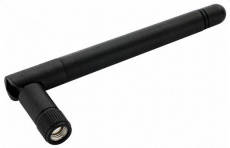
• Type: omnidirectional
• Frequency: 2.4 GHz
• Impedance: 50 Ω
• MIMO, SISO: 1 x 1
• Azimuth beam width (-6dB) [°]: 360, 13
• Gain: 2 dBi
• Connector: RPSMA male
• For indoor use
• Material: UV stabilized plastic
• Color: black
• Dimensions: 120x8x8 mm


• Type: omnidirectional
• Frequency: 2.4 GHz
• Impedance: 50 Ω
• MIMO, SISO: 1 x 1
• Azimuth beam width (-6dB) [°]: 360, 10
• VSWR: <1,9
• Gain: 10 dBi
• Connector: RPSMA male
• For indoor use
• Material: UV stabilized plastic
• Color: black
• Dimensions: 480x12x12 mm

• Frequency: 2.4 GHz
• Antenna gain: 5 dBi
• Radiation pattern: omnidirectional
• Connector: RSMA (plug)
• Application: indoor
• Length: 195 mm
• Weight: 0.1 kg
• Voltage standing wave ratio: below 1.9


• Type: omnidirectional
• Frequency: 2.4 GHz
• Impedance: 50 Ω
• MIMO, SISO: 1 x 1
• Azimuth beam width (-6dB) [°]: 360, 13
• VSWR: <1,9
• Gain: 5 dBi
• Connector: RPSMA male
• For indoor use
• Material: UV stabilized plastic
• Color: black
• Cable: 1m RG174
• Dimensions: 180x8x8 mm

• Type: omnidirectional
• Frequency: 2.4 GHz
• Impedance: 50 Ω
• MIMO, SISO: 1 x 1
• Azimuth beam width (-6dB) [°]: 360, 10
• VSWR: <1,9
• Gain: 10 dBi
• Connector: RPSMA male
• For indoor use
• Material: UV stabilized plastic
• Color: black
• Cable: 1m RG174
• Dimensions: 415x60/12mm

• Type: omnidirectional
• Frequency: 2.4 GHz
• Impedance: 50 Ω
• MIMO, SISO: 1 x 1
• Azimuth beam width (-6dB) [°]: 360, 8
• VSWR: <1,5
• Gain: 12 dBi
• Connector: N male
• For outdoor use
• Material: Fiberglass
• Color: white
• Weight: 250 g
• Dimensions: 950x19x19 mm
• Wind load: 240 km/h
• Type: omnidirectional
• Frequency: 2.4 GHz
• Impedance: 50 Ω
• MIMO, SISO: 1 x 1
• Azimuth beam width (-6dB) [°]: 360, 8
• VSWR: <1,5
• Gain: 15 dBi
• Connector: N male
• For outdoor use
• Material: Fiberglass
• Color: white
• Weight: 350 g
• Dimensions: 1450x19x19 mm
• Wind load: 200 km/h

• Type: directional panel antenna
• Frequency: 5 GHz
• Impedance: 50 Ω
• Polarization: V or H
• MIMO, SISO: 1 x 1
• Azimuth beam width (-6dB) [°]: 20, 20
• VSWR: <1,5
• Gain: 20 dBi
• Connector: MMCX
• For outdoor use
• Material: Aluminium, UV stabilized ABS plastic
• Weight: 300 g
• Dimensions: 187x187x63 mm
• Mounting mast: Ø 28-66 mm
MaxLink WiFi antenna - main technical characteristics
The category includes several different WiFi antenna designs. The 2.4 GHz solutions are available with documented gain values of 2 dBi, 5 dBi, 10 dBi, 12 dBi, and 15 dBi. The 5 GHz directional panel antenna has a documented gain of 20 dBi. The VSWR is below 1.9 for some indoor versions, while outdoor base station and panel antennas are specified with VSWR below 1.5.
What frequency does a MaxLink WiFi antenna operate on?
The documented MaxLink antenna range covers two main frequency groups. The indoor and outdoor omnidirectional versions operate at 2.4 GHz, while the directional panel antenna is specified for 5 GHz. When selecting an antenna for a WLAN system, the first step is therefore to determine whether the connected device requires a 2.4 GHz or 5 GHz antenna.
2.4 GHz omnidirectional WiFi antenna for indoor and outdoor use
The 2.4 GHz antenna range includes several omnidirectional configurations. Documented gain values for indoor antennas are 2 dBi, 5 dBi, and 10 dBi. Some versions are designed for direct connection, while others include a 1 m RG174 cable. The documented connector types include RPSMA male and RSMA male.
MaxLink omnidirectional antenna with different gain options
- 2 dBi indoor omnidirectional configuration.
- 5 dBi indoor dipole and magnetic-mount configuration.
- 10 dBi direct-connect and magnetic-mount configuration.
- 12 dBi outdoor base station antenna.
- 15 dBi outdoor base station antenna.
The outdoor 2.4 GHz base station antennas are specified with 50 ohm impedance, VSWR below 1.5, and an N male connector. Their construction uses fiberglass and the documented colour is white. The 12 dBi version has documented dimensions of 950 x 19 x 19 mm, a weight of 250 g, and wind resistance of 240 km/h. The 15 dBi version has dimensions of 1450 x 19 x 19 mm, a weight of 350 g, and documented wind resistance of 200 km/h.
When can a 5 GHz directional panel antenna be selected?
The 5 GHz directional antenna uses a panel design with documented gain of 20 dBi, 50 ohm impedance, and VSWR below 1.5. Polarization can be vertical or horizontal. The connector is MMCX, while the construction materials are aluminium and UV-resistant ABS plastic. The documented dimensions are 187 x 187 x 63 mm and the weight is 300 g.
MaxLink 5 GHz panel antenna mounting data
The 5 GHz panel antenna is designed for outdoor use and can be mounted on a mast. The documented mounting range is for mast diameters of 28-66 mm. In addition to frequency and connector type, the available mast diameter should therefore be checked before installation. The panel design differs from the 2.4 GHz omnidirectional antennas, so their technical specifications should not be generalized across configurations.
Antenna gain, VSWR, and 50 ohm impedance
The documented impedance of the antennas in the category is 50 ohm. Gain ranges from 2 dBi to 20 dBi, but each value belongs to a specific antenna design. Some indoor 2.4 GHz versions are specified with VSWR below 1.9, while outdoor 2.4 GHz base station antennas and the 5 GHz panel antenna are specified with VSWR below 1.5.
What does antenna gain indicate in the MaxLink range?
Antenna gain is not identical across all WLAN antennas. The documented values are 2 dBi, 5 dBi, 10 dBi, 12 dBi, 15 dBi, and 20 dBi. The 2-15 dBi values belong to 2.4 GHz omnidirectional configurations, while the 20 dBi value belongs to the 5 GHz directional panel antenna. Frequency, antenna type, and gain should therefore always be considered together.
WiFi antenna connectors and mounting options
The documented antenna connector types include RPSMA male, RSMA male, N male, and MMCX. Some 2.4 GHz magnetic-mount antennas include a 1 m RG174 cable. Depending on the configuration, mounting can be direct connection, magnetic base, or mast installation. The exact connector and mounting method are determined by the technical design of the selected antenna.
MaxLink WiFi antenna selection checklist
- 2.4 GHz or 5 GHz frequency.
- Omnidirectional or directional panel design.
- 50 ohm impedance.
- Documented gain between 2 dBi and 20 dBi.
- VSWR below 1.9 or 1.5 depending on the configuration.
- RPSMA, RSMA, N, or MMCX connector.
- RG174 cable where included in the configuration.
- Indoor or outdoor use.
- Magnetic, direct-connect, or mast mounting.
- For outdoor antennas, documented dimensions, weight, and wind resistance.
FAQ - MaxLink WiFi antennas
- Which WiFi frequencies are available in the category?
The documented range includes 2.4 GHz omnidirectional antennas and a 5 GHz directional panel antenna. - What is the impedance of the antennas?
The documented impedance is 50 ohm. - What gain values are available?
The category includes documented gain values of 2 dBi, 5 dBi, 10 dBi, 12 dBi, 15 dBi, and 20 dBi. - Are outdoor WiFi antennas available?
Yes. The range includes 2.4 GHz fiberglass base station antennas and a 5 GHz outdoor panel antenna. - Which connectors are available?
The documented connector types include RPSMA, RSMA, N, and MMCX. - Are magnetic-mount WiFi antennas available?
Yes. The 2.4 GHz range includes magnetic-mount configurations with 1 m RG174 cable.
Summary
The MaxLink WiFi antenna category includes 2.4 GHz omnidirectional and 5 GHz directional WLAN antennas for indoor and outdoor applications. Documented gain ranges from 2 dBi to 20 dBi, impedance is 50 ohm, and available connectors include RPSMA, RSMA, N, and MMCX. To select the appropriate antenna, the frequency, radiation pattern, gain, VSWR, connector, cabling, and installation method should all be checked together.