

True Vision AIS transponder
The True Vision AIS transponder category includes Class A and Class B-SOTDMA transceivers as well as a dual-channel AIS receiver. The Automatic Identification System is used to transmit information relating to vessel position and identification: position data is derived from GNSS, while communication between devices is carried out via VHF digital transmission. AIS transponders handle static and dynamic vessel data, while the receiver decodes received AIS messages without transmitting own-vessel data. Read more...

• Transponder compliant with SOLAS and inland waterway AIS Class A standards
• Built-in high-resolution color display (800×480 px)
• Real-time AIS data processing even in heavy traffic
• Integrated WiFi connectivity (802.11 b/g/n)
• Easy integration with marine systems (NMEA 183 and NMEA 2000 interfaces)
• Built-in world map (C-MAP support)
• Weatherproof design for outdoor use (IP66 and IP67)
• Power supply: 12–24 V DC
• Power consumption: 72 W during transmission, 11 W during reception
• The VHF antenna is not included in the standard package

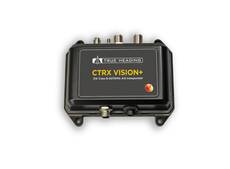
• Class B-SOTDMA AIS transponder with 5 W transmit power
• AIS frequency range: 161.975-162.025 MHz
• Built-in VHF antenna splitter with 156-163 MHz operating range
• NMEA 0183, NMEA 2000, USB and WiFi data interfaces
• 72-channel GPS, GLONASS and SBAS GNSS receiver
• 12-24 V DC supply, current consumption below 220 mA at 12 V DC
• IP66 and IP67 waterproof ratings
• Dimensions: 173 x 128 x 53 mm, weight: 380 g
• The package includes the GPS/GNSS antenna with a 10-meter cable

• Dual-channel AIS receiver for reception and decoding of all AIS messages
• Receives AIS Class A, Class B, AIS-EPIRB, AIS-SART, AIS-MOB and AIS-AtoN
• Fixed reception frequencies: 161.975 MHz and 162.025 MHz
• NMEA0183 38400 baud output and NMEA0183 4800 baud input
• USB and NMEA2000 LEN=1 interfaces
• Power supply: 9.6-31.2 V DC or USB
• IPx7 protection and -25 C to +55 C operating temperature
• Supplied with 2 m power, data and USB cable and 4 mounting screws

True Vision AIS transponder: vessel identification and AIS data communication
An AIS transponder can transmit vessel position, speed, course and identification data to other AIS equipment. Dynamic data includes position, Speed Over Ground and Course Over Ground, while static data includes MMSI, vessel name, call sign, vessel type and vessel dimensions. The category includes Class A and Class B-SOTDMA transponders as well as receive-only AIS equipment.
How does the Automatic Identification System work in marine navigation?
AIS combines GNSS position data with VHF digital communication. The Class A system uses a TDMA transmitter and two receivers operating in the 156.025-162.025 MHz frequency range with 25 kHz channel spacing; transmitter power can automatically switch between 1 W and 12.5 W. The built-in GNSS receiver has 72 channels and supports GPS, GLONASS and BeiDou operating modes. The Class B-SOTDMA unit in this category operates in the AIS frequency range of 161.975-162.025 MHz with 5 W transmit power.
AIS Class A and AIS Class B-SOTDMA systems
The Class A version is designed for SOLAS and Inland AIS operation and features an 800 x 480 pixel colour LCD display, adjustable backlight and built-in basic world map. The system handles AIS targets, alarms, filters, messages, and MOB and SART targets. In Inland AIS mode, ENI and ERI vessel and convoy types, loading status, Blue Sign status, static draught, crew and passenger numbers, and convoy dimensions can also be entered.
The Class B-SOTDMA version participates in the AIS time-slot reservation process and uses 5 W transmit power. It has one transmitter and two receivers, with receiver sensitivity of less than -110 dBm at 20 percent PER. GNSS functionality includes GPS, GLONASS and SBAS support. Separate LEDs indicate power status, transmit timeout, fault condition and Silent Mode.
What role do GNSS position and VHF data communication play?
GNSS provides the position data used by AIS, while the VHF radio section handles transmission and reception of digital AIS messages. The internal GNSS receiver of the Class A system can use GPS, GLONASS and BeiDou sources individually or in combinations, while an external GNSS source can be connected through an NMEA interface. On the Class A unit, the VHF antenna connector is SO-239 and the GNSS antenna connector is TNC; both RF ports have an impedance of 50 Ohm.
NMEA interface, NMEA2000, USB and WiFi data connections
The devices in the category provide NMEA0183 and NMEA2000 connections, while selected versions also include USB and WiFi interfaces. The Class A system supports three IEC 61162-1/-2 sensor inputs and three bidirectional data ports operating at 4800 or 38400 baud, together with a DGNSS correction port and an NMEA2000 LEN=1 connection. WiFi client and access point modes are also available; access point mode supports up to five simultaneous connections.
How does the AIS transponder connect to the marine navigation system?
The documented interfaces allow connection to chartplotters, ECDIS, external displays, pilot devices, GNSS sources and other NMEA-compatible equipment. The Class B-SOTDMA unit provides an NMEA0183 output at 38400 baud, an input at 4800 baud, NMEA2000, USB and WiFi connections. The dual-channel receiver forwards received AIS data through NMEA0183, NMEA2000 and USB; messages received on the low-speed NMEA0183 input can be multiplexed and forwarded to the high-speed output.
AIS target tracking, Silent Mode and Inland AIS functions
The Class A unit provides real-time AIS target display, alarms and target filtering. Silent Mode is available on both the Class A and Class B-SOTDMA systems. According to the Class B operating functions, Silent Mode stops transmission of own-vessel AIS data while reception of AIS positions from other vessels continues. The Class A Inland AIS mode handles additional vessel and voyage data as well as a Blue Sign switch input.
What is the difference between an AIS transponder and a dual-channel AIS receiver?
An AIS transponder sends and receives AIS data, while a dual-channel AIS receiver is used only to receive and decode radio messages. The receiver can receive transmissions from Class A, Class B, AIS-EPIRB, AIS-SART, AIS-MOB, AIS-AtoN and AIS base stations on fixed frequencies of 161.975 MHz and 162.025 MHz. Receiver sensitivity is better than -112 dBm at 20 percent Packet Error Rate.
VHF antenna, antenna splitter and installation requirements
The Class B-SOTDMA transponder features a built-in VHF antenna splitter operating between 156 and 163 MHz, with receive insertion loss of 0 dB, transmit loss below 1 dB and VHF port power handling of 25 W. The splitter allows the VHF antenna to be shared between the AIS transponder and the VHF radio. On the Class B unit, the VHF antenna uses an SO-239 connector and the GNSS antenna uses a TNC connector.
The installation documentation states that the AIS transceiver must not be operated without a VHF antenna. For the Class B system, the antenna must be positioned at least 1.5 m from the transponder, and the specified MPE radius for RF exposure is 1.5 m. GNSS positioning accuracy can be influenced by antenna location, the number of satellites and the time required to receive satellite information.
Advantages:
- Class A, Class B-SOTDMA and receive-only AIS solutions are available within the category.
- NMEA0183 and NMEA2000 connectivity is available across all three device types.
- The transponder versions use GNSS-based positioning data and provide VHF digital AIS communication.
- The Class A system supports Inland AIS mode, while the Class B-SOTDMA version includes a built-in VHF antenna splitter.
Limitations: the dual-channel AIS receiver does not transmit own-vessel data. When Silent Mode is used, the Class B-SOTDMA transponder stops transmitting own AIS data, so other AIS devices do not receive the vessel's information. Compatibility also depends on the standard AIS and NMEA data supported by the connected external system.
Summary: True Vision AIS systems for vessel tracking and data exchange
Within the True Vision AIS category, the Class A system provides a high-resolution display, Inland AIS support, NMEA connectivity and WiFi; the Class B-SOTDMA version uses 5 W transmit power and a built-in VHF antenna splitter; while the dual-channel receiver provides AIS message reception without own transmission. The documented differences cover AIS class, transmit and receive operation, data interfaces, and GNSS and VHF connections.
What are the most common questions about True Vision AIS transponders?
- What is the purpose of an AIS transponder?
It transmits and receives AIS data relating to vessel position, movement and identification through VHF digital communication. - What is the difference between Class A and Class B-SOTDMA?
The Class A unit in this category supports SOLAS and Inland AIS operation, uses automatic 1 W or 12.5 W transmit power and has an integrated display, while the Class B-SOTDMA version operates with 5 W transmit power and SOTDMA time-slot reservation. - What is Silent Mode used for?
On the Class B-SOTDMA system, it stops transmission of own-vessel AIS data while reception of AIS messages from other vessels continues. - Which data interfaces are available?
The category includes NMEA0183, NMEA2000, USB and, on selected versions, WiFi connectivity. - Does the AIS receiver also transmit vessel data?
No. The dual-channel AIS receiver receives and decodes AIS messages but does not transmit own-vessel data.