

Window film
Window film for reducing electrosmog can be used to shield high-frequency electromagnetic waves entering through glazed surfaces. In the documented laboratory test, the single-layer film provided 18 dB shielding attenuation across the frequency range from 600 MHz to 40 GHz. The film can be installed using a wet application method with a mounting concentrate diluted in water. For certain film types containing metallic layers, the cut edges must also be sealed after installation. Read more...
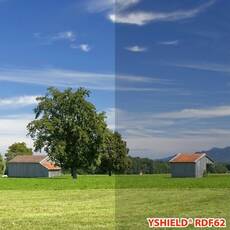
• Attenuation 18 dB at 1 GHz
• Light transmission: 62 %
• Color of daylight: Bright gray
• Width: 152 cm
• Length: 1m (30 m roll)
• Weight: 250 g
• Mounting: Water-activated, pressure-sensitive adhesive to the back
• Material thickness: 37.5 µm
• Only for indoor application on non heat absorbing glass surfaces!
• Background: Heat-absorbing glass is already metallized. When solar radiation permeates the metallization and subsequently hits the window foil, multi-reflections may occur.The windowpane will needlessly heat up and thus by expansion cause leaks or even cracks in the border-seals. Check the type of glass in advance!

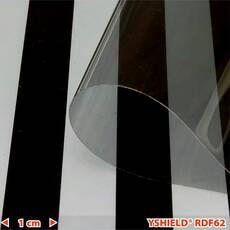
• Attenuation 18 dB at 1 GHz
• Light transmission: 62 %
• Color of daylight: Bright gray
• Width: 76 cm
• Length: 1m (30 m roll)
• Weight: 135 g
• Mounting: Water-activated, pressure-sensitive adhesive to the back
• Material thickness: 37.5 µm
• Only for indoor application on non heat absorbing glass surfaces!
• Background: Heat-absorbing glass is already metallized. When solar radiation permeates the metallization and subsequently hits the window foil, multi-reflections may occur.The windowpane will needlessly heat up and thus by expansion cause leaks or even cracks in the border-seals. Check the type of glass in advance!

• Attenuation 33 dB at 1 GHz
• Light transmission: 72 %
• Color of daylight: Very light green
• Width: 152 cm
• Length: Linear meter / 30 m roll
• Weight:320 g
• Mounting: Water-activated, pressure-sensitive adhesive to the back
• Material thickness: 75 µm
• Only for indoor application on non heat absorbing glass surfaces! Background: Heat-absorbing glass is already metallized. When solar radiation permeates the metallization and subsequently hits the window foil, multi reflections may occur.The windowpane will needlessly heat up and thus by expansion cause leaks or even cracks in the border-seals. Check the type of glass in advance!
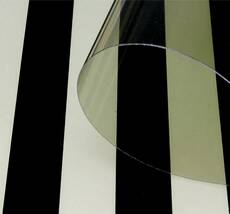
• Attenuation 33 dB at 1 GHz
• Light transmission: 72 %
• Color of daylight: Very light green
• Width: 76 cm
• Length: Linear meter / 30 m roll
• Weight: 165 g
• Mounting: Water-activated, pressure-sensitive adhesive to the back
• Material thickness: 75 µm
• Only for indoor application on non heat absorbing glass surfaces!
• Heat-absorbing glass is already metallized. When solar radiation permeates the metallization and subsequently hits the window foil, multi reflections may occur.The windowpane will needlessly heat up and thus by expansion cause leaks or even cracks in the border-seals. Check the type of glass in advance!
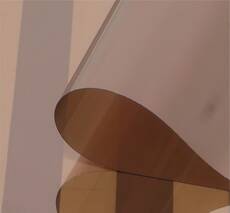
• Attenuation 35 dB at 1 GHz
• Light transmission: 25 %
• Color of daylight: Brown
• Weight:320 g
• Width: 152 cm
• Length: Linear meter / 30 m roll
• Mounting: Water-activated, pressure-sensitive adhesive to the back
• Material thickness: 50 µm
• Indoor application only on non heat absorbing glass surfaces!
• Heat-absorbing glass is already metallized. When solar radiation permeates the metallization and subsequently hits the window foil, multi reflections may occur.The windowpane will needlessly heat up and thus by expansion cause leaks or even cracks in the border-seals. Check the type of glass in advanced
• Outdoor application even on heat absorbing glass surfaces. This window film is specially designed for outdoor application. The solar radiation is blocked, this is why the window cant heat up. This film is especially approved for thermal insulation glazing.
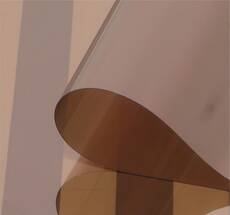
• Attenuation 35 dB at 1 GHz
• Light transmission: 25 %
• Color of daylight: Brown
• Weight: 135 g
• Width: 76 cm
• Length: Linear meter / 30 m roll
• Mounting: Water-activated, pressure-sensitive adhesive to the back
• Material thickness: 50 µm
• Indoor application only on non heat absorbing glass surfaces!
• Heat-absorbing glass is already metallized. When solar radiation permeates the metallization and subsequently hits the window foil, multi reflections may occur.The windowpane will needlessly heat up and thus by expansion cause leaks or even cracks in the border-seals. Check the type of glass in advanced
• Outdoor application even on heat absorbing glass surfaces. This window film is specially designed for outdoor application. The solar radiation is blocked, this is why the window cant heat up. This film is especially approved for thermal insulation glazing.

• Mounting concentrate for wet bonding window films
• 30 ml for 0.5 liter water for 3 linear meters of film
• Weight: 35 g


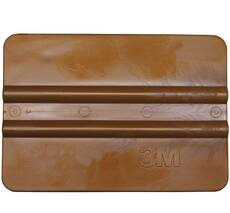
• Plastic scraper 10 cm for a bubble-free bonding of window films on glass surfaces
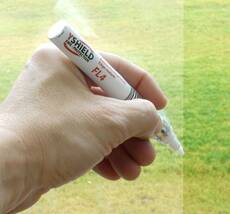
• for window films RDF72 and RDF25
• There is a high risk of corrosion to the foil edges due to the metal layers when this sealing is not used
• 10 ml lacquer for 100 linear meters foil edge or cut parts of about 20 linear meters window film
• Weight: 30 g
Window film against electrosmog for shielding glazed surfaces
Electromagnetic shielding window film supplements the shielding of a building by covering the glass surface. Glazed areas require separate treatment because shielding materials applied to walls do not cover windows. The shielding performance of the film was measured in a laboratory within a defined frequency range and with a single-layer configuration.
The measurement result is expressed in decibels. A higher dB value indicates greater shielding attenuation, but the figure always applies to the tested product, number of layers and frequency range. The laboratory result therefore cannot automatically be applied to other films or to a different number of layers.
Within which frequency range was the electromagnetic shielding window film tested?
RDF62 window film tested from 600 MHz to 40 GHz
The shielding attenuation of the RDF62 window film was tested between 600 MHz and 40 GHz. The measured range also covers frequency bands marked as GSM, UMTS, LTE and 5G. The documented result applies to a single layer of film.
The test arrangement closely followed IEEE Std 299-2006 or ASTM D4935-10. The measurement curve represents the average of all tested production batches, with a stated tolerance of +/- 2 dB.
High-frequency electromagnetic fields and shielding attenuation
How is the attenuation of electromagnetic shielding window film measured?
During testing, the incident power flux density reaching the film is determined first, followed by the power flux density transmitted through the film. The shielding attenuation is calculated from the ratio of these two values. The result is a dimensionless quantity expressed in decibels.
Vector network analysers with a measuring dynamic range of up to 140 dB were used for the test. One arrangement used horizontally and vertically polarised horn antennas positioned inside and outside the test chamber. The other arrangement used radially polarised TEM cells.
What does an 18 dB shielding value mean?
Single-layer shielding result of the RDF62 film
The documented shielding attenuation of the single-layer window film is 18 dB. According to the conversion table included with the laboratory test, 10 dB corresponds to 90 percent attenuation, while 20 dB corresponds to 99 percent attenuation. The 18 dB result is positioned between these two documented reference values.
The laboratory report does not provide separate attenuation values for two or three layers. The single-layer result therefore cannot automatically be multiplied for multi-layer use. When comparing products within the category, data measured with the same method and the same number of layers should be considered.
Shielding radio-frequency radiation on window glass
Shielding glazed surfaces with light-transmitting film
The window film is applied directly to the glass pane, so the shielding layer covers the entire filmed surface. The available laboratory report documents the attenuation of electromagnetic waves. It does not specify light transmission, colour, UV filtering or thermal protection properties.
The mobile network labels shown on the measurement graph help identify the tested frequency range. The report does not provide separate values for each mobile network band, so the uniform 18 dB measurement result applies across the entire documented range.
How is window glass retrofitted with film using a wet application method?
FMK30 mounting concentrate for wet application
The mounting concentrate is intended for the wet application of window film. It must be mixed with water and used during installation. The documentation shows air bubbles under a film applied manually without liquid, while no air bubbles are visible after wet application using the concentrate and a squeegee.
During wet application, the film can be positioned on the surface before the liquid and air are pushed out with a smoothing tool. The documentation names the FVR10 squeegee for installation. It does not provide information about alternative tools or different mixing ratios.
Mounting concentrate for reducing air bubbles
Why can a concentrate be used when applying window film?
Air may remain between the film and the glass during dry manual application. With wet application, the mounting concentrate mixed with water and the use of a squeegee support the installation process. In the documented comparison, no air bubbles are visible on the surface installed using the wet method.
- The concentrate is intended for wet application.
- The specified pack size is 30 ml.
- The concentrate must be added to 0.5 litres of water.
- The documented quantity is suitable for 3 linear metres of film.
- The stated surface coverage is 4.5 m2.
The mixing ratio and coverage figures belong together. The full 30 ml quantity is specified for 0.5 litres of water and 3 linear metres of film.
What surface area can be covered with the mounting concentrate?
FMK30 concentrate dosage for 4.5 m2 of film
The 30 ml mounting concentrate is sufficient for 0.5 litres of water. This mixture can be used for the wet application of 3 linear metres, corresponding to 4.5 m2 of window film. The linear metre and square metre values refer to the same documented quantity of film.
For larger or smaller areas, the required quantity can be planned from the stated ratio, but the source does not provide a separate dosage table. It also does not include instructions for undiluted use or alternative mixtures with different quantities of water.
Edge sealing for window films containing metallic layers
FL4 edge sealant for RDF72 and RDF25 window films
The edge sealant is specified only for RDF72 and RDF25 window films. Edge sealing is mandatory for these types because the metallic layers create a high risk of corrosion at unsealed film edges. The data sheet does not name RDF62, so compatibility between the edge sealant and RDF62 is not documented.
The edge sealant is supplied as a paint pen containing 10 ml of lacquer. The stated quantity is sufficient for sealing 100 linear metres of film edge or approximately 20 linear metres of window film cut to size.
When can the edge sealant be applied after film installation?
Eight-week waiting period before sealing the edges
The edge sealant must not be applied for eight weeks after the window film has been installed. During this waiting period, excess water remaining from installation can evaporate. Edge sealing may only be carried out afterwards on the affected film types.
The documentation does not specify a shorter drying time for different temperatures, humidity levels or glass surfaces. The eight-week period must therefore be treated as a uniform requirement for the named film types.
Documented criteria for selecting light-transmitting shielding film
Which data can be used when selecting window protection against electrosmog?
When selecting electromagnetic shielding window film, the documented frequency range, shielding attenuation expressed in dB, number of layers and measurement tolerance can be checked. A separate installation aid can be selected where the film is suitable for wet application.
For films containing metallic layers, it must also be checked whether edge sealing is required. The edge sealant cannot be considered generally compatible with every window film. It is documented only for the film types explicitly named in its data sheet.
Mobile network frequencies and window protection against electrosmog
Window film in GSM, UMTS, LTE and 5G frequency ranges
The laboratory graph marks GSM, UMTS, LTE and 5G bands within the tested range from 600 MHz to 40 GHz. The measurement curve of the single-layer film shows 18 dB shielding attenuation across this range. The document does not assign separate dB values to the individual network technologies.
Window film against electrosmog is a product category in which both laboratory shielding data and the installation system are important. We recommend that you check the tested frequency range, number of layers, required quantity of wet-application concentrate and the edge-sealing requirements of the selected film type separately.
Frequently asked questions about electromagnetic shielding window film
- What is the documented shielding attenuation of the RDF62 window film?
The single-layer film provides 18 dB shielding attenuation across the tested range from 600 MHz to 40 GHz. - Can the same edge sealant be used with every window film?
No. The edge sealant data sheet names only RDF72 and RDF25. - How much water should be mixed with the mounting concentrate?
The 30 ml concentrate must be added to 0.5 litres of water. - What area of film can be installed with one portion of concentrate?
The specified quantity is suitable for 3 linear metres, corresponding to 4.5 m2 of film. - When can the required edge sealing be carried out?
Eight weeks after the window film has been installed, allowing excess water to evaporate.
Summary of selecting window films against electrosmog
A window film with a documented frequency range and shielding attenuation can be selected for shielding glazed surfaces. The single-layer laboratory result of RDF62 is 18 dB between 600 MHz and 40 GHz. For wet installation, 30 ml of mounting concentrate can be mixed with 0.5 litres of water for 4.5 m2 of film.
Edge-sealing requirements vary by film type. The FL4 edge sealant is documented for RDF72 and RDF25 and may only be applied eight weeks after installation. When assembling the required products, the film measurement data, installation method and type-specific edge treatment requirements must therefore be checked together.