

Sirio Base Station UHF Antenna
The Sirio UHF base station antenna category includes fixed-installation omnidirectional and directional antennas for UHF radio communication. The available configurations collectively cover frequencies between 300 and 510 MHz, although this does not mean that a single antenna operates continuously across the entire range. Available designs include quarter-wave, half-wave, three-quarter-wave, collinear, dipole, and Yagi antennas. Documented gain ranges from 2.15 to 14 dBi, while maximum input power varies between 20 and 300 W. When selecting the appropriate configuration, operating frequency, radiation pattern, power handling, and installation requirements must all be considered. Read more...

• Type: 3/4λ coaxial J-pole
• Frequency range @ SWR ≤1.5: 410-425 MHz
• Impedance: 50Ω
• Radiation (H-plane): 360° omnidirectional
• Radiation (E-plane): beamwidth @ -3 dB = 60°
• Polarization: linear vertical
• Gain: 2 dBd, 4.15 dBi
• Max. Power (CW) @ 30°C: 200 Watts
• Grounding protection: All metal parts are DC-grounded, the inner conductor shows a DC short
• Connector: N-female

• Type: 3/4λ coaxial J-pole
• Frequency range @ SWR ≤1.5: 425-440 MHz
• Impedance: 50Ω
• Radiation (H-plane): 360° omnidirectional
• Radiation (E-plane): beamwidth @ -3 dB = 60°
• Polarization: linear vertical
• Gain: 2 dBd, 4.15 dBi
• Max. Power (CW) @ 30°C: 200 Watts
• Grounding protection: All metal parts are DC-grounded, the inner conductor shows a DC short
• Connector: N-female
• Type: 3/4λ coaxial J-pole
• Frequency range @ SWR ≤1.5: 440-455 MHz
• Impedance: 50Ω
• Radiation (H-plane): 360° omnidirectional
• Radiation (E-plane): beamwidth @ -3 dB = 60°
• Polarization: linear vertical
• Gain: 2 dBd, 4.15 dBi
• Max. Power (CW) @ 30°C: 250 Watts
• Grounding protection: All metal parts are DC-grounded, the inner conductor shows a DC short
• Connector: N-female
• Type: 3/4λ coaxial J-pole
• Frequency range @ SWR ≤1.5: 455-470 MHz
• Impedance: 50Ω
• Radiation (H-plane): 360° omnidirectional
• Radiation (E-plane): beamwidth @ -3 dB = 60°
• Polarization: linear vertical
• Gain: 2 dBd, 4.15 dBi
• Max. Power (CW) @ 30°C: 250 Watts
• Grounding protection: All metal parts are DC-grounded, the inner conductor shows a DC short
• Connector: N-female
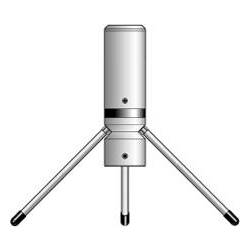
• Type: 1/4λ ground plane large band
• Frequency range @ SWR ≤1.5: 380-480 MHz
• Impedance: 50Ω
• Radiation (H-plane): 360° omnidirectional
• Radiation (E-plane): beamwidth @ -3 dB = 80°
• Radiation angle: 0°
• Polarization: linear vertical
• Gain: 0 dBd, 2.15 dBi
• Max. Power (CW) @ 30°C: 300 Watts
• Grounding protection: All metal parts are DC-grounded, the inner conductor shows a DC short
• Connector: N-female

• Type: 3x5/8λ ground plane colinear
• Frequency range: 370-510 MHz (tunable)
• Impedance: 50Ω
• Radiation (H-plane): 360° omnidirectional
• Radiation (E-plane): beamwidth @ -3 dB = 25°
• Radiation angle: -2°
• Polarization: linear vertical
• Gain: 4.6 dBd, 6.75 dBi
• Max. Power (CW) @ 20°C: 200 Watts
• Grounding protection: All metal parts are DC-grounded, the inner conductor is shows a DC short
• Connector: N-female, gold plated central pin
• Type: 3x5/8λ ground plane colinear
• Frequency range @ SWR ≤2: 427-443 MHz
• Impedance: 50Ω
• Radiation (H-plane): 360° omnidirectional
• Radiation (E-plane): beamwidth @ -3 dB = 24°
• Radiation angle: 0°
• Polarization: linear vertical
• Gain: 4.6 dBd, 6.75 dBi
• Max. Power (CW) @ 30°C: 200 Watts
• Grounding protection: All metal parts are DC-grounded, the inner conductor is coupled capacitively
• Connector: N-female, gold plated central pin
• Type: 5x5/8λ ground plane colinear
• Frequency range @ SWR ≤2: 427-443 MHz
• Impedance: 50Ω
• Radiation (H-plane): 360° omnidirectional
• Radiation (E-plane): beamwidth @ -3 dB = 17°
• Radiation angle: -1.5°
• Polarization: linear vertical
• Gain: 7.1 dBd, 9.25 dBi
• Max. Power (CW) @ 30°C: 200 Watts
• Grounding protection: All metal parts are DC-grounded, the inner conductor is coupled capacitively
• Connector: N-female, gold plated central pin
• Type: 5x5/8λ ground plane colinear
• Frequency range @ SWR ≤2: 438-454 MHz (PMR)
• Impedance: 50Ω
• Radiation (H-plane): 360° omnidirectional
• Radiation (E-plane): beamwidth @ -3 dB = 17°
• Radiation angle: -1.5°
• Polarization: linear vertical
• Gain: 7.1 dBd, 9.25 dBi
• Max. Power (CW) @ 30°C: 200 Watts
• Grounding protection: All metal parts are DC-grounded, the inner conductor is coupled capacitively
• Connector: N-female, gold plated central pin

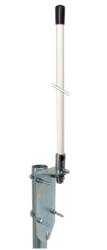
• Type: 1/2λ ground plane
• Frequency range @ SWR ≤2: 430-450 MHz
• Impedance: 50Ω
• Radiation (H-plane): 360° omnidirectional
• Polarization: linear vertical
• Gain: 0 dBd, 2.15 dBi
• Max. Power (CW) @ 30°C: 200 Watts
• Grounding protection: All metal parts are DC-ground, the inner conductor shows a DC-short
• Connector: N-female
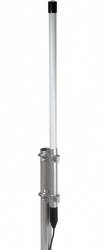
• Type: colinear
• Frequency range @ SWR ≤1.5: 380-470 MHz
• Impedance: 50Ω
• Radiation (H-plane): 360° omnidirectional
• Radiation (E-plane): beamwidth @ -3 dB = 78°
• Polarization: linear Vertical
• Gain: 0 dBd, 2.15 dBi
• Max. Power (CW) @ 30°C: 75 Watts
• Grounding protection: All metal parts are DC-grounded, the inner conductor shows a DC-short
• Connector: N-female with rubber protection cap
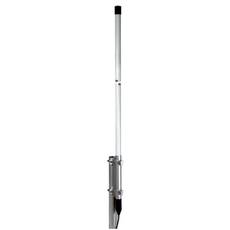
• Type: colinear
• Frequency range @ SWR ≤2: 380-430 MHz
• Impedance: 50Ω
• Radiation (H-plane): 360° omnidirectional
• Radiation (E-plane): beamwidth @ -3 dB = 40°
• Radiation angle: 0°
• Polarization: linear vertical
• Gain: 3 dBd, 5.15 dBi
• Max. Power (CW) @ 30°C: 75 Watts
• Grounding protection: All metal parts are DC-grounded, the inner conductor shows a DC-short
• Connector: N-female with rubber protection cap
• Type: colinear
• Frequency range @ SWR ≤2: 400-430 MHz
• Impedance: 50Ω
• Radiation (H-plane): 360° omnidirectional
• Radiation (E-plane): beamwidth @ -3 dB = 14°
• Radiation angle: 0°
• Polarization: linear vertical
• Gain: 6 dBd, 8.15 dBi
• Max. Power (CW) @ 30°C: 75 Watts
• Grounding protection: All metal parts are DC-grounded, the inner conductor shows a DC-short
• Connector: N-female with rubber protection cap
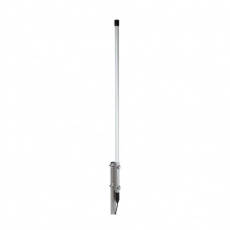
• Type: colinear
• Frequency range @ SWR ≤2: 420-470 MHz
• Impedance: 50Ω
• Radiation (H-plane): 360° omnidirectional
• Radiation (E-plane): beamwidth @ -3 dB = 40°
• Radiation angle: 0°
• Polarization: linear vertical
• Gain: 3 dBd, 5.15 dBi
• Max. Power (CW) @ 30°C: 75 Watts
• Grounding protection: All metal parts are DC-grounded, the inner conductor shows a DC-short
• Connector: N-female with rubber protection cap

• Type: colinear
• Frequency range @ SWR ≤2: 420-450 MHz
• Impedance: 50Ω
• Radiation (H-plane): 360° omnidirectional
• Radiation (E-plane): beamwidth @ -3 dB = 14°
• Radiation angle: 0°
• Polarization: linear vertical
• Gain: 6 dBd, 8.15 dBi
• Max. Power (CW) @ 30°C: 75 Watts
• Grounding protection: All metal parts are DC-grounded, the inner conductor shows a DC-short
• Connector: N-female with rubber protection cap
Special gross price: 185.14€ (Net price: 145.78€)
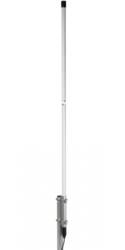
• Type: colinear
• Frequency range @ SWR ≤2: 440-470 MHz
• Impedance: 50Ω
• Radiation (H-plane): 360° omnidirectional
• Radiation (E-plane): beamwidth @ -3 dB = 14°
• Radiation angle: 0°
• Polarization: linear vertical
• Gain: 6 dBd, 8.15 dBi
• Max. Power (CW) @ 30°C: 75 Watts
• Grounding protection: All metal parts are DC-grounded, the inner conductor shows a DC-short
• Connector: N-female with rubber protection cap
Special gross price: 185.14€ (Net price: 145.78€)
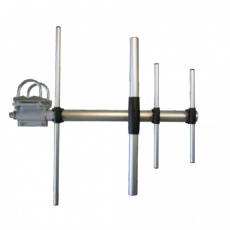
• Type: 4 elements Yagi
• Frequency range @ SWR ≤2: 300-500 MHz
• Impedance: 50Ω
• Radiation (H-plane) beamwidth @ -3 dB: 150° @400MHz
• Radiation (E-plane) beamwidth @ -3 dB: 68° @400MHz
• Front to back ratio: ≥ 9 dB
• Polarization: linear vertical or Horizontal
• Gain: 5.85 dBd - 8 dBi
• Max. Power (CW) @ 30°C: 150 Watts
• Grounding protection: All metal parts are DC-grounded, the inner conductor shows a DC short
• Connector: N-female with rubber protection cap
Special gross price: 108.51€ (Net price: 85.44€)
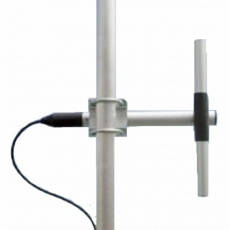
• Type: dipole
• Frequency range @ SWR ≤1.5: 380-470 MHz
• Impedance: 50Ω
• Radiation (H-plane): beamwidth @ -3 dB = 200°
• Radiation (E-plane): beamwidth @ -3 dB = 68°
• Front to back ratio: ≥ 8 dB
• Polarization: linear vertical
• Gain: 2.35 dBd - 4.5 dBi
• Max. Power (CW) @ 30°C: 150 Watts
• Grounding protection: All metal parts are DC-grounded, the inner conductor shows a DC short
• Connector: N-female with rubber protection cap
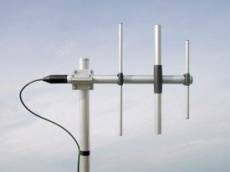
• Type: 3 elements Yagi
• Frequency range @ SWR ≤1.5: 380-440 MHz
• Impedance: 50Ω
• Radiation (H-plane): beamwidth @ -3 dB = 125°
• Radiation (E-plane): beamwidth @ -3 dB = 65°
• Front to back ratio: ≥ 17 dB
• Polarization: linear vertical or Horizontal
• Gain: 4.85 dBd - 7 dBi
• Max. Power (CW) @ 30°C: 150 Watts
• Grounding protection: All metal parts are DC-grounded, the inner conductor shows a DC short
• Connector: N-female with rubber protection cap
Special gross price: 109.35€ (Net price: 86.10€)

• Type: 3 elements yagi antenna
• Frequency range @ SWR ≤1.5: 400-470 MHz
• Impedance: 50Ω
• Radiation (H-plane): beamwidth @ -3 dB = 125°
• Radiation (E-plane): beamwidth @ -3 dB = 65°
• Front to back ratio: ≥ 17 dB
• Polarization: linear vertical or horizontal
• Gain: 4.85 dBd, 7 dBi
• Max. Power (CW) @ 30°C: 150 Watts
• Grounding protection: All metal parts are DC-grounded, the inner conductor shows a DC short
• Connector: N-female with rubber protection cap
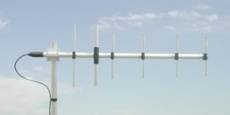
• Type: 6 elements Yagi
• Frequency range @ SWR ≤1.5: 380-440 MHz
• Impedance: 50Ω
• Radiation (H-plane): beamwidth @ -3 dB = 70°
• Radiation (E-plane): beamwidth @ -3 dB = 55°
• Front to back ratio: ≥ 17 dB
• Polarization: linear vertical or Horizontal
• Gain: 8.85 dBd - 11 dBi
• Max. Power (CW) @ 30°C: 150 Watts
• Grounding protection: All metal parts are DC-grounded, the inner conductor shows a DC short
• Connector: N-female with rubber protection cap
Special gross price: 137.49€ (Net price: 108.26€)
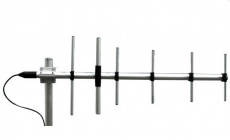
• Type: 6 elements yagi antenna
• Frequency range @ SWR ≤1.5: 400-470 MHz
• Impedance: 50Ω
• Radiation (H-plane): beamwidth @ -3 dB = 70°
• Radiation (E-plane): beamwidth @ -3 dB = 55°
• Front to back ratio: ≥ 17 dB
• Polarization: linear vertical or horizontal
• Gain: 8.85 dBd, 11 dBi
• Max. Power (CW) @ 30°C: 150 Watts
• Grounding protection: All metal parts are DC-grounded, the inner conductor shows a DC short
• Connector: N-female with rubber protection cap
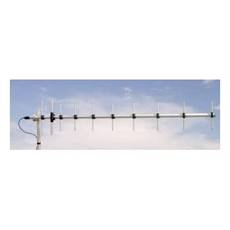
• Type: 6 elements Yagi
• Frequency range @ SWR ≤1.5: 380-440 MHz
• Impedance: 50Ω
• Radiation (H-plane): beamwidth @ -3 dB = 40°
• Radiation (E-plane): beamwidth @ -3 dB = 45°
• Front to back ratio: ≥ 18 dB
• Polarization: linear vertical or Horizontal
• Gain: 11.85 dBd - 14 dBi
• Max. Power (CW) @ 30°C: 150 Watts
• Grounding protection: All metal parts are DC-grounded, the inner conductor shows a DC short
• Connector: N-female with rubber protection cap
• Type: 10 elements yagi antenna
• Frequency range @ SWR ≤1.5: 400-470 MHz
• Impedance: 50Ω
• Radiation (H-plane): beamwidth @ -3 dB = 50°
• Radiation (E-plane): beamwidth @ -3 dB = 45°
• Front to back ratio: ≥ 18 dB
• Polarization: linear vertical or horizontal
• Gain: 11.85 dBd, 14 dBi
• Max. Power (CW) @ 30°C: 150 Watts
• Grounding protection: All metal parts are DC-grounded, the inner conductor shows a DC short
• Connector: N-female with rubber protection cap
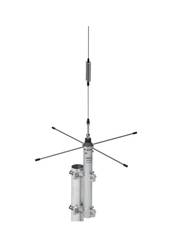
• Type: 1/4 λ + 1/2 λ collinear
• Radiation: omnidirectional
• Maximum output power: 150 watts (CW) continuous
• Power gain: 2,5 dBd - 4,65 dBi
• Connector: N-female
• Materials: aluminium, brass, stainless steel 17/7 PH
• Height (approx.): 990 mm
• Weight (approx.): 730 gr
• Frequency range: 365-470 MHz tunable
• Systems: 70cm-HAM, TETRA, CDMA-450, ISM/SIGFOX/LoRa 433MHz
Sirio UHF base station antenna – main technical characteristics
The Sirio antenna range includes UHF base station antennas designed for different radio communication systems. Omnidirectional configurations provide a 360-degree radiation pattern in the horizontal plane, while Yagi antennas concentrate radiation in a specific direction. The antennas in this category have a nominal impedance of 50 ohms. Gain, maximum power handling, and connector configurations differ between designs, so the general specifications of the category must not be interpreted as the specifications of a single antenna.
Key specifications of Sirio UHF base station antennas
- Documented frequency coverage across the complete range: 300-510 MHz.
- Antenna designs: 1/4, 1/2, and 3/4 Lambda, collinear, dipole, and Yagi.
- Radiation pattern: omnidirectional or directional.
- Antenna gain: 2.15-14 dBi, depending on the configuration.
- Maximum input power: 20-300 W.
- Nominal impedance: 50 ohms.
- Documented connector option: N female on several configurations.
- Applications: UHF radio systems operating on compatible frequencies.
Determining the required frequency range and radiation pattern is the first step. We recommend verifying these fundamental requirements before comparing antenna gain values.
What frequency ranges do Sirio UHF base station antennas support?
The category includes several UHF base station antennas designed for different operating frequencies. Some omnidirectional configurations operate within 410-425, 425-440, 440-455, or 455-470 MHz. Other antennas cover 380-480 MHz, 370-510 MHz, or 365-470 MHz. Directional Yagi antennas include configurations for 300-500 MHz, 380-440 MHz, and 400-470 MHz. The radio equipment's operating frequency must always be compared with the documented frequency range of the specific antenna.
Sirio UHF antennas for frequencies around 430 MHz
Several antenna designs are available for UHF radio communication around 430 MHz. Certain configurations are designed for suitable frequencies within the 70-centimetre amateur radio band, while others provide documented frequency coverage for additional UHF applications. Some antennas can be adjusted for specific frequencies, while others are designed for narrower, predefined operating ranges. Antenna frequency coverage does not, by itself, establish permission to transmit.
Vertical and collinear antennas for UHF radio communication
The available vertical antenna designs include 1/4 Lambda, 1/2 Lambda, and 3/4 Lambda radiators. Collinear antennas use multiple radiating sections arranged vertically above one another. The category also includes 3 x 5/8 Lambda and 5 x 5/8 Lambda configurations. These antennas provide omnidirectional radiation in the horizontal plane, while their different radiator structures produce varying gain characteristics and vertical radiation patterns.
How does a Sirio collinear antenna differ?
A collinear antenna uses multiple radiating sections to produce the intended radiation pattern. Documented three-section configurations have a gain of 6.75 dBi, while five-section versions provide 9.25 dBi. Other collinear designs are available with gain values of 2.15, 5.15, or 8.15 dBi. Higher gain does not automatically guarantee a longer communication range, as installation height, obstacles, and system losses also affect radio communication performance.
What is the difference between omnidirectional and directional UHF antennas?
An omnidirectional UHF antenna is designed to provide a 360-degree radiation pattern in the horizontal plane. This can be suitable for radio systems requiring communication in multiple directions. A directional antenna, by contrast, concentrates radiation towards a particular direction. The choice between these two configurations should therefore be based primarily on the locations of the connected radio stations and the required coverage direction.
Sirio directional antennas and beamwidth
For directional configurations, the technical documentation also specifies beamwidth. Different Yagi antennas have documented horizontal -3 dB beamwidths of approximately 150, 125, 70, or 50 degrees. A smaller beamwidth indicates narrower directional coverage. The intended radio link direction must therefore be considered during installation. Checking only the operating frequency and antenna gain is not sufficient.
Sirio Yagi antennas and dipole configurations
The category includes 3-element, 4-element, 6-element, and 10-element Yagi antennas. The documented gain of three-element configurations is 7 dBi, while the four-element wideband version provides 8 dBi. Six-element antennas offer 11 dBi, and ten-element configurations provide 14 dBi. Different element counts are associated with different directional radiation characteristics. Accurate antenna alignment is particularly important when selecting higher-gain configurations with narrower beamwidths.
Which applications are suitable for Sirio dipole antennas?
The dipole antenna in this category has a documented frequency range of 380-470 MHz, a gain of 4.5 dBi, and a maximum power rating of 150 W. Its specified horizontal beamwidth is 200 degrees, meaning its radiation pattern differs from that of a 360-degree omnidirectional antenna. Its VSWR is no greater than 1.5. Because dipole and Yagi antennas have different directional characteristics, the coverage requirements of the intended radio system must be evaluated separately.
What antenna gain and maximum transmit power ratings are available?
Antenna gain across the range varies between 2.15 and 14 dBi. Quarter-wave and half-wave configurations include antennas with 2.15 dBi gain, while three-quarter-wave versions provide 4.15 dBi. Collinear designs include configurations with 9.25 dBi gain, and directional Yagi antennas reach a documented maximum of 14 dBi. The dBi unit expresses gain relative to a theoretical isotropic radiator and does not represent active signal amplification.
Sirio UHF antenna power ratings
- Half-wave omnidirectional configuration: 20 W maximum input power.
- Certain collinear antennas: 75 W maximum input power.
- Yagi and dipole antennas: 150 W maximum input power.
- Several vertical and collinear configurations: 200 W maximum input power.
- Wideband quarter-wave configuration: 300 W maximum input power.
These values represent the power-handling limits of separate antenna designs. The radio's output power must always be compared with the antenna's maximum permitted input power. For certain configurations, the manufacturer's operating-mode specifications must also be considered.
Antenna impedance, VSWR, and radio-frequency matching
The documented antenna impedance of the Sirio UHF antennas is 50 ohms. This is an important compatibility parameter when connecting the transceiver, coaxial transmission line, and antenna. Several directional configurations and the dipole antenna have a VSWR of no greater than 1.5. VSWR, or Voltage Standing Wave Ratio, is a measurable parameter used to evaluate impedance matching between an antenna and its transmission line. Exact values and measurement conditions must always be verified in the documentation of the selected antenna.
Why is VSWR measurement important for UHF base station antennas?
Incorrect impedance matching can increase reflected radio-frequency power. Possible causes include faulty connectors, damaged coaxial cable, or incorrect antenna frequency adjustment. For tunable configurations, setting the antenna to the intended operating frequency is particularly important. We recommend checking the VSWR of the complete antenna system with an appropriate UHF measuring instrument after installation.
What N connectors and coaxial cables are required?
Several antennas in the category feature N female connectors. In addition to selecting a compatible N male plug, the impedance and frequency-dependent attenuation of the coaxial cable must also be checked. Longer transmission lines can introduce greater losses, making cable selection an important part of antenna system design. N connectors are not used on every configuration, so the exact RF connector of the selected antenna must be verified before purchasing.
Antenna mounting and outdoor installation requirements
When planning antenna mounting, both the mechanical dimensions and radiation pattern of the selected design must be considered. Omnidirectional antennas require a securely mounted supporting structure, while the installation direction is particularly important for directional Yagi antennas. Outdoor coaxial connections must be protected against moisture. Mast load capacity, grounding, and safe clearance from overhead power lines must all be checked before installation.
How should you select the right Sirio UHF base station antenna?
To select the appropriate Sirio UHF base station antenna, first determine the radio's operating frequency and the required coverage direction. Next, check antenna gain, permitted input power, 50-ohm impedance matching, and connector compatibility. Omnidirectional configurations should be considered when communication is required in multiple directions, while directional antennas are more appropriate for radio links with a defined direction. We recommend comparing the documented electrical and mechanical specifications according to the intended application.
FAQ – Sirio UHF base station antennas
- What frequencies are supported by Sirio UHF base station antennas?
The different configurations in the category collectively cover frequencies between 300 and 510 MHz. - Are all Sirio UHF antennas omnidirectional?
No. The range includes omnidirectional, dipole, and directional Yagi antennas. - What is the highest documented antenna gain?
The directional Yagi antenna range includes configurations with 14 dBi gain. - What maximum input power ratings are available?
Documented ratings range from 20 to 300 W, depending on the antenna design. - What is the antenna impedance?
The antennas in this category have a nominal impedance of 50 ohms. - How does a Yagi antenna differ from an omnidirectional antenna?
A Yagi antenna concentrates radiation in a specific direction, while an omnidirectional design provides a 360-degree radiation pattern in the horizontal plane. - Which connector types are available?
Several configurations feature N female connectors. The exact connector must be checked for each antenna. - Is antenna impedance matching verification necessary?
Yes. Checking VSWR is particularly important after installing adjustable antennas and outdoor transmission lines.
Summary
The Sirio UHF base station antenna category includes omnidirectional, collinear, dipole, and directional Yagi antennas designed for different UHF radio communication applications. The documented configurations provide solutions for frequencies between 300 and 510 MHz, with gain values ranging from 2.15 to 14 dBi and maximum input power ratings of 20-300 W. Selecting the appropriate antenna requires checking frequency compatibility, radiation pattern, 50-ohm impedance matching, suitable RF connectors, and secure outdoor mounting.