

Sirio LoRa Vehicle Antenna
The Sirio LoRa vehicle antenna category includes antennas designed for vehicle-mounted LoRa radio communication. The documented configurations include solutions for both 868 MHz and 915 MHz LoRa applications. The antennas in the category are specified with 50 ohm impedance, linear vertical polarization, and an omnidirectional radiation pattern. When selecting an antenna, the frequency range, gain, maximum power, cable type and length, as well as connector configuration should all be checked. Read more...
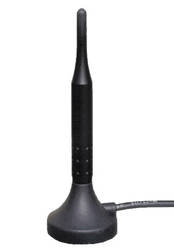
• Type: multiband, 1/4 λ, omnidirectional
• Polarization: linear vertical
• Frequency range: 698-960 MHz & 1710-2700 MHz
• Systems: GSM-R, GSM-900, 2G-GSM/GPRS/EDGE, 3G-UMTS, 4G-LTE, ISM/SIGFOX/LoRa 868MHz, ISM/SIGFOX/LoRa 915MHz, WiFi-2.4GHz
• Impedance: 50 Ω
• Gain: 0 dB
• Max. Power: 20 Watts
• Cable: 3 m RG174, SMA male


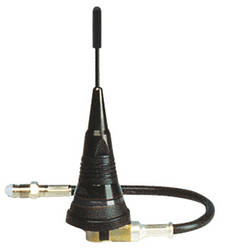
• Type: 1/4 λ, omnidirectional
• Polarization: linear vertical
• Frequency range: 824-960 MHz
• Systems: GSM-R, GSM-900, ISM/SIGFOX/LoRa 868MHz, ISM/SIGFOX/LoRa 915MHz
• Impedance: 50 Ω
• Gain: 0 dB
• Max. Power: 30 Watts
• Cable: 5 m RG58, FME female
Special gross price: 22.82€ (Net price: 17.97€)

• Type: 1/4 λ, omnidirectional
• Polarization: linear vertical
• Frequency range: 824-960 MHz
• Systems: GSM-R, GSM-900, ISM/SIGFOX/LoRa 868MHz, ISM/SIGFOX/LoRa 915MHz
• Impedance: 50 Ω
• Gain: 0 dB
• Max. Power: 30 Watts
• Cable: 3 m RG58, FME female
Special gross price: 23.88€ (Net price: 18.80€)
Sirio LoRa vehicle antenna - technical characteristics and application areas
The antennas in the category include versions designed for a narrower 868-870 MHz frequency range, as well as configurations covering 824-960 MHz and multiband operation. The documented frequency ranges of the multiband solutions are 698-960 MHz and 1710-2700 MHz. These include antennas that can be used not only for LoRa but also for GSM-R, GSM-900, 2G-GSM/GPRS/EDGE, 3G-UMTS, 4G-LTE, and WiFi-2.4GHz systems.
What frequency range is supported by a Sirio LoRa antenna?
The documented LoRa applications include 868 MHz and 915 MHz. Some antennas are specifically designed for the 868-870 MHz range, while other versions cover 824-960 MHz. The multiband mobile antenna operates in the 698-960 MHz and 1710-2700 MHz ranges. For this reason, the operating frequency of the radio system should always be compared with the specified frequency range of the antenna.
ISM band, SIGFOX, and LoRa radio communication
ISM, SIGFOX, and LoRa systems are all listed as documented application areas for antennas in this category. 868 MHz LoRa operation appears for several configurations, while some antennas are also specified for 915 MHz LoRa and SIGFOX systems. Due to the different available frequency ranges, the operating frequency of the radio communication system is one of the primary technical parameters when selecting an antenna.
Which antenna mounting and cabling options are available?
The Sirio LoRa vehicle antenna range includes magnetic mount and other vehicle antenna configurations. The documented cabling options include 3 m RG58, 5 m RG58, and 3 m RG174 coaxial cables. Depending on the antenna configuration, the connector can be an FME female connector or an SMA male connector.
Sirio vehicle antenna with RG58 and RG174 cable
- 3 m RG58 cable with FME female connector
- 5 m RG58 cable with FME female connector
- 3 m RG174 cable with SMA male connector
- Magnetic mount vehicle antenna configuration
The cable type and cable length are not identical for every antenna, so the required cable length should be checked according to the installation position and the location of the radio equipment. The connector configuration should also be compared with the connector used by the receiving device.
Sirio vehicle antenna - impedance, polarization, and gain
The documented impedance of the LoRa antennas in the category is 50 ohm. The polarization is linear vertical, while the radiation pattern is omnidirectional. Depending on the configuration, documented gain values of 0 dB and 3 dB are available. According to the reviewed technical data, the maximum power can be 20 W or 30 W.
What does an omnidirectional LoRa vehicle antenna design mean?
The technical data of the antennas in the category specify an omnidirectional radiation pattern. The documented antenna structures include 1/4 wavelength and 1/4 + 5/8 wavelength configurations. Antenna type, gain, and frequency range vary between configurations and therefore should not be represented by a single general value.
What gain and power ratings are available for LoRa antennas?
The documented antenna data include 0 dB and 3 dB gain. The maximum power is 20 W for some configurations and 30 W for others. These values are associated with the electrical design of the relevant antenna, so the output power of the radio equipment should always be compared with the specified maximum power of the selected antenna.
What should be checked when selecting a LoRa antenna?
We recommend that you do not rely solely on the LoRa designation when selecting a Sirio LoRa vehicle antenna. The exact operating frequency of the radio, the antenna frequency range, 50 ohm impedance, documented gain, maximum power, cable type, and connector should all be checked. Different antenna frequency ranges may apply to 868 MHz and 915 MHz applications.
Sirio antenna selection checklist
- 868 MHz or 915 MHz LoRa application
- Complete antenna frequency range
- 50 ohm impedance
- Linear vertical polarization
- Omnidirectional radiation pattern
- 0 dB or 3 dB documented gain
- 20 W or 30 W maximum power
- RG58 or RG174 cable
- 3 m or 5 m cable length
- FME female or SMA male connector
- Magnetic mount or other vehicle antenna configuration
For a multiband antenna, it should also be checked which additional radio systems are supported alongside LoRa. The documented solutions include GSM-R, GSM-900, 2G-GSM/GPRS/EDGE, 3G-UMTS, 4G-LTE, and WiFi-2.4GHz applications.
FAQ - Sirio LoRa vehicle antennas
- Which LoRa frequencies are available for vehicle antennas?
The documented applications include 868 MHz and 915 MHz LoRa systems. - What is the impedance of the LoRa antennas?
The documented impedance of the antennas in the category is 50 ohm. - What polarization is used?
The documented polarization is linear vertical. - What gain values are available in the category?
Depending on the configuration, the documented gain is 0 dB or 3 dB. - Which coaxial cables are used?
Both RG58 and RG174 cabling are documented in the category. - Can the same antenna be used for LoRa and SIGFOX systems?
Some configurations document ISM, SIGFOX, and LoRa applications within the same frequency range.
Summary
The Sirio LoRa vehicle antenna category includes vehicle antennas for 868 MHz and 915 MHz LoRa, ISM, and SIGFOX radio communication. The range includes 50 ohm antennas with linear vertical polarization and omnidirectional radiation patterns, with documented gain values of 0 dB or 3 dB. To select the appropriate configuration, the frequency range, maximum power, mounting method, cable length, cable type, and connector configuration should all be checked.