

True Heading GPS Antennas
The True Heading GPS antenna category includes two antennas designed for satellite positioning. The marine GPS/GNSS antenna is supplied with a 10 m RG58 coaxial cable and a TNC female connector and is specified for use with True Heading and Shiptron AIS systems. The Heavy Duty active GNSS antenna supports five satellite navigation systems: GPS, Galileo, GLONASS, BeiDou and EGNOS. Read more...
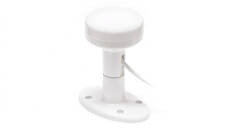
• GPS/GNSS antenna for marine applications
• Supplied with 10 m white RG58 coaxial cable
• TNC female connector
• White weather-resistant dome housing
• Supports fast and accurate positioning
• Specified for True Heading and Shiptron AIS systems
• This product is included with the CTRX Vision+ AIS Class B transponder

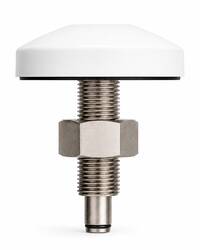
• Active GNSS antenna supporting five satellite navigation systems
• Supports GPS, Galileo, Glonass, BeiDou and Egnos
• Suitable for direct deck mounting or rail mounting
• Withstands walking pressure and harsh environmental conditions
• GPS (L1): 1560-1590 MHz, VSWR <2.0:1, 26 dBd
• Galileo (E1): 1563.144-1587.696 MHz, VSWR <2.0:1, 26 dBd
• Glonass (G1): 1598.0625-1605.37 MHz, VSWR <2.0:1, 26 dBd
• BeiDou (B1): 1559.052-1591.788 MHz, VSWR <2.5:1, 25 dBd
• Egnos (L1): 1574.397-1576.443 MHz, VSWR <2.0:1, 26 dBd
True Heading GPS antenna: GPS/GNSS solutions for navigation systems
The True Heading marine GPS/GNSS antenna is a receiving antenna designed for marine applications. The configuration includes a 10 m white RG58 coaxial cable, a TNC female connector and a white weather-resistant dome housing. The product is specified for use with True Heading and Shiptron AIS systems and is also listed as an accessory for the CTRX Vision+ Class B-SOTDMA AIS transponder. The CTRX Vision+ external GPS antenna connector is a TNC type.
The Heavy Duty active GNSS antenna is designed for marine and land-based navigation systems. Its fully sealed construction has an IP68 rating, can be mounted directly on a deck surface or on a pole fitting, and uses an SMA female connector. Its dimensions are 48 x 40 mm and its weight is 0.07 kg. The construction is designed to withstand pressure caused by being stepped on and is also specified for operation in harsh marine environments.
Which satellite navigation systems are supported by True Heading GNSS antennas?
The Heavy Duty active GNSS antenna supports five satellite navigation systems in a single unit: GPS, Galileo, GLONASS, BeiDou and EGNOS. The documented bands correspond to GPS L1, Galileo E1, GLONASS G1, BeiDou B1 and EGNOS L1 signals. Separate frequency ranges, VSWR values and gain data are specified for these systems.
The marine GPS/GNSS antenna can be used as the external GNSS antenna of the CTRX Vision+ AIS system. The dynamic vessel data handled by the CTRX Vision+ includes position information derived from GNSS data. The installation guide treats the connection and positioning of the external GNSS antenna as a separate installation step.
GPS L1, Galileo E1, GLONASS G1, BeiDou B1 and EGNOS L1 frequency ranges
The Heavy Duty active GNSS antenna has a GPS L1 frequency range of 1560-1590 MHz with a centre frequency of 1575.42 MHz, VSWR <2.0:1 and gain of 26 dBd. The Galileo E1 frequency range is 1563.144-1587.696 MHz, with a centre frequency of 1575.42 MHz, VSWR <2.0:1 and gain of 26 dBd. GLONASS G1 operates from 1598.0625 to 1605.37 MHz with VSWR <2.0:1 and gain of 26 dBd.
The BeiDou B1 frequency range is 1559.052-1591.788 MHz, with a centre frequency of 1575.42 MHz, VSWR <2.5:1 and gain of 25 dBd. The EGNOS L1 range is 1574.397-1576.443 MHz, with a centre frequency of 1575.42 MHz, VSWR <2.0:1 and gain of 26 dBd.
What role can a marine GPS antenna perform in an AIS system?
The True Heading marine GPS/GNSS antenna is specified as the external GNSS antenna for the CTRX Vision+ Class B-SOTDMA AIS transponder. The unit has a dedicated GNSS antenna connection, and the external GPS antenna connector is a TNC type. During installation, the 10 m antenna cable must be routed to the GNSS connector of the transponder.
The AIS system uses GNSS data as the source of vessel position information. With the CTRX Vision+, installation of the external antenna forms part of the system installation procedure. Separate installation requirements apply to sky visibility, mounting, cable routing and positioning in relation to radar transmission paths.
Active GNSS antenna design, IP68 protection and mounting options
The True Heading Heavy Duty active GNSS antenna has an IP68-rated, fully sealed construction. It can be mounted directly on a deck surface or attached to a pole fitting. The antenna is designed to withstand pressure caused by being stepped on and can be used in marine and land-based environments. It uses an SMA female connector, measures 48 x 40 mm and weighs 0.07 kg.
The other antenna in the category has a white dome housing and weather-resistant construction. Documented marine environmental factors include salt water, strong wind and UV exposure. Installation of the GNSS antenna used with the CTRX Vision+ system requires a 1 inch, 14 TPI threaded pole.
Pros:
- The Heavy Duty model supports five satellite navigation systems in a single antenna.
- The Heavy Duty antenna has an IP68 rating and a fully sealed construction.
- The marine GPS/GNSS antenna is supplied with a 10 m RG58 coaxial cable.
- The Heavy Duty model can be mounted on a deck surface or on a pole fitting.
Cons:
- Installation of the CTRX Vision+ GNSS antenna requires a 1 inch, 14 TPI threaded pole.
- Mast-top installation is not recommended if vessel movement can cause the antenna to swing.
- The antenna must not be installed directly in the transmission path of a radar antenna.
- The TNC female and SMA female versions require different connection arrangements.
The mounting location and connector type should be checked for the specific antenna before installation.
How should a True Heading GPS/GNSS antenna be positioned and connected?
The external GNSS antenna of the CTRX Vision+ should be installed in a location with a clear view of the entire sky. The installation documentation does not recommend mounting it at the top of a mast if vessel movement could cause antenna motion that reduces GNSS position accuracy. The antenna must not be positioned directly in the transmission path of a radar antenna.
The 10 m cable can be routed through the mounting pole before the antenna is screwed onto the pole mount. The cable must then be routed to the AIS transponder, using an extension cable if required, and connected to the GNSS connector. If no GPS position is available, both the external antenna connection and its installation should be checked.
TNC and SMA antenna connectors, cabling and compatibility
The True Heading marine GPS/GNSS antenna is supplied with a 10 m white RG58 coaxial cable and a TNC female connector. This configuration is specified for use with True Heading and Shiptron AIS systems and is also listed as an accessory for the CTRX Vision+ Class B AIS transponder. The CTRX Vision+ external GPS antenna connector is a TNC type.
The Heavy Duty active GNSS antenna uses an SMA female connector. The marine GPS/GNSS model includes a 10 m RG58 coaxial cable, while the Heavy Duty model is specified with an SMA female connector. Before connection, the antenna interface of the navigation or AIS equipment should be checked.
What are the most frequently asked questions about True Heading GPS antennas?
- Which satellite systems are supported by the Heavy Duty active GNSS antenna?
It supports GPS, Galileo, GLONASS, BeiDou and EGNOS. - What is the protection rating of the Heavy Duty GNSS antenna?
It has an IP68 rating and a fully sealed construction. - Which connector is fitted to the marine GPS/GNSS antenna?
The 10 m RG58 coaxial cable is fitted with a TNC female connector. - Which connector is used by the Heavy Duty active GNSS antenna?
It uses an SMA female connector. - Where should the external GNSS antenna of the CTRX Vision+ be installed?
It should be installed where it has a clear view of the entire sky and is not directly in the transmission path of a radar antenna.
When selecting an antenna, the supported GNSS system, connector type, cabling and mounting method should be checked together.
Summary: True Heading GPS antenna versions and technical characteristics
The True Heading GPS antenna category includes a marine GPS/GNSS antenna and a Heavy Duty active GNSS antenna. The marine version is supplied with a 10 m RG58 cable, a TNC female connector and a weather-resistant dome housing and is specified for True Heading, Shiptron and CTRX Vision+ AIS applications. The Heavy Duty active GNSS antenna supports GPS, Galileo, GLONASS, BeiDou and EGNOS, has an IP68 rating, uses an SMA female connector, measures 48 x 40 mm and weighs 0.07 kg. We recommend checking the satellite navigation system, frequency range, connector type and installation requirements together when selecting the appropriate antenna.