

Panorama Antennas Multiband Vehicle Antenna
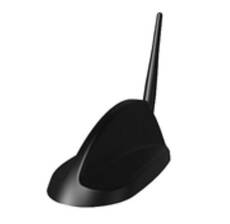
The Panorama Antennas multiband vehicle antenna category includes the GPSB Sharkee, which combines GPS/GNSS, 2G/3G/4G cellular and dual-band WiFi antenna systems in a single shark-fin style housing, with the option to add a VHF or UHF antenna whip. The internal antennas have omnidirectional radiation patterns, vertical polarization and 50 ohm impedance. The 120 x 58 x 50 mm housing is rated IP66 and is made from impact-resistant, UV-stabilised ABS. Read more...
• 1 antenna, 5 frequency bands
• Connection types: WIFI-SMA (f); GPS-FME (f); LTE-SMA(m); VHF&UHF-FME (m)
• Antenna gain: 2 dBi
• GPS gain: 30 dBi
• Operating frequency range: 1559-1612Mhz (GPS/GNSS)
• Operating frequency range: 698-960Mhz, 1710-2170Mhz, 2500-2700Mhz (2G, 3G, 4G, 5G)
• Operating frequency range: 2396-2485Mhz & 4900-6000Mhz (WLAN 2.4/4.9-6GHz)
• Operating frequency range: optional VHF or UHF antenna rod (optional item, to be ordered separately!)
• Dimensions: 120 mm (length) x 58 mm (width) x 50 mm (height)
• Cable dimensions (RG174): LTE 0.3 m; GPS 0.33 m; WIFI 0.27 m, VHF or UHF 0.36 m


Panorama Antennas multiband vehicle antenna - GPSB Sharkee
The GPSB is a four-function vehicle antenna. Three internal antenna systems provide GPS/GNSS, cellular and WiFi functions, while the fourth function is provided by the selected external VHF or UHF antenna whip. The OEM shark-fin design combines multiple antenna functions in one housing. The GPSB is intended for public safety, utility, industrial and transport applications.
Which frequency ranges does the GPSB multifunction antenna cover?
The GPS/GNSS element operates from 1559-1612 MHz. The cellular element covers 698-960 MHz, 1710-2170 MHz and 2500-2700 MHz, with 2G/3G/4G operational bands. The dual-band WiFi antenna operates from 2396-2485 MHz and 4900-6000 MHz. The frequency range of the fourth element depends on the selected VHF or UHF antenna whip.
GPS/GNSS, cellular and dual-band WiFi antenna system in one housing
The cellular element has a peak isotropic gain of 1 dBi, while the WiFi element has a peak isotropic gain of 2 dBi. The specified peak gain figures are simulated values with a 600 x 600 mm ground plane and without cable loss. The internal elements use vertical polarization, an omnidirectional radiation pattern and 50 ohm impedance. The maximum input power of the internal antenna systems is 25 W.
How can the GPSB be expanded with a VHF or UHF antenna whip?
The GPSB housing includes a separate external antenna whip mounting point for a VHF or UHF whip. The antenna whip is optional, and its frequency range depends on the selected version. The maximum input power of the main antenna whip is 60 W. The RG174 cable for the whip is 0.36 m long, 2.8 mm in diameter and terminated with an FME male connector.
Electrical characteristics and maximum input power
The internal antennas of the GPSB have a nominal impedance of 50 ohm. The cellular element has a peak gain of 1 dBi, while the WiFi element has a peak gain of 2 dBi. The internal elements support a maximum input power of 25 W, while the documented value for the external main antenna whip is 60 W. Polarization is vertical and the radiation pattern is omnidirectional.
GPS/GNSS unit with 30 dB LNA gain
The active GPS/GNSS antenna operates in the 1559-1612 MHz frequency range. Typical VSWR is below 2.5:1, LNA gain is 30 dB and polarization is right-hand circular. The unit is supplied with 3-5 V DC through the coaxial cable, while current consumption remains below 20 mA. The power supply must be protected with overcurrent protection rated at a maximum of 1 A.
IP66 protection and shark-fin design for vehicles
The GPSB has an overall height of 50 mm, a length of 120 mm and a width of 58 mm, with a weight of 215 g. The black antenna housing is made from impact-resistant, UV-stabilised ABS. The documented protection rating is IP66, while the operating temperature range is from -40 C to +80 C. The antenna can be mounted on standard vehicle panels up to 4 mm thick.
What installation requirements apply to the GPSB vehicle antenna?
The antenna must be mounted on a conductive ground plane with a minimum diameter equal to 1/2 wavelength at the lowest operating frequency. The formula 150 / frequency in MHz can be used to calculate the 1/2 wavelength in metres. On a non-metallic panel, a suitably sized ground plane plate must be provided below the mounting panel.
The electrical resistance between the mounting washer and nut and the ground plane must be below 0.2 ohm. The installation location requires a flat mounting surface and sufficient clearance below the panel. The antenna should be positioned as far as possible from other roof-mounted items, and areas with double skin panels or reinforcing structures should be avoided.
Antenna mounting with a single 19 mm hole
The GPSB requires a 19 mm diameter mounting hole. Burrs and metal swarf must be removed around the hole, while suitable electrical contact must be provided between the washer and the vehicle ground plane on the underside. The recommended tightening torque for the mounting nut is 5 Nm. The kit also includes heat-shrink tubing for additional sealing of the coaxial connections.
RG174 cables and FME, SMA connections
All four antenna systems use RG174 cable with a diameter of 2.8 mm. The GPS/GNSS cable is 0.33 m long and uses an FME female connector. The cellular cable is 0.30 m long and terminates in an SMA male connector. The WiFi cable is 0.27 m long and uses an SMA female connector. The optional VHF or UHF antenna whip cable is 0.36 m long and uses an FME male connector.
How should the coaxial cables be routed and checked?
The coaxial cables should be routed so they do not run directly alongside existing vehicle wiring, become trapped by moving vehicle components or pass in front of airbags. During commissioning, satellite reception can be checked on the GPS/GNSS line, while ground continuity and VSWR can be checked on the communication cables. The resistance between the connector body and vehicle ground must be below 0.2 ohm.
Panorama Antennas GPSB key technical specifications
The main documented technical parameters are:
- GPS/GNSS frequency range: 1559-1612 MHz
- Cellular frequencies: 698-960 MHz, 1710-2170 MHz and 2500-2700 MHz
- WiFi frequencies: 2396-2485 MHz and 4900-6000 MHz
- Cellular peak gain: 1 dBi
- WiFi peak gain: 2 dBi
- Impedance: 50 ohm
- Maximum input power of internal elements: 25 W
- Maximum input power of main antenna whip: 60 W
- GPS/GNSS LNA gain: 30 dB
- GPS/GNSS supply voltage: 3-5 V DC through coaxial cable
- GPS/GNSS current consumption: below 20 mA
- Dimensions: 120 x 58 x 50 mm
- Weight: 215 g
- Protection rating: IP66
- Operating temperature: -40 C to +80 C
- Mounting hole: 19 mm
- Maximum panel thickness: 4 mm
Safety and compliance requirements
During operation, the antenna must be positioned so that no person is closer than 20 cm to it. GPSB RoHS 2 compliance relates to Directive 2011/65/EU, while the documentation also includes an EU Declaration of Conformity referring to the requirements of the 2014/53/EU Radio Equipment Directive and the 2014/35/EU Low Voltage Directive.
Panorama Antennas multiband vehicle antenna summary and FAQ
The GPSB Sharkee combines GPS/GNSS, 2G/3G/4G cellular and dual-band WiFi antenna systems in one housing and can be expanded with an optional VHF or UHF antenna whip. The black IP66-rated ABS housing is mounted through a single 19 mm hole, while the individual antenna systems use their own RG174 cables with FME or SMA connectors.
- Which cellular frequency ranges does the GPSB cover?
The cellular element operates in the 698-960 MHz, 1710-2170 MHz and 2500-2700 MHz ranges. - Which WiFi frequency ranges are supported?
The WiFi element operates from 2396-2485 MHz and 4900-6000 MHz. - What is the GPS/GNSS LNA gain?
The LNA gain is 30 dB. - Can a VHF or UHF antenna whip be connected?
Yes. The GPSB supports an optional external VHF or UHF antenna whip. - What mounting hole diameter is required?
A 19 mm diameter mounting hole is required. - What maximum vehicle panel thickness is supported?
The antenna can be mounted on standard vehicle panels up to 4 mm thick. - What is the protection rating of the antenna housing?
The documented protection rating is IP66. - What separation distance must be maintained during operation?
The antenna must be positioned so that no person is within 20 cm during operation.