

- Special Offers
- Transceiver Radio
- Transceiver Accessory
- Antennas
- HF Antennas
- Sirio HF Base Antenna
- Diamond HF Mobil Antenna
- Diamond HF Base Antenna
- CB Antennas
- VHF Antennas
- Airband Antennas
- Marine Antennas
- UHF Antennas
- TETRA Antennas
- Multiband Antennas up to 500Mhz
- LoRa Antennas
- GSM Antennas
- WiFi Antennas
- Multiband Antennas from 500Mhz
- GPS Antennas
- Vehicle Antennas
- TV Antennas
- Parabola Antennas
- Radio Broadcast Antennas
- Antenna Accessory
- Fiber Optics
- Cable
- Connector
- Installation Material
- Installation Tools
- Measuring Equipement
- Body Worn Camera
- Electrosmog
- Telephone
- Baby Monitor
- Fever Thermometer
- Radio Device
- Set-top Boxes
- Personal Protective Equipment
- Motorcycle Helmet Speaker
- Car Equipment
- Voltage Converter
- Dry Cell
- Battery
- Battery Charger
- Emergency Signal
- Amber Signal
- Sound Signal
- Light and Sound Signal Accessory
- Traffic Engineering
- LED Lamp
- Smart Home
- Mosquito Repellent Device
- Market - Other Products
- Discontinued Products
Pre-order (2)
Diamond HF Mobil Antenna
The Diamond shortwave vehicle antenna category includes vehicle antennas designed for 28 MHz in the 10 m band and 50-54 MHz in the 6 m band. Both documented versions use a 1/4 wavelength antenna design and a PL male connector, with a maximum output power of 250 W. The two versions differ in frequency, gain, physical length, and weight, so these parameters should be compared separately with the requirements of the intended radio equipment. Read more...
Pre-order (2)
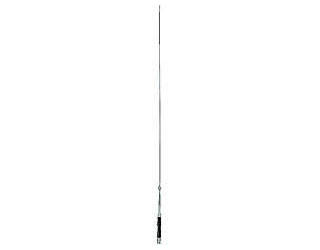
• Frequenci: 50-54 MHz (6m)
• Type: 1/4 λ
• Maximum power: 250 W
• Gain: 2.15 dBi
• Length: 1 m
• Weight: 130 g
• Connector: PL dugó


• Frequenci: 28 MHz (10m)
• Type: 1/4 λ
• Maximum power: 250 W (SSB)
• Gain: 0 dBi
• Length: 1.10 m
• Weight: 180 g
• Connector: PL dugó
Diamond shortwave vehicle antenna - main technical characteristics
The category includes two Diamond antenna versions designed for different frequencies. One version is specified for 28 MHz, corresponding to the 10 m band, while the other operates between 50-54 MHz in the 6 m band. Both use a 1/4 wavelength construction. The maximum output power is 250 W for both antennas, with the 28 MHz version specified at 250 W in SSB mode.
Which frequencies are available for Diamond vehicle antennas?
The documented range covers two frequency areas. The 10 m version is specified for 28 MHz, while the 6 m version covers 50-54 MHz. The category therefore does not contain a single general-purpose vehicle antenna, but two configurations intended for different radio frequency applications. The first step in selection is to check whether the operating frequency of the radio matches the documented frequency of the antenna.
Diamond 1/4 wavelength antenna design
Both antennas use a 1/4 wavelength design. This antenna construction is a common technical characteristic of the 28 MHz and 50-54 MHz versions. No other antenna construction is listed on the category page, so the main differences between the two versions are frequency, gain, length, and weight.
What antenna gain is available?
The documented antenna gain differs depending on frequency and configuration. The 28 MHz, 10 m antenna has a gain of 0 dBi. The 50-54 MHz, 6 m version has a gain of 2.15 dBi. These values belong to the corresponding antenna designs and should not be interchanged between the two versions.
Diamond antenna with 0 dBi and 2.15 dBi gain
- 28 MHz, 10 m: 0 dBi gain.
- 50-54 MHz, 6 m: 2.15 dBi gain.
- Both versions: 1/4 wavelength antenna design.
- Both versions: 250 W maximum output power.
The gain should always be considered together with the maximum output power of the relevant antenna. For the 28 MHz antenna, the 250 W value is documented for SSB mode, while the 50-54 MHz version is specified with a maximum output power of 250 W.
What are the physical dimensions of the mobile radio antenna?
The two mobile radio antenna versions differ in physical size. The 28 MHz version is 1.10 m long and weighs 180 g. The 50-54 MHz version is 1 m long and weighs 130 g. Installation planning should therefore take into account not only the radio frequency parameters but also the available mounting space and antenna dimensions.
What is the difference between the 1 m and 1.10 m antennas?
The 1 m antenna corresponds to the 50-54 MHz, 6 m configuration and weighs 130 g. The 1.10 m version is designed for 28 MHz in the 10 m band and weighs 180 g. The different length and weight values therefore belong directly to antennas designed for different frequency ranges.
PL male antenna connector for both frequency ranges
Both antennas in the category use a PL male connector. The connector type is therefore a common technical characteristic of the 28 MHz and 50-54 MHz versions. Before installation, the connection of the radio or antenna system should be compared with this documented PL male connector configuration.
What should be checked when connecting a Diamond vehicle antenna?
In addition to the mechanical compatibility of the PL male connector, the correct antenna frequency must also be verified. The common connector does not mean that the two antennas are interchangeable from an RF perspective. The 28 MHz and 50-54 MHz versions are designed for different frequencies and have different gain and physical dimensions.
What should be checked when selecting a Diamond shortwave vehicle antenna?
We recommend starting the selection process by determining the required operating frequency. Then check the 1/4 wavelength construction, documented antenna gain, 250 W maximum output power, and PL male connector. For installation, the 1 m or 1.10 m length and the 130 g or 180 g weight should also be checked separately.
Diamond antenna selection checklist
- 28 MHz, 10 m or 50-54 MHz, 6 m frequency.
- 1/4 wavelength antenna design.
- 0 dBi or 2.15 dBi documented gain.
- 250 W maximum output power.
- 250 W SSB rating for the 28 MHz version.
- 1 m or 1.10 m antenna length.
- 130 g or 180 g weight.
- PL male connector.
The two versions share several characteristics, but their frequency, gain, and physical dimensions are not identical. These values should therefore always be evaluated as part of the complete technical configuration of the selected antenna.
FAQ - Diamond shortwave vehicle antennas
- Which frequencies are available in the category?
The documented versions are designed for 28 MHz in the 10 m band and 50-54 MHz in the 6 m band. - What antenna design is used?
Both documented versions use a 1/4 wavelength design. - What is the maximum output power?
Both antennas are specified for 250 W. For the 28 MHz version, this value is documented for SSB operation. - What is the documented antenna gain?
The 28 MHz version has 0 dBi gain, while the 50-54 MHz version has 2.15 dBi gain. - How long are the antennas?
The documented lengths are 1 m and 1.10 m. - What connector is used?
Both antennas use a PL male connector.
Summary
The Diamond shortwave vehicle antenna category includes antennas for 28 MHz in the 10 m band and 50-54 MHz in the 6 m band. Both designs use a 1/4 wavelength construction, PL male connector, and 250 W maximum output power. The 28 MHz version has 0 dBi gain, a length of 1.10 m, and a weight of 180 g, while the 50-54 MHz version has 2.15 dBi gain, a length of 1 m, and a weight of 130 g. Selection should therefore be based primarily on the required frequency, followed by gain, physical dimensions, and connection type.