

Ice Pack
Ice gel packs and ice packs cover two different areas of use. A rigid ice pack helps keep food and drinks cold in a cool bag, cool box or cooler backpack. A flexible gel pack is intended for cold compresses, while certain versions can also be used for heat therapy. We recommend selecting the product according to its intended use, dimensions, weight, preparation time and documented method of application. Read more...
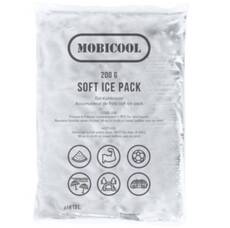
• Universal ice jelly in 200 g pack
• Suitable for both cooling and heating
• Easy to place between ice-cream dishes, flexible. It keeps food cold (or even warm) for several hours
• Also suitable for cooling painful sprains and sprains
• Dimensions: width 10 mm, height 180 mm, depth 120 mm
• Weight: 0,21 kg


• Dimension: width 35 mm, height 165 mm, depth 88 mm
• Ice packs extend the cooling effect of cooler bags
• Ice packs are suitable for cooling food, drinks and medicines
• Ice packs prolong the cooling effect of coolers and cooler bags. Use the ice pack to achieve a longer cooling effect for food, drinks or medicines.
• Before use, chill the ice pack in the freezer for 24 hours and then place it in the cooler or cool box.
• Cleaning is simple, wash with neutral dishwashing detergent and rinse.

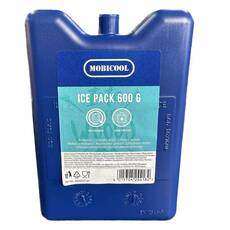
• Dimension: width 115 mm, height 165 mm, depth 40 mm
• Ice packs extend the cooling effect of cooler bags
• Ice packs are suitable for cooling food, drinks and medicines
• Ice packs prolong the cooling effect of coolers and cooler bags. Use the ice pack to achieve a longer cooling effect for food, drinks or medicines.
• Before use, chill the ice pack in the freezer for 24 hours and then place it in the cooler or cool box.
• Cleaning is simple, wash with neutral dishwashing detergent and rinse.
What are ice gel packs and ice packs, and how do they differ?
A reusable ice pack is a portable cooling medium that must be frozen before use. Its sealed casing contains water, another liquid or gel that absorbs heat from its surroundings after cooling. A rigid plastic version is mainly intended for cool bags and passive cool boxes. A therapeutic ice gel pack contains gel in a flexible pouch that can partially conform to the shape of the treated body area.
Construction of a reusable ice pack
An ice pack consists of a sealed casing and a cooling medium. It must be placed in a freezer before use and can be cooled again after thawing. Certain versions are made with a polyethylene casing and a water-based filling. Other designs contain a non-toxic liquid or gel. The product must not be opened, and its contents must not be consumed.
Reusable ice packs for cool bags and cool boxes
An ice pack can be placed in an insulated bag, cooler backpack or passive cool box when transporting chilled food and drinks. The frozen cooling element can be used without a mains power supply. Cooling performance is also influenced by insulation, ambient temperature, direct sunlight, how frequently the container is opened and the initial temperature of the products placed inside.
How should an ice pack be positioned in a cool bag?
Ice packs can be placed in the upper section of the cool bag or layered between food items. For longer transport periods, one cooling element can be positioned at the bottom and another at the top. The required quantity does not depend only on the capacity of the bag. The amount of food, required temperature, environmental conditions and insulation performance of the cool bag must also be considered.
Dimensions, weight and quantity for portable cooling
- Certain smaller ice packs weigh approximately 175 g and measure about 16.5 x 7.5 x 2 cm.
- Medium-sized options include versions weighing approximately 370 g and measuring 9.35 x 3.05 x 16.6 cm.
- Larger ice packs include versions weighing approximately 740 g and measuring 14.3 x 18 x 3.6 cm.
- The required quantity for a 20-litre cool bag may differ according to the size and weight of the ice packs.
Smaller ice packs can be positioned more easily between food items, while larger versions occupy more space. We recommend checking the internal dimensions and available space in the cool bag before purchasing.
How does an ice pack support food cooling?
A frozen ice pack absorbs heat from its surroundings while the cooling medium inside gradually warms up. This slows the warming of food and drinks stored in a cool bag or cool box. An ice pack is not an active cooling appliance, so the duration of temperature retention cannot be determined solely from the size of the cooling element.
Food cooling and material use
Only an ice pack with documented food-contact suitability or food-safe materials should be used near food. Certain products contain a non-toxic filling, but this does not mean that the liquid can be consumed. A cooling element with a damaged, cracked or leaking casing must not be used further.
How much freezing time is required, and what affects the cooling duration?
The required freezing time differs according to product type. Certain therapeutic gel packs require approximately 1-2 hours of cooling, while other ice gel packs require at least 10-12 hours. Rigid ice packs may require at least 24 hours in a freezer. The freezing time specified for the individual product must always be followed.
Conditions that affect cooling duration
- the capacity of the cool bag or cool box;
- the construction of the insulation;
- the quantity of food and drinks placed inside;
- the initial temperature of the contents;
- the ambient temperature and exposure to sunlight;
- how frequently the lid or zip is opened;
- the dimensions, weight and quantity of the ice packs.
Because of these variables, one standard cooling duration cannot be specified. The required cooling capacity must be determined according to the complete transport or storage conditions.
Ice gel packs for cold and heat therapy
Therapeutic gel packs are available in several dimensions. Documented examples include 9 x 13 cm, 14 x 13 cm, 10 x 15 cm, 12 x 29 cm and 29 x 12 cm versions. Smaller gel packs can be used on more limited areas, while longer models can cover larger surfaces. The correct size must be selected according to the affected body area and the usage instructions.
How should a hot and cold gel pack be prepared?
For cold application, the gel pack must be placed in a freezer or refrigerator for the specified period. Heat application is permitted only when the product is designed for this purpose. Certain versions can be heated for approximately 6 minutes in water with a maximum temperature of 80 C after the water has been removed from the heat source. Other models can also be prepared in a microwave oven at a specified power setting.
Which rules must be followed during heating?
- The specified water temperature and heating time must not be exceeded.
- Only the prescribed power setting may be used for microwave heating.
- The temperature must be checked between short heating intervals.
- Certain gel packs must be kneaded after heating to distribute the heat evenly.
- Preparation times for different products must not be used interchangeably.
Excessive temperature or prolonged heating can damage the casing and the filling.
What can a therapeutic ice gel pack be used for?
Documented uses for cold application include sprains, bruises, swelling, strains, headaches and insect bites. Uses for warm application include muscle pain, back pain, lumbago and menstrual pain. The gel pack must be used only according to the application method specified for the individual product.
Safety rules for cold and heat therapy
- A dry cloth or the supplied cover must be placed between the gel pack and the skin.
- Certain versions specify a maximum application time of 20 minutes.
- A defined interval, such as 30 minutes, may be required between applications.
- The product is intended for external use only.
- A damaged, punctured or leaking gel pack must be discarded.
- Medical consultation may be required for certain health conditions.
For circulatory disorders, hypersensitivity to cold, Raynaud syndrome, cardiovascular disease or diabetes, the restrictions stated in the product instructions must be followed.
How should an ice pack be stored and cleaned?
After use, the ice pack must be cleaned and dried, then stored in a clean and dry location. Certain versions can be cleaned in a dishwasher, while this is not permitted for other products. The ice pack must not be machine washed, dry cleaned, ironed, bleached or tumble dried when prohibited by the product instructions.
Storage conditions for ice packs and ice gel packs
The casing of gel packs and ice packs must be protected from punctures, cuts and strong mechanical loads. Therapeutic gel packs should be stored in a cool, dry place protected from direct sunlight. Check the casing before freezing. Do not place a leaking or visibly damaged product near food or against the skin.
What are the advantages and limitations of ice gel packs and ice packs?
- Advantage: a reusable ice pack can be frozen repeatedly.
- Advantage: versions with different dimensions and weights are available.
- Advantage: certain gel packs can be used for both cold and warm applications.
- Limitation: appropriate preparation time is required before every use.
- Limitation: cooling duration is influenced by several external conditions.
- Limitation: the application time and contraindications of therapeutic versions must be observed.
We recommend choosing only an ice pack specifically identified for food cooling and a therapeutic gel pack designed for cold or warm compress applications.
Frequently asked questions about ice gel packs and ice packs
- What is the difference between an ice pack and an ice gel pack?
A rigid ice pack is used in a cool bag or cool box, while a flexible ice gel pack may be intended for cold or warm compresses. - How long should the product be frozen?
Documented preparation times range from approximately 1 hour to at least 24 hours, so the instructions for the individual product must always be followed. - Can an ice pack come into contact with food?
Only when food-contact suitability or the use of food-safe materials is specified for the product. - Can every ice gel pack be heated in a microwave oven?
No. Only a gel pack designed for microwave heating may be heated, using the specified power and duration. - Can a gel pack be placed directly on the skin?
The documented application methods require a dry cloth or protective cover between the skin and the gel pack. - What should be done with a damaged ice pack or gel pack?
A cracked, punctured or leaking product must not be used further.
Summary: selecting an ice gel pack or ice pack according to the intended use
For food cooling, select an ice pack that matches the size of the cool bag or cool box, the quantity being transported and the required number of cooling elements. For therapeutic applications, use an appropriately sized gel pack designed for cold or combined hot and cold use. Freezing time, heating method, application duration, cleaning requirements and safety restrictions must always be followed according to the specifications of the individual product.