

Diamond Car and Truck Mobile VHF Antenna
The Diamond VHF mobile antenna category includes mobile antennas designed for the 134-174 MHz, 144-160 MHz, and 144-174 MHz frequency ranges. The selection includes 1/4 Lambda, 5/8 Lambda, 6/8 Lambda, and 2 x 5/8 Lambda configurations. Antenna gain ranges from 2.15 dBi to 6.5 dB, maximum transmit power varies between 100 and 280 W, and antenna lengths range from 51 cm to 2.52 m. All configurations feature PL male connectors. When selecting the appropriate antenna, the operating frequency, gain, radio output power, and vehicle mounting requirements must all be checked. Read more...
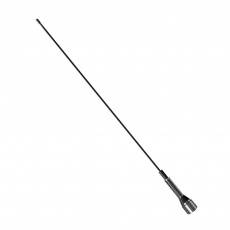
• Type: 1/4 λ bottom spring
• Frequency: 144-174 MHz
• Gain: 2.15 dB
• Power: 200 Watts
• Impedance: 50 Ohms
• VSWR : 1.5:1 (nominal)
• Length: 0.51m
• Weight: 110 g
• Connector: UHF-male

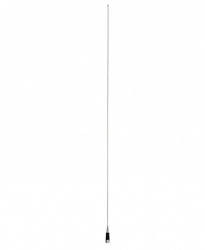
• Type: 5/8 λ mobile whip
• Frequency: 134-174 MHz
• Gain: 3.4 dB
• Power: 200 Watts
• Impedance: 50 Ohms
• VSWR : 1.5:1 (nominal)
• Length: 1.42m
• Weight: 180 g
• Connector: UHF-male
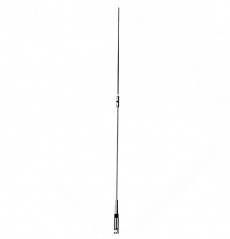
• Type: 6/8 λ mobile whip
• Frequency: 144-174 MHz
• Gain: 4.1 dB
• Power: 150 Watts
• Impedance: 50 Ohms
• VSWR : 1.5:1 (nominal)
• Length: 1.41m
• Weight: 200 g
• Connector: UHF-male
Special gross price: 45.41€ (Net price: 35.76€)

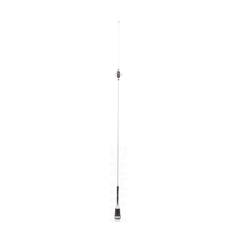
• Type: 6/8 λ mobile whip
• Frequency: 144-174 MHz
• Gain: 4.1 dB
• Power: 200 Watts
• Impedance: 50 Ohms
• VSWR : 1.5:1 (nominal)
• Length: 1.45m
• Weight: 220 g
• Connector: UHF-male
Special gross price: 38.21€ (Net price: 30.09€)

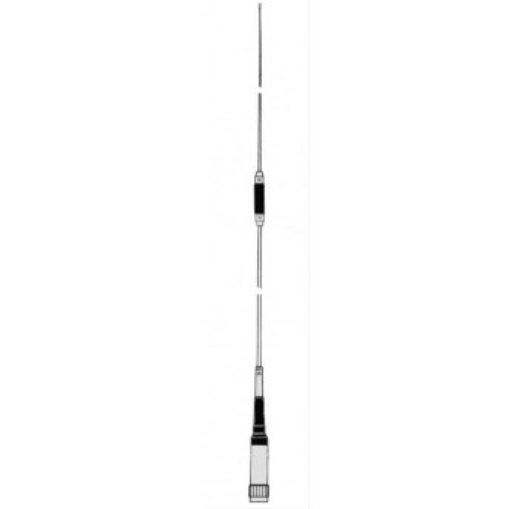
• Type: 2x5/8 λ radialless
• Frequency: 144-160 MHz
• Gain: 6.5 dB
• Power: 100 Watts
• Impedance: 50 Ohms
• VSWR : 1.5:1 (nominal)
• Length: 2.46m
• Weight: 500 g
• Connector: UHF-male
• Type: 2x5/8 λ radialless
• Frequency: 144-174 MHz
• Gain: 6.5 dB
• Power: 280 Watts
• Impedance: 50 Ohms
• VSWR : 1.5:1 (nominal)
• Length: 2.52m
• Weight: 520 g
• Connector: UHF-male
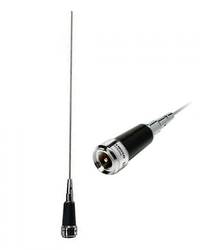
• Frequency: 144-172 MHz
• Gain: 3.4 dBi
• Power: 200 W
• Length: 133 cm
• Weight: 180 g
• Connector: UHF male
Diamond VHF mobile antenna – main technical characteristics
The Diamond antenna range includes VHF mobile antennas with different lengths and electrical configurations. The shortest version is a 51 cm antenna weighing 110 g and featuring a 1/4 Lambda design. The 5/8 Lambda and 6/8 Lambda configurations include antennas measuring 1.33-1.45 m in length. The 2 x 5/8 Lambda antennas measure 2.46 m and 2.52 m, with weights ranging from 500 to 520 g. Maximum power ratings and gain values differ between the available configurations.
Diamond VHF mobile antenna technical specifications
- Frequency ranges: 134-174 MHz, 144-160 MHz, and 144-174 MHz.
- Antenna design: 1/4, 5/8, 6/8, or 2 x 5/8 Lambda.
- Antenna gain: 2.15 dBi, 3.4 dB, 4.1 dB, or 6.5 dB, depending on the configuration.
- Maximum transmit power: 100 W, 150 W, 200 W, or 280 W.
- Antenna length: 51-252 cm.
- Weight: 110-520 g.
- Connector: PL male.
- Impedance: 50 ohms for configurations with detailed specifications.
These specifications apply to different antenna designs. We recommend checking every parameter against the specifications of the particular antenna configuration being considered.
What frequency ranges do Diamond VHF mobile antennas support?
The first step in selecting a VHF mobile antenna is determining the exact operating frequency. The 134-174 MHz antenna can be adjusted over a wider VHF frequency range, while the 144-160 MHz version is designed for a narrower range. Several additional configurations are specified for 144-174 MHz operation. These ranges should not be treated as interchangeable because the electrical design and adjustment requirements may differ between antennas.
Diamond 144 MHz antennas and the 2-metre amateur radio band
A 144 MHz antenna can also be used with mobile transceivers operating in the 2-metre amateur radio band, provided that the frequency adjustment and connector are suitable. Both the 134-174 MHz configurations and the versions starting at 144 MHz cover the 144 MHz frequency. However, an antenna's frequency coverage does not automatically establish permission to transmit throughout its entire operating range. The radio equipment's operating frequencies and the applicable frequency-use regulations must be checked separately.
Vertical antenna designs: 1/4, 5/8, and multi-section radiators
Diamond VHF mobile antennas include 1/4 Lambda, 5/8 Lambda, 6/8 Lambda, and 2 x 5/8 Lambda designs. The 1/4 Lambda version is 51 cm long and has a gain of 2.15 dBi. The 5/8 Lambda configuration measuring 1.42 m provides 3.4 dB gain. The 6/8 Lambda versions have a gain of 4.1 dB. Antennas using two 5/8 Lambda sections have a documented gain of 6.5 dB.
How does the Diamond 2 x 5/8 Lambda antenna differ?
The 2 x 5/8 Lambda VHF antenna features two vertically stacked radiating sections. This design is available in the category with lengths of 2.46 m and 2.52 m. Both versions have a gain of 6.5 dB, but their maximum power ratings differ: one is rated for 100 W, while the other supports 280 W. The longer antenna structure requires more installation space, making the selection of a suitable antenna mount particularly important.
What antenna gain and maximum transmit power ratings are available?
Antenna gain depends on the design of the radiating element. The 1/4 Lambda configuration provides 2.15 dBi, the 5/8 Lambda versions offer approximately 3.4 dB, the 6/8 Lambda designs provide 4.1 dB, and antennas using two 5/8 Lambda sections have a gain of 6.5 dB. When comparing values expressed in dB and dBi, the specified reference must also be considered. Higher antenna gain alone does not guarantee a particular radio communication distance.
Diamond VHF antenna power specifications
The maximum transmit power ratings available in the category are 100 W, 150 W, 200 W, and 280 W. The 2 x 5/8 Lambda antennas include configurations with identical gain values but different power-handling capabilities. Consequently, the permitted transmit power cannot be determined from antenna gain alone. The output power of the radio equipment must always remain within the maximum power rating of the selected antenna.
Diamond antennas for 144 MHz amateur radio and VHF applications
In addition to the 2-metre amateur radio band, Diamond VHF antennas can be selected for other VHF radio communication applications within their specified frequency ranges. Compatibility between the vehicle-mounted mobile transceiver and antenna depends on operating frequency, transmit power, and RF connection. Antennas that can be adjusted across a wider frequency range may also require configuration for the intended operating frequency.
Vehicle radio antennas for mobile amateur radio applications
A vehicle radio antenna serves as the external antenna of a mobile radio system. Diamond VHF configurations connect to a suitable antenna mount using a PL male connector. Appropriate coaxial cabling is required between the mobile radio and antenna. When selecting the installation components, the radio's frequency band, antenna adjustment requirements, and available mounting options on the vehicle must all be considered.
What do 50-ohm antenna impedance and VSWR mean?
The documented antenna impedance is 50 ohms for Diamond VHF mobile antennas with detailed technical specifications. Several configurations have a nominal VSWR below 1.5:1. VSWR, or Voltage Standing Wave Ratio, describes the radio-frequency impedance matching between the antenna and transmission line. Verifying the matching is particularly important for antennas that can be cut to a specific frequency because the length of the radiating element affects the operating frequency.
Why is VSWR verification important for VHF mobile antennas?
Excessively high VSWR may indicate incorrect frequency adjustment or a connection problem within the antenna system. Measurement requires a VSWR meter suitable for the relevant VHF frequency and transmit power range. After adjusting the antenna, matching should be checked in its actual installed position. We particularly recommend this verification for configurations featuring radiating elements that can be cut to the required length.
PL antenna connectors and coaxial cabling for vehicles
All antennas in this category feature PL male connectors, also known as PL-259 or UHF male connectors. A compatible antenna mount with the corresponding female connector is required. Coaxial cable provides the connection between the antenna mount and the radio. Checking connector compatibility and the suitability of the coaxial cable is a fundamental requirement when configuring the radio-frequency system.
Installing a Diamond VHF antenna with a PL connector
Various mounting accessories can be selected for antennas equipped with PL male connectors. Available mounting solutions include magnetic mounts, through-hole antenna mounts, and antenna mounting brackets. The appropriate solution must be selected according to the vehicle's construction and the antenna's mechanical dimensions. The coaxial cable must be routed so that it does not interfere with the vehicle's controls.
What antenna mounting solution is required for different configurations?
When planning antenna mounting, the total length and weight of the radiating element must be considered. The shortest configuration is 51 cm long and weighs 110 g, while the longest antenna measures 2.52 m and weighs 520 g. Larger antennas require appropriately rated mounts and secure mechanical attachment. The vehicle's overall height and surrounding obstacles must also be considered when selecting the antenna position.
How should you select a Diamond antenna mount?
- Magnetic mount: available as a separate antenna mounting solution.
- Through-hole antenna mount: designed for installation at a mounting point created in the vehicle body.
- Antenna mounting bracket: allows installation using a separate support component.
- Antenna length: ranges from 51 cm to 2.52 m.
- Antenna weight: ranges from 110 to 520 g, depending on the configuration.
- Connection: an antenna mount compatible with the PL male connector is required.
Both mechanical compatibility and cable routing are important when selecting a mounting solution. Longer antennas require a supporting structure with adequate mechanical strength.
Antenna length, weight, and frequency-specific adjustment
Diamond VHF mobile antennas differ significantly in physical dimensions. The 1/4 Lambda configuration is 51 cm long, the 5/8 Lambda versions measure approximately 1.3-1.4 m, and the 6/8 Lambda antennas are 1.41-1.45 m long. The 2 x 5/8 Lambda configurations measure 2.46 m and 2.52 m. Certain antennas include frequency-specific cutting charts that help determine the required length of the radiating element.
How should the Diamond VHF antenna cutting chart be used?
A frequency-specific cutting chart indicates the required radiating element length for the selected operating frequency. For example, the 134-174 MHz antenna with a 5/8 Lambda design provides this adjustment option. Shortening the radiating element is a permanent modification, so the required length must be determined accurately before cutting. Antenna adjustment must be verified through VSWR measurement.
How should you select the right Diamond VHF mobile antenna?
To select the appropriate Diamond VHF mobile antenna, first determine the radio's exact operating frequency and maximum transmit power. Next, check the antenna gain, radiator configuration, PL connector, and required antenna mount. Shorter configurations offer smaller physical dimensions, while longer multi-section antennas include higher-gain options. Making the appropriate choice requires comparing both the radio-frequency and mechanical specifications.
Diamond VHF mobile antenna selection checklist
- The radio's exact operating frequency.
- 134-174 MHz, 144-160 MHz, or 144-174 MHz antenna configuration.
- 1/4, 5/8, 6/8, or 2 x 5/8 Lambda radiator design.
- Antenna gain and its specified measurement unit.
- Maximum transmit power between 100 and 280 W.
- Verification of 50-ohm impedance and VSWR specifications.
- Antenna mount compatible with a PL male connector.
- Antenna length, weight, and available mounting options.
- Frequency-specific adjustment where required.
We recommend selecting an antenna based on its complete technical configuration rather than focusing exclusively on the highest gain or power rating.
FAQ – Diamond VHF mobile antennas
- What frequency ranges do Diamond VHF mobile antennas support?
The category includes configurations for 134-174 MHz, 144-160 MHz, and 144-174 MHz. - What antenna designs are available?
The range includes 1/4 Lambda, 5/8 Lambda, 6/8 Lambda, and 2 x 5/8 Lambda configurations. - What is the highest antenna gain available?
The category includes configurations with a documented gain of 6.5 dB. - What is the maximum transmit power?
Documented power ratings range from 100 W to 280 W. - Which connectors do the antennas use?
All configurations feature PL male connectors. - What antenna lengths are available?
The range includes antennas measuring between 51 cm and 2.52 m. - How much do the antennas weigh?
Weight ranges from 110 to 520 g, depending on the configuration. - What is the antenna impedance?
Diamond VHF mobile antennas with detailed specifications have an impedance of 50 ohms. - Is frequency-specific antenna adjustment required?
Certain configurations include cutting charts and can be adjusted to the required operating frequency. - What antenna mounting options are available?
Related accessories include magnetic mounts, through-hole antenna mounts, and antenna mounting brackets.
Summary
The Diamond VHF mobile antenna category offers antennas with different operating frequency ranges and configurations for vehicle-mounted VHF radio equipment. The selection includes 1/4, 5/8, 6/8, and 2 x 5/8 Lambda designs, with maximum transmit power ratings of 100-280 W and PL male connectors. Selecting the appropriate antenna requires considering the operating frequency, gain, impedance, VSWR, physical dimensions, and mounting requirements together.