

Carant GSM Base Antenna
The Carant GSM base station antenna category includes log-periodic and yagi designs, as well as antennas designated as MIMO models. The range covers frequency bands identified for GSM 900/1800, UMTS and LTE, together with several wideband versions. The antennas in the category have an impedance of 50 Ohm and vertical polarization, while gain, VSWR, maximum input power, radiation angle, connector type and mechanical construction vary by model. We therefore recommend checking the complete frequency range together with the electrical and mechanical specifications when selecting an antenna. Read more...

• Type: log-per
• Frequency range: 890–960 MHz (GSM 900)
• Impedance: 50Ω
• Polarisation: vertical
• Gain: 6 dBi @ 900 MHz
• VSWR: < 1,5:1
• Maximum input power: 6 Watts


• Type: log-per
• Frequency range: 890–960 MHz; 1710–1920 MHz (GSM 900/1800)
• Impedance: 50Ω
• Polarisation: vertical
• Gain: 4 dBi @ 900 MHz; 5 dBi @ 1800 MHz
• VSWR: < 2:1
• Maximum input power: 15 Watts
• Type: log-per
• Frequency range: 890–960 MHz; 1710–2170 MHz (GSM 900/1800, UMTS)
• Impedance: 50Ω
• Polarisation: vertical
• Gain: 4 dBi
• VSWR: < 1,7:1
• Maximum input power: 15 Watts
• Type: log-per
• Frequency range: 790–960 MHz; 1710–2700 MHz (GSM 900/1800, UMTS, LTE)
• Impedance: 50Ω
• Polarisation: vertical
• Gain: 4 dBi
• VSWR: < 1,7:1
• Maximum input power: 15 Watts
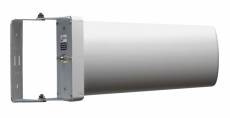
• Type: yagi
• Frequency range: 1710-1990 MHz
• Impedance: 50Ω
• Radiation angle: < 45°
• Polarisation: vertical
• Gain: 11 dBi @ 1850 MHz
• VSWR: < 1,5:1
• Maximum input power: 6 Watts
• Type: yagi
• Frequency range: 1920-2170 MHz
• Impedance: 50Ω
• Polarisation: vertical
• Gain: 10,5 dBi
• VSWR: < 1,5:1
• Maximum input power: 25 Watts

• Type: log-per
• Frequency range / Gain:
430–480 MHz; max. 8,5 dBi
790–960 MHz; max. 11,3 dBi
1710–2700 MHz; max. 10 dBi
• Impedance: 50Ω
• Radiation angle: 60°
• Polarisation: vertical
• VSWR: < 2:1
• Maximum input power: 10 Watts

• Type: log-per
• Frequency range / Gain:
690–960 MHz; max. 13 dBi
1710-2185 MHz; max. 12 dBi
2500–2700 MHz; max. 10,9 dBi
• Impedance: 50Ω
• Radiation angle: 60°
• Polarisation: vertical
• VSWR: < 2,2:1
• Maximum input power: 10 Watts

• Type: log-per
• Frequency range / Gain:
790–960 MHz; max. 11,5 dBi
1710-2185 MHz; max. 11 dBi
2500–2700 MHz; max. 12 dBi
• Impedance: 50Ω
• Radiation angle: 60°
• Polarisation: vertical
• VSWR: < 2:1
• Maximum input power: 10 Watts

• Type: log-per
• Frequency range / Gain:
790–960 MHz; max. 11,5 dBi
1710-2700 MHz; max. 12 dBi
• Impedance: 50Ω
• Radiation angle: 60°
• Polarisation: vertical
• VSWR: < 2:1
• Maximum input power: 10 Watts
Carant GSM base station antenna types and main technical characteristics
Which GSM antenna and base station antenna designs are available in the range?
The category includes WLP, WLD, WLT-3G and WLQ-4G log-periodic models, AGY yagi antennas, LPA wideband log-periodic antennas and the MIMO LPA 827 version. The WLP is specified exclusively for the 890-960 MHz range, the WLD covers two, the WLT-3G three, and the WLQ-4G several mobile communication frequency ranges. The LPA family covers several separate bands, while the AGY models are specified for 1710-1990 MHz and 1920-2170 MHz.
Which mobile communication frequency bands are covered by Carant antennas?
Carant antenna and GSM frequency band overview
The category includes several separate frequency bands between 430 MHz and 2700 MHz. For models designated for GSM applications, the documented ranges include 890-960 MHz, 1710-1920 MHz, 1710-1990 MHz and 1710-2170 MHz. The WLQ-4G product is specified for 790-960 MHz and 1710-2700 MHz, while its technical material also lists 760-960 MHz and 1700-2700 MHz. The LPA models include the 430-480, 690-960, 790-960, 1710-2185, 1710-2700 and 2500-2700 MHz bands.
Log-periodic, yagi, wideband and MIMO antenna designs
How does the outdoor antenna construction differ across the Carant range?
The log-periodic and yagi designs have different mechanical dimensions. The WLP, WLD, WLT-3G and WLQ-4G models measure 137 x 147 x 22 mm, weigh 114.8 g and use copper, ABS and FR4, with a specified wind resistance of 25 m/s. The AGY yagi models measure 347 x 132 x 75 mm, weigh 315 g and use aluminium, ABS and tin-plated brass, with a specified wind resistance of 45 m/s. The LPA versions use aluminium alloy, corrosion-resistant steel, ABS and polycarbonate, together with RG-223 cable and mounting for masts with a diameter of 30-60 mm.
How do antenna gain, VSWR and impedance differ?
Antenna gain and 50 Ohm impedance of Carant models
The listed models have an impedance of 50 Ohm. Depending on design and frequency band, the documented gain ranges from 4 dBi up to a maximum of 13 dBi. The WLP is specified with 6 dBi at 900 MHz, the WLD with 4 dBi at 900 MHz and 5 dBi at 1800 MHz, while the WLT-3G and WLQ-4G are specified with 4 dBi. The AGY yagi models have values of 10.5 and 11 dBi, while the LPA wideband models provide maximum values between 8.5 and 13 dBi depending on the frequency band. The specified VSWR limits vary between values below 1.5:1, 1.7:1, 2:1 and 2.2:1.
Polarization, radiation angle and directional antenna design
Which polarization and radiation angles are specified for Carant mobile communication antennas?
The products in the category are specified with vertical polarization. Radiation angle is not listed separately for every model: the AGY-10 is specified with a value below 45 degrees, while the LPA 427, LPA 727, LPA 827 and MIMO LPA 827 models are specified with 60 degrees. The technical data for the LPA 427, LPA 727 and LPA 827 specifies an F/B ratio above 15 dB, while the WLQ-4G technical data specifies an E/H ratio above 20 dB.
Which antenna connectors and mechanical characteristics are available?
Antenna connector, cable and mast mounting in the Carant range
The connector type varies according to the model design. The WLP and AGY yagi models are specified with an FME male connector, while the WLD, WLT-3G, WLQ-4G and LPA models listed in the webshop are specified with an SMA male connector. The technical data for the LPA 427, LPA 727 and LPA 827 also lists SMA female and male versions, while the LPA 827 installation material additionally identifies N male and female connector versions. The LPA models use RG-223 cable and can be mounted on masts with a diameter of 30-60 mm.
Pros - documented advantages and characteristics:
- The LPA 427, LPA 727 and LPA 827 are specified as wideband, high-gain directional antennas.
- The WLQ-4G is a quad-band indoor and outdoor antenna specified for GSM 900, GSM 1800, GSM 1900, UMTS, WLAN and LTE bands.
- Simultaneous use of GSM and 3G/4G frequencies is specified for the WLQ-4G.
Alongside the wideband and multiband designs, the exact frequency, power and connector specifications must be checked separately for each model.
Cons - documented differences and limitations:
- Maximum input power varies by model and is specified as 6 W, 10 W, 15 W or 25 W.
- Frequency range, gain, VSWR and connector type are not uniform across the entire category.
- Mechanical dimensions, weight, wind resistance, materials and mounting differ according to antenna design.
Because of these technical differences, the products in the category cannot be treated as antennas with identical electrical and mechanical specifications.
Which questions frequently arise about Carant GSM base station antennas?
Carant GSM antenna FAQ for technical selection
- What is the impedance of Carant GSM base station antennas?
The models listed in the category have an impedance of 50 Ohm. - Which polarization do they use?
The listed models are specified with vertical polarization. - Which gain values are available?
The documented values range from 4 dBi up to a maximum of 13 dBi, depending on the model and, for certain wideband antennas, the frequency band. - Which maximum input power values are specified?
The models include maximum input power values of 6 W, 10 W, 15 W and 25 W. - Which connector types are available?
The product data includes FME and SMA connectors, while the technical material for the LPA 827 also lists N connector versions. - Which environmental tests are specified for the LPA antennas?
The LPA 427, LPA 727 and LPA 827 list IEC68-2-1:Ab/Ad, IEC68-2-2:Bb/Bd, IEC68-2-14:Na, IEC68-2-56:Cb and IEC68-2-11:Ka designations.
When selecting a specific Carant antenna, the electrical and mechanical parameters should be checked together with the required frequency band.
Summary of Carant GSM base station antennas
What role do mobile communication, impedance and antenna design play in the Carant GSM antenna category?
The Carant GSM base station antenna range includes several separate frequency bands, log-periodic and yagi constructions, wideband LPA models and the MIMO LPA 827 design. In addition to the common 50 Ohm impedance and vertical polarization, gain, VSWR, maximum input power, radiation angle and connector type vary between models. We recommend checking the intended frequency band, required gain, VSWR, connector type and the mechanical installation specifications together when selecting the appropriate model.