

Sirio Base Station CB Antenna
The Sirio CB base station antenna range includes 15 antennas and one Sirio 827 radial ring accessory. The selection includes 1/4, 1/2, 5/8 and 3/4 lambda designs, omnidirectional vertical antennas, dipoles and 3- or 4-element Yagi antennas. The models can be compared by frequency range, 50 Ohm impedance, SWR, gain, power handling, connector type, mast diameter, dimensions, weight and wind resistance. Read more...
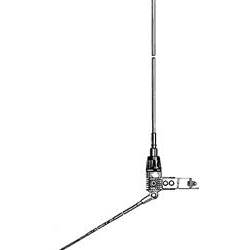
• Type: 1/4λ
• Frequency range: tunable from 26,8 to 27,6 MHz
• Impedance: 50Ω
• Radiation (H-plane): 360° omnidirectional
• Polarization: linear vertical
• Gain: 0 dBd, 2.15 dBi
• Bandwidth @ SWR ≤ 2: ≥ 800 KHz
• SWR @ res. freq.: ≤ 1.2 @ 27 Mhz
• Max. power: 300 Watts (CW) continuous, 900 Watts (CW) short time
• Feed system / position: Direct / center
• Connector: UHF-female
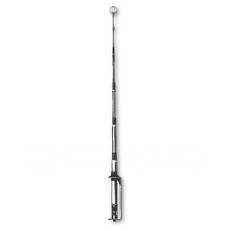
• Type: 1/2λ
• Frequency range: tunable from 26.4 to 29.0 MHz
• Impedance: 50Ω
• Radiation (H-plane): 360° omnidirectional
• Polarization: linear vertical
• Gain: 0 dBd, 2.15 dBi
• Bandwidth @ SWR ≤ 2: ≥ 1600 KHz
• SWR @ res. freq.: ≤ 1.3
• Max. power: 250 Watts (CW) continuous, 750 Watts (CW) short time
• Feed system / position: Transformer DC-ground / base
• Connector: UHF-female
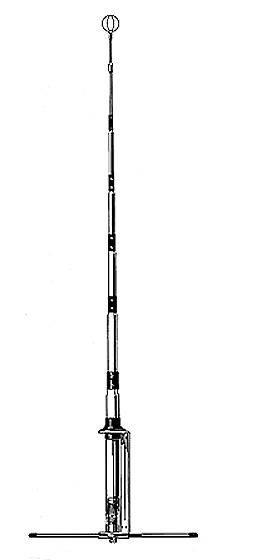
• Type: 5/8λ
• Frequency range: tunable from 26.4 to 29.0 MHz
• Impedance: 50Ω
• Radiation (H-plane): 360° omnidirectional
• Polarization: linear vertical
• Gain: 1.2 dBd, 3.35 dBi
• Bandwidth @ SWR ≤ 2: ≥ 1600 KHz
• SWR @ res. freq.: ≤ 1.3
• Max. power: 250 Watts (CW) continuous, 750 Watts (CW) short time
• Feed system / position: Transformer DC-ground / base
• Connector: UHF-female
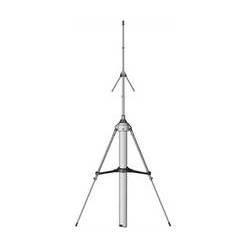
• Type: 1/4λ
• Frequency range: tunable from 26.5 to 30.0 MHz
• Impedance: 50Ω
• Radiation (H-plane): 360° omnidirectional
• Polarization: vertical
• Gain: 0 dBd, 2.15 dBi
• Bandwidth @ SWR ≤ 2: ≥ 2000 KHz @ 26.5 Mhz
• SWR @ res. freq.: ≤ 1.5
• Max. power: 1000 Watts (CW) continuous, 3000 Watts (CW) short time
• Connector: UHF-female

• Type: 5/8λ
• Frequency range: tunable from 27 to 30 MHz
• Impedance: 50Ω
• Radiation (H-plane): 360° omnidirectional
• Polarization: linear vertical
• Gain: 1.2 dBd, 3.35 dBi
• Bandwidth @ SWR ≤ 2: ≥ 1300 KHz
• SWR @ res. freq.: ≤ 1.2 @ 27 Mhz
• Max. power: 1000 Watts (CW) continuous, 3000 Watts (CW) short time
• Feed system / position: Transformer / base
• Connector: UHF-female

• Type: 3/4λ
• Frequency range: tunable from 27 to 28,5 MHz
• Impedance: 50Ω
• Radiation (H-plane): 360° omnidirectional
• Polarization: vertical
• Gain: 2 dBd, 4.15 dBi
• Bandwidth @ SWR ≤ 2: ≥ 1400 KHz
• SWR @ res. freq.: ≤ 1.2 @ 27 Mhz
• Max. power: 1000 Watts (CW) continuous, 3000 Watts (CW) short time
• Feed system / position: Gamma match / base
• Connector: UHF-female
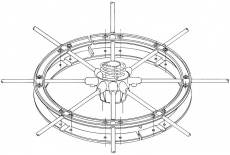
• A special nylon ring designed to fit around the SIRIO 817 radials to give extra support in high wind conditions
• Weight: 360g


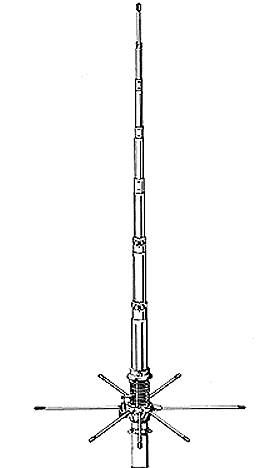
• Type: 5/8λ ground plane
• Frequency range: tunable from 26.4 to 28.4 MHz
• Impedance: 50Ω
• Radiation (H-plane): 360° omnidirectional
• Polarization: linear vertical
• Gain: 1.5 dBd, 3.65 dBi
• Bandwidth @ SWR ≤ 2: ≥ 2000 KHz
• SWR @ res. freq.: ≤ 1.1
• Max. power: 1000 Watts (CW) continuous, 3000 Watts (CW) short time
• Feed system / position: Transformer DC-ground / base
• Connector: UHF-female

• Type: 5/8λ
• Frequency range: tunable from 26.4 to 28.2 MHz
• Impedance: 50Ω
• Radiation (H-plane): 360° omnidirectional
• Polarization: linear vertical
• Gain: 1.3 dBd, 3.45 dBi
• Bandwidth @ SWR ≤ 2: ≥ 2100 KHz
• SWR @ res. freq.: ≤ 1.1
• Max. power: 1000 Watts (CW) continuous, 3000 Watts (CW) short time
• Feed system / position: Transformer DC-ground / base
• Connector: UHF-female
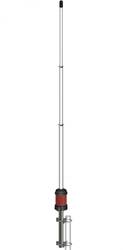
• Type: 1/2 λ center feeded vertical dipole
• Frequency range: 27.2-30 MHz tunable
• Impedance: 50Ω
• Radiation (H-plane): 360° omnidirectional
• Polarization: linear vertical
• Gain: 0 dBd - 2.15 dBi
• Bandwidth: ≥ 1.8MHz @ SWR ≤ 2
• Max. power: 500 Watts (continuous)

• Type: 0.625 λ center feeded vertical dipole
• Frequency range: 25.5 - 30 MHz wide band from 10m to 12m* ham band
• Impedance: 50Ω
• Radiation (H-plane): 360° omnidirectional
• Polarization: linear vertical
• Gain: 1 to 2 dB higher than conventional 5/8 λ
• SWR @ res. freq.: ≤ 2.0
• Max. power: 500 Watts (CW) continuous, 1000 Watts (CW) short time
• Connector: UHF-female, PTFE insulator & gold plated central pin

• Type: 1 element Yagi antenna
• Frequency range: 26.5-30 MHz @ SWR ≤ 1.1
• Impedance: 50Ω
• Radiation: Horizontal mounting: Directional; Vertical mounting: Omnidirectional
• Polarization: linear vertical or horizontal
• Gain: 0 dBd, 2.15 dBi
• Bandwidth @ SWR ≤ 2: ≥ 3500 KHz
• SWR @ res. freq.: ≤ 1.1
• Max. power: 1000 Watts (CW) continuous, 3000 Watts (CW) short time
• Connector: UHF-female
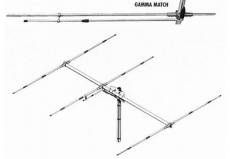
• Type: 3 element Yagi antenna
• Frequency range: 26.1-30.0 MHz @ SWR ≤ 2 (tunable)
• Impedance: 50Ω
• Radiation (H-plane): directional
• Polarization: linear horizontal
• Gain: 8.5 dBd, 10.65 dBi
• Max. power: 1000 Watts (CW) continuous, 3000 Watts (CW) short time
• Connector: UHF-female
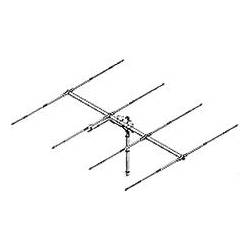
• Type: 4 element Yagi antenna
• Frequency range: 26.9-27.5 MHz @ SWR ≤ 2
• Impedance: 50Ω
• Radiation (H-plane): directional
• Polarization: linear horizontal
• Gain: 11 dBd, 13.15 dBi
• Bandwidth @ SWR ≤ 2: ≥ 600 KHz
• SWR @ res. freq.: ≤ 1.2
• Max. power: 1000 Watts (CW) continuous, 3000 Watts (CW) short time
• Feed system / position: Gamma match / center
• Connector: UHF-female
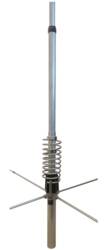
• 5/8 lambda
• Gain: 1.2 dBd, 3.35 dBi
• Impedance: 50 Ohm
• Frequency: 26-30 MHz
• Radiating: omnidirectional
• Polarization: vertical linear
• S.W.R.: ≤ 1.2, 27 MHz
• Bandwidth at 2:1 SWR: 1300 kHz
• Maximum power: 1000 W continuous, 3000 W short time
• Connector type: UHF female
Sirio CB base station antenna: designs and technical characteristics
Sirio antenna models in omnidirectional, dipole and Yagi versions
The Boomerang 27 A and 27 W use a 1/4 lambda design, the GPS 27 1/2 and SD Dipole are 1/2 lambda, while the GPE 27, Tornado 27, Sirio 827, Sirio 2016 and Monsoon use a 5/8 lambda design. The Vector 4000 is a 3/4 lambda coaxial J-pole antenna. The Gain-Master HW is a 0.5 lambda center-fed vertical dipole, while the Gain-Master is a 0.625 lambda center-fed vertical dipole. The SY 27-3 is a 3-element Yagi antenna and the SY 27-4 is a 4-element Yagi antenna.
What frequency ranges are available for Sirio CB base station antennas?
27 MHz antenna models with tunable frequency ranges
The Boomerang 27 A and W cover 26.8-27.6 MHz. The Starduster M-400 covers 26.5-30 MHz, the Vector 4000 covers 27-28.5 MHz, the Gain-Master HW covers 27.2-30 MHz, the Gain-Master covers 25.5-30 MHz, the SD Dipole covers 26.5-30 MHz, the SY 27-4 covers 26.9-27.5 MHz, while the Monsoon covers 26-30 MHz. The Starduster, Vector 4000, Gain-Master HW, SD Dipole and Monsoon are tunable designs. Because the GPS 27 1/2, GPE 27 5/8 and SY 27-3 are listed with differing source values, no consolidated frequency range is stated for these models here.
1/4, 1/2, 5/8 and 3/4 lambda base station antennas
Base station antenna designs by electrical configuration
The Starduster M-400 is a 1/4 lambda ground plane antenna with a bandwidth of 2000 kHz or more, rated at 1000 W continuous and 3000 W short-time power. The Tornado 27 uses a 5/8 lambda ground plane design, with at least 2000 kHz bandwidth, 1.2 dBd or 3.35 dBi gain and 1000 W/3000 W power ratings. The Vector 4000 is a 3/4 lambda coaxial J-pole with gamma match feeding, 2 dBd or 4.15 dBi gain, 1400 kHz bandwidth and 1000 W/3000 W power handling.
What do SWR, gain and 50 Ohm impedance mean in the model specifications?
50 Ohm antenna, SWR and gain by model
The antennas in the category are specified with 50 Ohm impedance. The Boomerang 27 A and W have an SWR of up to 1.2:1 and a gain of 0 dBd or 2.15 dBi. The Tornado 27 has an SWR of up to 1.2 and a gain of 1.2 dBd or 3.35 dBi. The Sirio 827 has a gain of 1.5 dBd or 3.65 dBi, while the Sirio 2016 is specified at 1.3 dBd or 3.45 dBi. The SD Dipole has an SWR of up to 1.1 and a gain of 0 dBd or 2.15 dBi. The SY 27-3 has a gain of 8.5 dBd or 10.65 dBi, while the SY 27-4 is specified at 11 dBd or 13.15 dBi.
Omnidirectional vertical antenna, dipole and Yagi versions
How do omnidirectional antennas and Yagi antennas differ?
The Boomerang models, GPS 27 1/2, GPE 27 5/8, Starduster M-400, Tornado 27, Vector 4000, Sirio 827, Sirio 2016, Gain-Master models and Monsoon are specified with omnidirectional radiation and vertical polarization. The SD Dipole is omnidirectional when installed vertically and directional when installed horizontally, with either vertical or horizontal polarization. The SY 27-3 and SY 27-4 are directional Yagi antennas with horizontal polarization; the SY 27-3 has a front-to-back ratio of at least 20 dB.
What power handling, dimensions and wind resistance characterize the individual Sirio antennas?
Sirio CB radio antenna mechanical and power specifications
The Boomerang 27 A is 2750 mm long and weighs 780 g, while the Boomerang 27 W is 1330 mm long and weighs 750 g; both are rated at 300 W continuous and 900 W short-time power and have a wind resistance of 140 km/h. The Starduster M-400 is 5040 mm long, weighs 1230 g and has a wind resistance of 130 km/h. The Tornado 27 is 7230 mm long, weighs approximately 2900 g and has a wind resistance of 130 km/h. The Vector 4000 is 8480 mm long, weighs 4700 g and has a wind resistance of 130 km/h. The Gain-Master HW has a height of 5560 mm, a weight of 2.6 kg and wind resistance of 160 km/h; the Gain-Master has a height of 7360 mm, a weight of 3 kg and the same 160 km/h wind resistance.
UHF and Amphenol connections, mast dimensions and antenna installation
SO-239 connector and CB antenna mast installation
The Boomerang models, GPS 27 1/2, GPE 27 5/8, Starduster M-400, Tornado 27, Vector 4000, Gain-Master models, SD Dipole, SY 27-3, SY 27-4 and Monsoon are specified with UHF-female connections. The Gain-Master HW product data also specifies an SO-239 connector. The Sirio 827 is listed with an Amphenol socket. The GPS and GPE can be installed on 35-42 mm diameter masts, the Starduster on 35-40 mm masts, the Tornado, Vector and Monsoon on 35-42 mm masts, the Gain-Master models on 35-54 mm masts, and the SD Dipole and both Yagi antennas on 35-50 mm masts.
Which Sirio CB radio antenna suits different technical requirements?
CB radio antenna comparison by power handling and design
- Pro: the category includes omnidirectional vertical, dipole and directional Yagi designs, allowing selection according to several documented radiation patterns and polarization types.
- Pro: several models are specified at 1000 W continuous and 3000 W short-time power, including the Starduster M-400, Tornado 27, Vector 4000, SD Dipole, SY 27-3, SY 27-4 and Monsoon.
- Con: the larger models have substantial physical dimensions; the Vector 4000 is 8480 mm long and the Gain-Master is 7360 mm high, so mast dimensions and documented wind resistance must also be considered.
- Con: several models are tunable, so the specified frequency range and tuning procedure for the selected model must be followed.
Sirio 827 antenna accessory and mechanical design
Sirio 827 radial ring and 5/8 lambda antenna
The Sirio 827 is a 5/8 lambda, 50 Ohm antenna covering 26.4-28.2 MHz, with vertical polarization and omnidirectional radiation. Its gain is 1.5 dBd or 3.65 dBi, while maximum power is 1000 W continuous and 3000 W short-time. Its length is 6.7 m and its weight is 6000 g. The separate Sirio 827 plastic radial ring is designed to dampen radial vibration, increase the resistance of the radials in strong winds and distribute the weight of birds sitting on the antenna between the radials. The accessory weighs 360 g.
Frequently asked questions about 27 MHz Sirio CB base station antennas
What should be checked when selecting a Sirio CB base station antenna?
- What impedance is specified for the antennas in the category?
The documented models are specified with an impedance of 50 Ohm. - Are directional antennas available in the range?
Yes. The SY 27-3 and SY 27-4 are directional Yagi antennas with horizontal polarization. - Is a dipole version available?
Yes. The SD Dipole is a 1/2 lambda dipole, while the Gain-Master HW and Gain-Master use center-fed vertical dipole designs. - Which model has the highest documented dBi gain?
Among the listed values, the SY 27-4 has the highest gain at 13.15 dBi. - Which models are specified with 160 km/h wind resistance?
The Gain-Master HW and Gain-Master are specified with 160 km/h wind resistance.
Summary: comparison criteria for Sirio CB base station antenna models
Sirio antenna selection based on documented technical specifications
Sirio CB base station antenna models differ in lambda configuration, radiation pattern, polarization, gain, SWR, power handling and mechanical dimensions. The Monsoon, for example, is a 5/8 lambda ground plane antenna tunable from 26 to 30 MHz, with 1.2 dBd or 3.35 dBi gain, at least 1300 kHz bandwidth and 1000 W/3000 W power ratings; its height is 7180 mm, radial length is 2035 mm and weight is 3 kg. We recommend checking frequency, connector type, mast diameter, physical dimensions, wind resistance and radiation pattern together when selecting a model.