

Diamond Base Station VHF Antenna
The Diamond VHF base station antenna category includes fixed-installation vertical antennas designed for different sections of the 134-174 MHz VHF frequency range. The range includes 5/8 Lambda, 2 x 5/8 Lambda, and 3 x 5/8 Lambda antenna configurations. Documented antenna gain ranges from 4.5 to 7.8 dB, maximum transmit power ranges from 200 to 350 W, and antenna lengths vary between 1.7 and 5.2 m. The antennas feature PL female connectors. When selecting the appropriate antenna, the exact operating frequency range, RF impedance matching, and mast mounting requirements must all be checked. Read more...
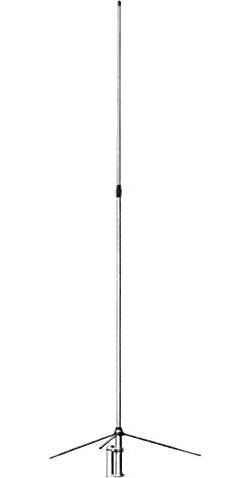
• Type: 2x5/8 λ
• Frequency: 144-174 MHz
• Gain: 6.5 dB
• Power: 200 Watts
• Element phasing: 5/8l Two-element stacked groundplane
• Radials: Three
• Grounding: DC Ground. Antenna element & radial connected to mounting pipe.
• Impedance: 50 Ohms
• VSWR : 1.5:1 (nominal)
• Maximum wind resistance: 45m/sec
• Mounting mast: 30-62mm
• Length: 2.7m
• Weight: 1.1 kg
• Connector: UHF-female (SO-239)

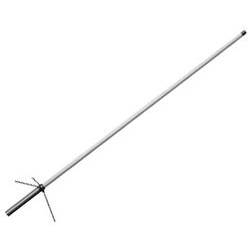
• Type: 5/8 λ
• Frequency: 134-174 MHz
• Gain: 3.8 dB
• Maximum power rating: 200 Watts
• Impedance: 50 Ohms
• VSWR : 1.5:1
• Maximum wind resistance: 60m/sec
• Mounting mast: 30-62mm
• Length: 1.7m
• Radial length: 52 cm
• Weight: 1.2 kg
• Connector: UHF-female (SO-239)
Special gross price: 86.44€ (Net price: 68.06€)
• 144-174 MHz
• Type: 3x5/8 λ
• Gain: 7.8 dB
• Max. power rating: 350 W
• Length: 520 cm
• Weight: 2 kg
• Wind veolcity: 40m/mp.
• Mast diameter: 30-62 mm
• Connector: PL female (MJ)
Diamond VHF base station antenna – main technical characteristics
The Diamond antenna range includes three different VHF base station antenna configurations. The 134-174 MHz version features a 5/8 Lambda radiator, 4.5 dB gain, and a maximum power rating of 200 W. The 144-148 MHz configuration uses a 2 x 5/8 Lambda design, provides 6.5 dB gain, and is also rated for 200 W. The 144-174 MHz triple-section configuration provides 7.8 dB gain and a maximum power rating of 350 W. These specifications belong to separate antenna configurations and do not represent the combined characteristics of a single antenna.
What are the most important specifications of Diamond VHF base station antennas?
- Documented frequency ranges: 134-174 MHz, 144-148 MHz, and 144-174 MHz.
- Antenna construction: 5/8 Lambda, 2 x 5/8 Lambda, or 3 x 5/8 Lambda.
- Antenna gain: 4.5 dB, 6.5 dB, or 7.8 dB.
- Maximum transmit power: 200 W or 350 W.
- Antenna length: 1.7 m, 2.7 m, or 5.2 m.
- Documented weight: approximately 0.9-2 kg.
- RF connector: PL female, also known as UHF female.
These specifications show significant differences between the available configurations in terms of frequency coverage, gain, power rating, and physical dimensions. We recommend starting the selection process by verifying the required operating frequency.
What frequency ranges do Diamond VHF base station antennas support?
The available VHF base station antenna configurations are not designed for identical frequency ranges. The 134-174 MHz version provides wider frequency coverage within its specified range. The 144-148 MHz antenna is designed for applications associated with the 2-metre amateur radio band. The 144-174 MHz version also supports a wider frequency range, but according to the manufacturer's instructions, the lengths of its radiating elements must be adjusted for the intended operating frequency.
Why is the exact frequency coverage of a 144 MHz antenna important?
The designation 144 MHz antenna does not, by itself, define the antenna's entire usable frequency range. An antenna designed for 144-148 MHz and one that can be adjusted across 144-174 MHz represent different technical solutions. The radio equipment's operating frequency must therefore be compared with the documented range of the selected antenna. Permission to transmit is determined by the regulations applicable to the relevant radio service, not by the antenna's frequency coverage.
Vertical antenna designs: 5/8 Lambda and multi-section configurations
The construction of a vertical antenna determines the arrangement of its radiating elements and its physical dimensions. A 5/8 Lambda configuration uses a single primary radiating section. The 2 x 5/8 Lambda version consists of two vertically stacked radiating sections, a phasing element, and radials. The 3 x 5/8 Lambda configuration uses three radiating sections connected by phasing units. A higher number of sections results in a longer antenna structure and different documented gain characteristics.
Diamond 5/8 Lambda and multi-section VHF antennas
The 1.7 m antenna has a 5/8 Lambda design, while the 2.7 m version uses two 5/8 Lambda sections and the 5.2 m configuration uses three. The manufacturer's documentation for the two-section antenna also specifies three radials and a DC-grounded design. The three-section configuration features fibreglass-reinforced plastic outer tubes, internal radiating elements, and a structure that can be adjusted to the required operating frequency. These designs must therefore be evaluated separately in terms of both mechanical construction and electrical performance.
What antenna gain and maximum transmit power ratings are available?
Documented antenna gain values for the VHF base station antennas are 4.5 dB, 6.5 dB, and 7.8 dB. The higher-gain configurations use multiple vertically stacked radiating sections, which also affects the spatial distribution of radiated energy. However, higher gain alone does not guarantee a specific radio communication distance. Actual communication performance also depends on installation height, terrain conditions, and the characteristics of the complete antenna system.
How should the 200 W and 350 W maximum power ratings be interpreted?
The documented maximum transmit power is 200 W for two antenna configurations and 350 W for the three-section version. These values represent the upper limits of permissible antenna power handling, not the transmit power generated by the antenna. The output power of the connected radio equipment must not exceed the selected antenna's specified rating. Compatibility must also be checked in relation to the coaxial cable, connectors, and antenna matching characteristics.
Diamond antennas for 144 MHz amateur radio and VHF applications
For operation in the 2-metre amateur radio band, both the 144-148 MHz antenna and a properly adjusted 144-174 MHz configuration may be considered. The 134-174 MHz version also provides documented coverage for additional VHF frequencies. In addition to the radio equipment's actual operating frequency, antenna gain, permitted power, and installation space requirements are important selection criteria. The applicable radio licences and frequency-use conditions must be verified separately for each VHF application.
Amateur radio antennas for fixed base stations
Diamond amateur radio antenna configurations can form part of the antenna system of a permanently installed radio station. The manufacturer's documentation for the two-section version specifically identifies base station and repeater station applications. The longer, three-section antenna can be used within the 144-174 MHz range after adjustment for the required operating frequency. In addition to selecting the correct frequency, installation height, mechanical stability, and electrical matching must also be checked.
What should you know about antenna impedance and VSWR?
The documented antenna impedance is 50 ohms according to the detailed technical specifications. This corresponds to the nominal RF impedance commonly used in professional and amateur VHF transceivers. The two-section antenna has a nominal VSWR of 1.5:1, while the three-section configuration has a VSWR below 1.5:1. VSWR is one of the measurable parameters used to assess the matching between an antenna and its transmission line. After installation, it is advisable to measure the actual VSWR at the intended operating frequency.
Why is VSWR measurement necessary for a VHF base station antenna?
VSWR, or Voltage Standing Wave Ratio, indicates how effectively the antenna and transmission line are matched at radio frequencies. An excessively high value may indicate a problem with the connection, cabling, or antenna adjustment. For the frequency-adjustable three-section configuration, following the manufacturer's cutting and adjustment chart is particularly important. Proper matching should be verified by measurements using low transmit power before the system is placed into normal operation.
PL antenna connectors and coaxial cabling for base stations
The Diamond antennas in this category are equipped with PL female connectors. This connector is also known as a UHF female or SO-239 connector and is compatible with a suitable PL-259 male plug. The connector designation does not change the fact that these antennas are designed for VHF frequencies. When selecting coaxial cable, the radio and antenna connectors, cable length, and transmission line attenuation must all be considered.
How should outdoor cabling be arranged for a Diamond VHF antenna?
Coaxial connections used in outdoor installations must be properly protected against moisture. The installation instructions for the two-section antenna describe routing the cable through the mast tube and weatherproofing the connector. The manufacturer also recommends a single-turn choke loop formed from the coaxial cable below the antenna. This arrangement may contribute to mechanical cable strain relief and the reduction of unwanted currents on the cable shield.
What mast mounting and wind resistance requirements should be considered?
The Diamond VHF base station antenna configurations measure 1.7 m, 2.7 m, or 5.2 m in length, resulting in significantly different mounting requirements. Detailed documentation specifies mast diameters of approximately 30-62 mm for several versions. The three-section antenna weighs 2 kg and has a rated wind resistance of 40 m/s. The two-section configuration features three radials and mast mounting brackets. When selecting a suitable support structure, the antenna's overall dimensions and expected mechanical loads must be taken into account.
Outdoor installation considerations for Diamond vertical antennas
According to the installation manuals, the antenna should be assembled in a safe, level area before being installed on a securely mounted mast. Adequate clearance from overhead electrical power lines must be maintained, and proper mast grounding must be provided. To avoid hazardous proximity, the manufacturer recommends a minimum clearance of twice the height of the antenna structure. Roof-mounted installation should be carried out by experienced personnel, particularly for larger antenna configurations.
Selecting a VHF base station antenna for radio equipment
When choosing a suitable VHF base station antenna, the first step is to determine the radio equipment's exact transmitting frequency, nominal impedance, and maximum output power. The 134-174 MHz configuration covers a wider frequency range, the 144-148 MHz version is designed for a narrower range, and the 144-174 MHz three-section configuration requires frequency-specific adjustment. In addition to electrical compatibility, the available mast dimensions and installation environment must also be checked.
What are the advantages and limitations of different VHF antenna configurations?
- 5/8 Lambda: 1.7 m length and 4.5 dB gain; smaller physical dimensions compared with multi-section configurations.
- 2 x 5/8 Lambda: 6.5 dB gain and 2.7 m length; documented frequency range of 144-148 MHz.
- 3 x 5/8 Lambda: 7.8 dB gain and 350 W maximum power; 5.2 m length and frequency-dependent adjustment requirements.
- Shorter antenna: easier to accommodate physically, but offers lower documented gain within this product range.
- Longer antenna: allows selection of a higher-gain configuration, but requires more installation space and a suitable support structure.
These technical differences mean that the same antenna configuration is not necessarily suitable for every installation. Frequency compatibility and mechanical installation requirements take priority over considering antenna gain alone.
How should you select the right Diamond VHF base station antenna?
We recommend starting by identifying the exact VHF frequency range required for your application. Next, verify the antenna's maximum power rating, compatibility with a 50-ohm RF system, and PL connector arrangement. The next stage of planning involves considering antenna length, weight, mast diameter, and wind loading. For frequency-adjustable configurations, the manufacturer's dimensioning and adjustment chart must also be used.
Diamond VHF base station antenna selection checklist
- The radio's exact operating frequency and the documented frequency range of the selected antenna.
- 5/8 Lambda, 2 x 5/8 Lambda, or 3 x 5/8 Lambda construction.
- Documented antenna gain between 4.5 and 7.8 dB.
- Maximum transmit power of 200 W or 350 W.
- 50-ohm impedance and available VSWR specifications.
- PL female connector and compatible coaxial connector.
- Antenna length between 1.7 and 5.2 m, weight, and mast mounting requirements.
- Required frequency adjustment, outdoor cable protection, and safe installation.
Selecting the appropriate antenna requires coordination between the radio equipment, coaxial transmission line, and supporting structure. The verified technical specifications allow the different antenna configurations to be compared according to the intended application.
FAQ – Diamond VHF base station antennas
- What frequency ranges do Diamond VHF base station antennas support?
The documented configurations cover 134-174 MHz, 144-148 MHz, and 144-174 MHz. - What antenna designs are available?
The range includes 5/8 Lambda, 2 x 5/8 Lambda, and 3 x 5/8 Lambda vertical configurations. - What antenna gain values are available?
The documented gain values are 4.5 dB, 6.5 dB, and 7.8 dB. - What is the maximum transmit power?
The range includes configurations rated for 200 W and 350 W. - What impedance do these antennas have?
The detailed technical documentation specifies an impedance of 50 ohms. - Which connector is required for a Diamond VHF base station antenna?
The antennas feature PL female connectors, compatible with a suitable PL-259 male plug. - What antenna lengths are available?
The three documented antenna lengths are 1.7 m, 2.7 m, and 5.2 m. - Do all VHF base station antennas require frequency tuning?
No. The manufacturer's instructions for the three-section 144-174 MHz configuration include a chart for adjusting the antenna dimensions to the required frequency. - What is the documented wind resistance?
The three-section configuration has a rated wind resistance of 40 m/s. - Can these antennas be used for repeater stations?
The manufacturer's documentation for the two-section antenna specifically identifies base station and repeater station applications.
Summary
The Diamond VHF base station antenna category includes vertical antenna configurations with different frequency coverage for VHF applications within the 134-174 MHz range. The selection includes 5/8 Lambda, 2 x 5/8 Lambda, and 3 x 5/8 Lambda designs, offering 4.5-7.8 dB gain, maximum power ratings of 200-350 W, and PL female connectors. When selecting an antenna, the operating frequency, impedance, VSWR, physical dimensions, and mast mounting requirements must be considered together. A properly selected and installed antenna system depends on an installation that meets the documented electrical and mechanical specifications.