

Icom Desktop Microphone
The Icom desktop microphone range includes different solutions for professional mobile radios, repeater stations, mobile LTE radios, shortwave radios and amateur radio equipment. The category includes models with 8-pin connectors, flexible goosenecks, directional electret microphone elements and dual dynamic microphone elements. Selected versions also provide adjustable microphone sensitivity, LOW-CUT function, PTT control, programmable function buttons and USB Type-C connectivity. Read more...
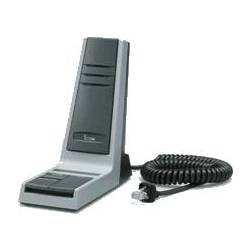
• Desktop microphone for professional mobile radios and repeaters


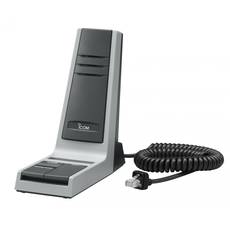
• Desktop microphone for Icom IP501M mobil LTE radio
• Desktop microphone for professional mobile radios
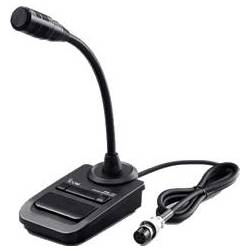
• Desktop microphone for amateur radios
• Goose-neck desktop microphone with an 8-pin metal connector
• PTT / PTT lock switches
• Low-cut filter
• Cosmetic design matches smaller sized base station radios
• Voice characteristics designed for SSB and FM
• Adjustable microphone output level
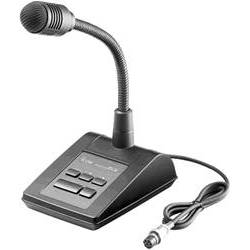
• Desktop microphone for amateur radios
• Goose-neck desktop microphone

• Dual element dynamic microphone with unidirectional and omnidirectional modes
• Output impedance: 600 ohm
• Microphone gain at VR max.: -30 dB +/-4 dB
• Power supply: 5-8 V DC from transceiver or 5 V DC from USB
• Compatible with microphone boom arms using a 5/8-inch thread
• Footswitch PTT connection and assignable function keys
• USB Type-C port for use as a PC microphone
• Supplied: XLR cable, 8-pin cable, cap and adjustment screwdriver
Icom desktop microphone for radio communication
Icom desktop microphones differ in intended application and technical design. The range includes versions for professional mobile radios and repeater stations, mobile LTE radios, shortwave radios and amateur radio transceivers. Because functions and connection methods vary by model, compatibility between the radio and the microphone should always be checked before selection.
Which Icom desktop microphone should be selected for a radio?
The appropriate radio microphone should be selected according to the connected radio and the intended application. The Icom range includes desktop microphones for mobile radios, repeater stations, mobile LTE radios, shortwave radios and amateur transceivers. Functions and connection methods are not identical across the category, so compatibility must be checked according to the exact radio model.
Icom radio microphones for mobile, LTE and amateur radios
In addition to desktop microphones for professional mobile radios, the range includes versions designed for mobile LTE radios and amateur radio equipment. Selected amateur-radio microphones can be used with several Icom HF, HF/50 MHz and all-mode transceivers. A manufacturer selector is also available on one version, allowing operation with compatible transceivers from Icom, Alinco or JVC KENWOOD.
What does a flexible gooseneck Icom desktop microphone provide?
The range includes compact desktop microphones with a directional electret microphone element and flexible gooseneck. Selected versions provide adjustable microphone sensitivity and LOW-CUT functionality. Flexible gooseneck construction is therefore a documented feature of several, but not all, microphones in the category.
Directional electret and dynamic Icom microphone designs
The category includes both electret and dynamic microphone designs. One version uses a directional electret microphone element, while another features two dynamic microphone elements with selectable directional or omnidirectional characteristics. In directional mode, sound arriving from the front is captured while off-axis background noise is reduced. In omnidirectional mode, frequency response remains consistent regardless of microphone distance.
How are LOW-CUT and adjustable microphone sensitivity used?
LOW-CUT functionality is available on selected microphones in the range. On one version, the LOW-CUT switch removes low-frequency components from the input audio. Adjustable microphone sensitivity is available on another version, while a separate model allows fine adjustment of microphone output level. These functions are not standard features of every Icom desktop microphone.
PTT microphone, function buttons and USB Type-C connectivity
One desktop microphone can be removed from its stand and mounted on a separately available microphone arm with a 5/8-inch thread. A commercially available foot switch can also be connected for PTT control. The controls include a PTT LOCK switch and programmable function buttons that can be assigned to frequently used radio functions. A USB Type-C port also allows the microphone to be used as a PC microphone.
Documented advantages of this configuration:
- a PTT foot switch allows the operator to keep both hands available for radio and keyboard operation;
- a microphone arm can reduce the transfer of desk vibration to the microphone;
- directional and omnidirectional pickup patterns can be selected;
- function buttons can be assigned to frequently used radio functions;
- the microphone can also be used as a PC microphone through USB Type-C.
Documented limitations and additional considerations:
- when connected to a PC by USB cable, the microphone switches and buttons are not active;
- the microphone arm is sold separately;
- the PTT foot switch is sold separately;
- the USB Type-C cable required for PC connection is not included.
The individual functions apply only to the corresponding microphone models and should not be generalized across the entire category.
What connection options are available on Icom radio accessories?
Connection methods vary by model. The range includes microphones with 8-pin connectors. One configuration uses an XLR cable between the microphone and the microphone stand, while an 8-pin metal connector cable is used between the stand and the radio. The XLR cable is 0.3 m long, while the 8-pin radio cable is 1 m long. A USB Type-C port provides a separate connection option for a PC.
Technical parameters of a dual-element Icom desktop microphone
The dual dynamic microphone element can be used with directional or omnidirectional pickup characteristics. Output impedance is 600 ohm and the frequency range is 50-10000 Hz. Microphone gain at maximum VR position is -30 dB +/-4 dB. Power is supplied at 5-8 V DC from the transceiver or 5 V DC through the USB connection. Weight is approximately 1 kg, and the operating temperature range is -10 to +60 degrees Celsius.
Supplied accessories include a 0.3 m XLR cable, a 1 m 8-pin metal connector cable, a cap for the microphone stand and a screwdriver for microphone gain adjustment. The PTT foot switch, microphone arm with 5/8-inch thread and USB Type-C cable required for PC connection are available separately.
Frequently asked questions about Icom desktop microphones
- Which radios can Icom desktop microphones be used with?
The category includes versions for professional mobile radios, repeater stations, mobile LTE radios, shortwave radios and amateur radio equipment. - Are flexible gooseneck Icom desktop microphones available?
Yes. The range includes directional microphones with flexible goosenecks. - Is LOW-CUT functionality available?
Yes. Selected microphones include a LOW-CUT function or switch. - Can an Icom desktop microphone be used with a PC?
The version equipped with a USB Type-C port can be used as a PC microphone. When connected through USB, its switches and buttons are not active. - Can a PTT foot switch be connected?
Yes. On the applicable microphone, a commercially available foot switch can be connected for PTT control.
Summary
The Icom desktop microphone category includes microphones for several radio applications, from professional mobile radios and repeater stations to LTE, shortwave and amateur radio equipment. The range includes directional electret, flexible gooseneck and dual-element dynamic microphone designs, with selected functions such as adjustable sensitivity, LOW-CUT, PTT control, programmable function buttons and USB Type-C connectivity. We recommend checking the exact radio model, microphone connection and documented functions before selection.