

Diamond Handheld Multiband Antenna
The Diamond multiband handheld radio antenna category includes antennas designed for VHF and UHF amateur radio frequencies, as well as the reception of certain additional frequency bands. The range primarily consists of 144/430 MHz dual-band antennas, but 50/144/430 MHz and 144/430/1200 MHz triple-band configurations are also available. The antennas come in compact, flexible, tiltable, and telescopic designs with BNC or SMA connectors. When selecting the appropriate antenna, the frequency bands, transmit power, connector configuration, antenna length, and gain must all be considered. Read more...
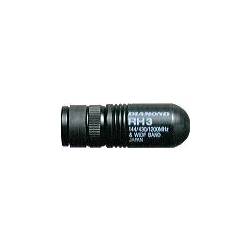
• Type: 1/4 wave
• Frequency: 120MHz / 300MHz Air bands
• Gain: 2.15 dB
• Impedance: 50 Ohms
• Length: 0.045m
• Weight: 18 g
• Connector: BNC-male


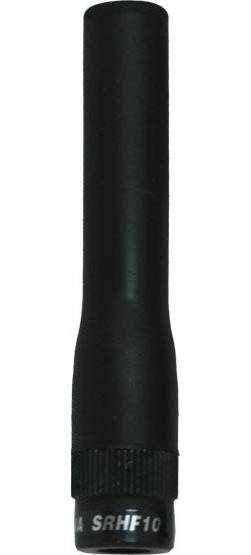
• Type: 1/4 wave (144/430MHz), Air band/150/300/450/800/900MHz receiving only
• Frequency: 144MHz / 430MHz
• Power: 6 Watts
• Impedance: 50 Ohms
• Length: 0.075m
• Weight: 20 g
• Connector: BNC-male
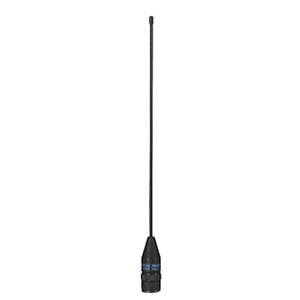
• Type: 1/4 wave (144/430MHz), 120/150/300/450/800MHz for receiving only
• Frequency: 144MHz / 430MHz
• Power: 10 Watts
• Impedance: 50 Ohms
• Length: 20 cm
• Weight: 15 g
• Connector: BNC male
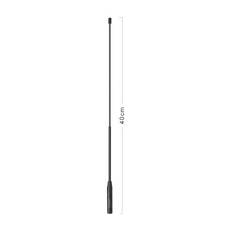
• Type: 1/4 wave (144MHz), 1/2 wave radialless (430MHz), 120/150/300/450/800/900MHz for receiving only
• Frequency: 144MHz / 430MHz
• Gain: 2.15 dB (430Mhz)
• Power: 10 Watts
• Impedance: 50 Ohms
• Length: 0.40m
• Weight: 42 g
• Connector: BNC-male
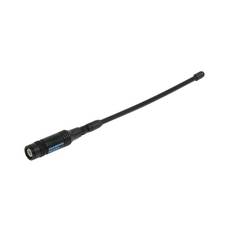
• Type: 1/4wave (144/430MHz), 120/150/300/450/800/900MHz for receiving only; 180 degrees tilt angle adjustable
• Frequency: 144MHz / 430MHz
• Power: 10 Watts
• Impedance: 50 Ohms
• VSWR : 1.5:1 (nominal)
• Length: 0.21m
• Weight: 35 g
• Connector: BNC-male

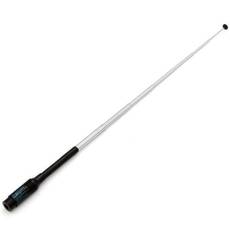
• Type: 1/4 wave (144MHz), 1/2 wave radialless (430MHz), 120/150/300/450/800/900MHz for receiving only
• Frequency: 144MHz / 430MHz
• Gain: 2.15 dB (430Mhz)
• Power: 10 Watts
• Impedance: 50 Ohms
• Length: 0.41m (full length),0.14m (retracted) 8 stages
• Weight: 35 g
• Connector: BNC-male
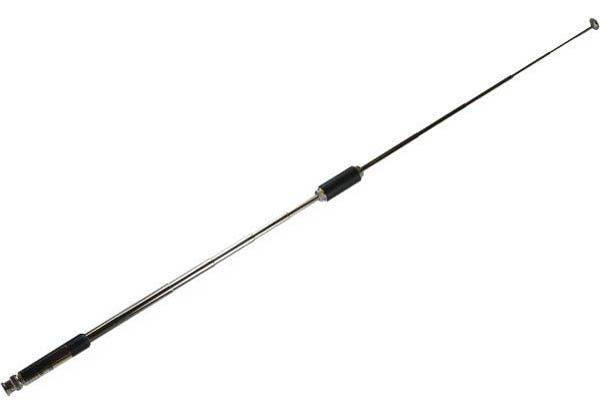
• Frequency range: 144/430MHz; 300MHz receiving only
• Can be used as amateur (2 m/70 cm) band transmitting antenna
• Connector type: BNC
• Length: 22.3 - 93 cm

• Type: 1/4 wave, 150/300/450/800/900MHz for receiving only
• Frequency: 144MHz / 430MHz / 1200Mhz
• Power: 10 Watts FM
• Impedance: 50 Ohms
• Length: 0.045m
• Weight: 15 g
• Connector: SMA-male
• Type: 1/4 wave (144/430MHz), Air band/150/300/450/800/900MHz receiving only
• Frequency: 144MHz / 430MHz
• Power: 6 Watts
• Impedance: 50 Ohms
• Length: 0.075m
• Weight: 20 g
• Connector: SMA-male
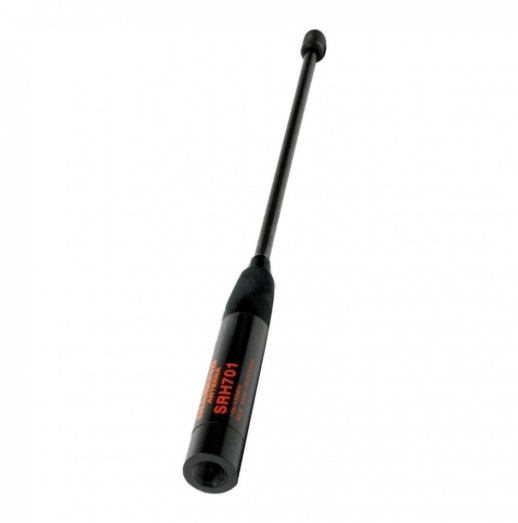
• Type: 1/4 wave (144/430MHz), 120/150/300/450/800/900MHz for receiving only
• Frequency: 144MHz / 430MHz
• Power: 10 Watts FM
• Impedance: 50 Ohms
• Length: 0.19m
• Weight: 26 g
• Connector: SMA-male
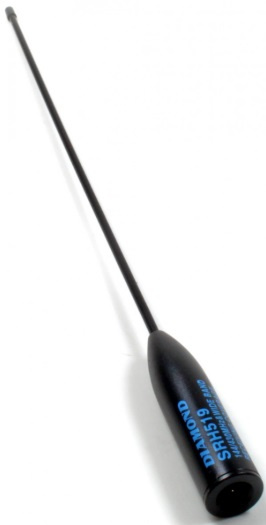
• Type: 1/4 wave (144/430MHz), 120/150/300/450/800/900MHz for receiving only
• Frequency: 144MHz / 430MHz
• Gain: 2.15 dB (430Mhz)
• Power: 10 Watts
• Impedance: 50 Ohms
• Length: 0.21m
• Weight: 9 g
• Connector: SMA-male
• Type: 1/4 wave (144MHz), 1/2 wave (430MHz), 120/150/300/450/900MHz for receiving only
• Frequency: 144MHz / 430MHz
• Gain: 2.15 dB (430Mhz)
• Power: 10 Watts FM
• Impedance: 50 Ohms
• Length: 0.40m
• Weight: 38 g
• Connector: SMA-male
• Type: 1/4 wave (144MHz), 1/2 wave (430MHz)
• Frequency: 144MHz / 430MHz
• FM/120/150/300/450/800MHz for receiving only
• Gain: 2.15 dB
• Power: 10 Watts
• Impedance: 50 Ohms
• Length: 16-44 cm
• Connector: SMA-male
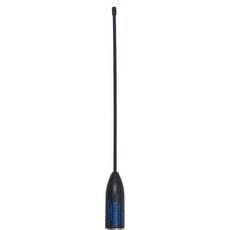
• Type: 1/4 wave (144/430MHz), 1/2 wave (1200MHz), 120/150/300/450/800/900MHz for receiving only
• Frequency: 144MHz / 430MHz / 1200Mhz
• Gain: 2.15 dBi (1200Mhz)
• Power: 6 Watts FM
• Impedance: 50 Ohms
• Length: 0.15m
• Weight: 10 g
• Connector: SMA-male

• Type: 1/4 wave (120MHz), 1/2 wave (300MHz)
• Frequency: 120MHz / 300MHz air bands
• Gain: 2.15 dB (300Mhz)
• Impedance: 50 Ohms
• Length: 0.47m
• Weight: 43 g
• Connector: SMA-male
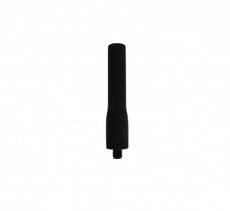
• Type: 1/4 wave (144/430MHz), 120/150/300/450/800/900MHz for receiving only
• Frequency: 144MHz / 430MHz
• Power: 6 Watts FM
• Impedance: 50 Ohms
• Length: 7.2 cm
• Weight: 18 g
• Connector: SMA-female
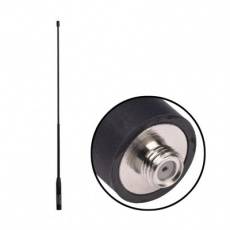
• Type: 1/4 wave (144/430MHz), 120/150/300/450/800/900MHz for receiving only
• Frequency: 144MHz / 430MHz
• Power: 10 Watts FM
• Impedance: 50 Ohms
• Length: 0.195m
• Weight: 30 g
• Connector: SMA-female
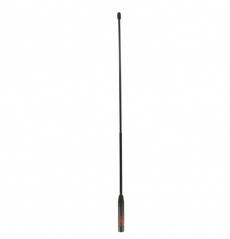
• 144 1/4 λ / 430 1/2 λ
• 120/150/300/450/800/900Mhz (receving only)
• Power : 10 W
• Length: 45 cm
• Weight: 40 g
• Connector: SMA female
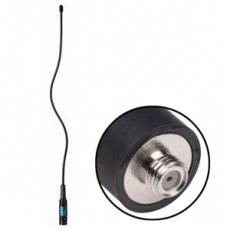
• 144 1/4 λ / 430 1/2 λ
• Gain: 2.15 dBi (430Mhz)
• 1/4 λ (120/150/300/450/800/900Mhz (receving only)
• Power : 10 W
• Length: 40 cm
• Weight: 40 g
• Connector: SMA female
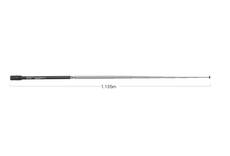
• Length: 113,5 cm (total length), 19,5 cm (retracted) 10 steps
• Weight: 65 g
• Amplification:2.15dBi
• Maximum power:10W FM
• Impedance:50ohms
• Connector:BNC-P
• Type:1/4 wave (70-300MHz)
• 180 degree tilt angle adjustable telescopic whip antenna
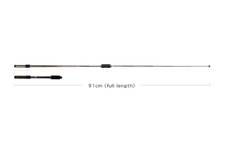
• For transmission: 144/430/1200MHz (2m/70cm/23cm)
• Reception only: 300MHz
• Length: 91cm (total length)
• Weight: 85g
• Impedance: 50ohm
• Connector: SMA-P
• Type: 1/2 wave radiation free (144MHz) , 2x 5/8 wave radiation free (430MHz)
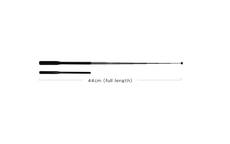
• For transmission: 144/430MHz (2m/70cm)
• Reception only: 120/150/300/450/800/900MHz
• Length: 44cm (total length)
• Weight: 41g
• Amplification: 2.15dBi (430MHz)
• Maximum power: 10W
• Impedance: 50ohms
• Connector: SMA-P
• Type: 1/4 wave (144MHz), 1/2 wave (430MHz)
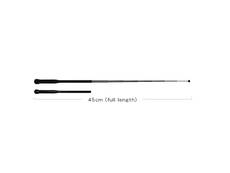
• For transmission: 144/430MHz (2m/70cm)
• Reception only: 120/150/300/450/800/900MHz
• Length: 45cm (total length)
• Weight: 46g
• Amplification: 2.15dBi
• Maximum rated power: 10W
• Impedance: 50ohm
• Connector: SMA-J
• Type: 1/4 wave (144MHz), 1/2 wave (430MHz)
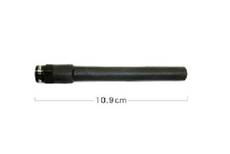
• Frequency: 50/144/430MHz (6m/2m/70cm)
• Length: 109mm
• Weight: 29g
• Impedance: 50Ω
• Max.power rating: 6W
• Connector: SMA male
• Type: 1/4wave,150/300/450/800/900MHz for receiving only
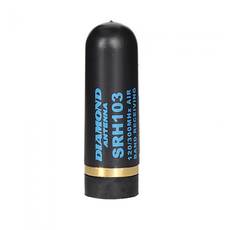
• Frequency: Air band (120/300MHz) receiving only
• Length: 4.5cm
• Weight: 15g
• Impedance: 50Ω
• Connector: SMA male
• Type: 1/4wave
Diamond multiband handheld radio antenna – main technical characteristics
The Diamond antenna range includes handheld radio antennas with different dimensions and construction types. Compact models include antennas as short as 4.5 cm, conventional whip antennas range from 40 to 47 cm, and telescopic configurations can extend to 113.5 cm. Documented maximum transmit power ratings are 6 W, 10 W, or 20 W, depending on the model. Technical specifications vary between configurations, so each parameter should be verified for the specific antenna being considered.
Which frequency bands does a multiband handheld radio antenna support?
The most common transmit frequencies for a multiband handheld radio antenna are the 144 MHz and 430 MHz amateur radio bands. Certain triple-band designs also support either 1200 MHz or 50 MHz operation. Some antennas offer additional receiving frequencies, including 120, 150, 300, 450, 800, and 900 MHz. These additional frequencies are not necessarily suitable for transmission. The receiving and transmitting frequency ranges specified in the technical documentation must therefore be interpreted separately.
Which frequency bands are supported by multiband handheld radio antennas?
A 144 MHz antenna is associated with the 2-metre amateur radio band, while a 430 MHz antenna is designed for the 70-centimetre amateur radio band. A dual-band configuration combines both frequency bands in a single antenna. Triple-band versions include 6 m/2 m/70 cm and 2 m/70 cm/23 cm combinations. The category also contains antennas for which the 120 MHz and 300 MHz frequencies are specified exclusively for reception.
Diamond VHF and UHF antennas for a single transceiver
A combined VHF antenna and UHF antenna configuration can be selected when the handheld transceiver supports the relevant frequencies and has a compatible antenna connector. Documented designs include configurations using a 1/4-wave element at 144 MHz and a 1/2-wave element at 430 MHz. Other models use two 5/8-wave sections at 430 MHz. These differences in electrical design result in varying antenna dimensions and gain characteristics.
VHF and UHF antennas for the 144 and 430 MHz amateur radio bands
When selecting a dual-band amateur radio antenna, the actual transmitting frequency of the radio is the primary consideration. A 144/430 MHz designation indicates that the antenna is designed for those frequency bands, but it does not automatically mean that transmission is supported on every other VHF or UHF frequency. The range includes models rated for maximum transmit powers of 6 W and 10 W. One telescopic configuration is rated for a maximum power of 20 W in FM mode.
What does the gain of a Diamond 144/430 MHz handheld radio antenna mean?
Antenna gain is a frequency-dependent technical characteristic. Several antennas approximately 40 cm long have a specified gain of 2.15 dBi at 430 MHz, while compact models may have a documented gain of 0 dB. One extendable telescopic antenna provides 3 dB gain at 144 MHz and 5.5 dB at 430 MHz. Values stated in different units or relative to different reference antennas should not be compared directly. A meaningful comparison requires consideration of both the operating frequency and the gain unit specified in the datasheet.
What is the difference between dual-band and triple-band antennas?
Dual-band antennas are designed for 144/430 MHz operation, while triple-band configurations support an additional amateur radio frequency band. The 144/430/1200 MHz versions include compact antennas measuring 4.5 cm and 15 cm. The 15 cm configuration has a documented gain of 2.15 dBi at 1200 MHz and a maximum transmit power of 6 W. The 50/144/430 MHz triple-band antenna is 10.9 cm long, has an impedance of 50 ohms, and is rated for a maximum power of 6 W.
Diamond triple-band handheld radio antenna: when is it appropriate?
A triple-band antenna is appropriate when the connected amateur radio transceiver actually supports the third frequency band. The 50/144/430 MHz and 144/430/1200 MHz versions are not interchangeable because they are designed for different operating frequencies. In addition to the third band, the radio's antenna connector and transmit power must also be checked. We recommend selecting an antenna based on the radio's actual technical specifications rather than simply the number of supported bands.
Compact, flexible, and telescopic Diamond antennas
The mechanical design of a Diamond handheld radio antenna significantly affects the overall size and handling of the transceiver. Compact antennas measuring 4.5-7.5 cm require relatively little space, while conventional whip antennas measuring 40-47 cm are physically longer. The range also includes flexible, 180-degree tiltable, and multi-section telescopic configurations. A tiltable design allows the antenna's position to be adjusted, while a telescopic structure provides variable physical length.
What are the advantages and limitations of a telescopic VHF/UHF antenna?
- Compact design: smaller physical dimensions, although gain depends on the specific antenna construction.
- Flexible whip antenna: flexible mechanical construction, available in different lengths.
- Tiltable configuration: allows the antenna's position to be adjusted.
- Telescopic configuration: adjustable length, but requires more space when extended.
- Longer antenna: higher documented gain in certain configurations, but also larger physical dimensions.
The most suitable design should be selected according to the intended operating conditions, the radio's antenna connector, and the required frequency bands. For telescopic antennas, the manufacturer's specified operating settings should also be followed.
SMA or BNC connector: which one fits your handheld radio?
The category includes antennas equipped with BNC connectors, SMA male connectors, and SMA female connectors. Connector selection is a fundamental compatibility requirement: matching frequency bands alone do not guarantee that the antenna can be physically connected to the radio. SMA male and SMA female connectors have different mating configurations and must be matched to the appropriate connector on the transceiver. BNC is a separate connector system.
How can SMA connector compatibility be verified?
When selecting an SMA connector, check whether the radio has a connection point compatible with an SMA male or SMA female antenna connector. Product specifications may use the designations SMA-P and SMA-J. A handheld radio with a BNC connector requires the corresponding BNC antenna configuration. If the antenna and radio connectors do not match, direct connection is not possible. The exact connector designation is therefore just as important as the operating frequency range.
Antenna gain, impedance, and maximum transmit power
The key electrical characteristics of a handheld radio antenna include frequency range, gain, impedance, and maximum permitted transmit power. Several documented configurations have an impedance of 50 ohms and maximum power ratings of 6 W or 10 W. One telescopic VHF/UHF antenna is rated for a maximum of 20 W in FM mode. A 50-ohm impedance specification does not replace frequency and power compatibility checks: all three parameters must match the technical requirements of the transceiver.
Technical selection criteria for Diamond antennas
- Specified transmitting frequency bands: 144/430 MHz, 50/144/430 MHz, or 144/430/1200 MHz.
- Verification of additional frequencies specified exclusively for reception.
- Maximum transmit power: 6 W, 10 W, or 20 W for the documented configurations.
- Antenna gain and its specified measurement unit.
- Impedance: 50 ohms for models where this value is documented.
- Connector type: BNC male, SMA male, or SMA female.
- Mechanical design, length, weight, and tilting capability.
We recommend avoiding antenna selection based on a single highlighted specification. For proper compatibility, both the electrical and mechanical characteristics of the radio and antenna must be taken into account.
What does a receive-only frequency range mean?
Some Diamond antennas can receive additional frequencies beyond their 144/430 MHz transmitting bands. Documented supplementary receiving frequencies include 120, 150, 300, 450, 800, and 900 MHz. Separate receiving configurations are also available for 120/300 MHz applications. A receive-only designation means that the antenna's suitability for transmission at that frequency is not specified. It does not imply that the radio can also transmit on that frequency.
Diamond wideband receiving antennas and transmission limitations
A wider receiving range may be relevant when using transceivers with suitable receiving capabilities or dedicated communications receivers. For example, a telescopic configuration designated for 70-1000 MHz is specified with 50-ohm impedance, 2.15 dBi gain, and a BNC connector. Such a wideband designation must not automatically be interpreted as confirmation that transmission is supported or permitted throughout the entire range. For transmission, the documented transmitting frequencies and the radio's authorised operating conditions must always be checked separately.
How should you select the right Diamond handheld radio antenna?
The selection process should begin with the radio's actual operating frequency bands and antenna connector, rather than relying on its model name alone. The next steps are to check transmit power and determine the required antenna length and mechanical construction. Compact antennas may be preferred for their smaller size, while longer or telescopic versions can be evaluated according to their documented frequency-dependent gain. When using a transceiver across several frequency bands, it is particularly important to distinguish between transmitting and receiving capabilities.
Diamond multiband handheld radio antenna: practical selection checklist
Before purchasing, verify the amateur radio frequency bands supported by the transceiver, its maximum transmit power, and the exact antenna connector configuration. Then compare antenna length, weight, gain, and any additional receiving frequencies. A longer antenna does not automatically guarantee better results in every situation, because gain depends on frequency and the operating environment also matters. We recommend comparing antennas on the basis of their documented technical specifications.
FAQ – Diamond multiband handheld radio antennas
- Which frequency bands are available for Diamond handheld radio antennas?
The range includes 144/430 MHz dual-band antennas and 50/144/430 MHz and 144/430/1200 MHz triple-band configurations. - Which connector types are available?
The documented configurations include BNC male, SMA male, and SMA female connectors. - What maximum transmit power ratings are supported?
Depending on the configuration, the specified maximum power ratings are 6 W, 10 W, or 20 W. - Can every antenna transmit on 120 or 300 MHz?
No. For several antennas, these frequencies are specified exclusively for reception. - What antenna gain is available at 430 MHz?
Several configurations specify 2.15 dBi, while one telescopic version has a documented gain of 5.5 dB. - What antenna lengths are available in this category?
Documented compact models are as short as 4.5 cm, while one telescopic antenna extends to 113.5 cm. - Are antennas available for the 1200 MHz amateur radio band?
Yes. The 144/430/1200 MHz triple-band configurations include compact handheld radio antennas. - Are SMA male and SMA female connectors interchangeable?
No. The antenna connector must match the corresponding connector on the radio.
Summary
The Diamond multiband handheld radio antenna category includes compact, flexible, tiltable, and telescopic antennas for various VHF and UHF amateur radio applications. The range covers 144/430 MHz dual-band antennas as well as 50/144/430 MHz and 144/430/1200 MHz triple-band configurations. SMA and BNC connector compatibility, documented maximum power ratings of 6-20 W, frequency-dependent antenna gain, and additional receive-only frequency bands are all important selection criteria. Choosing the appropriate antenna requires verifying the complete technical compatibility between the antenna and the handheld transceiver.